Home > Plan Your Trip > Graffiti Wall

Archive: Best Open-Air Museums

Each country recognizes that the modern world is bulldozing its heritage. Open-air folk museums, designed to save something of the good old days, are constantly growing and improving. What are your favorites and which do you find the liveliest?


Open-air museums
We have visited outdoor, open-air museums in the Black Forest, Stockholm, Cardiff, Arnhem, Salzburg, Brienz — all are good and worth a visit. Some are better than others, but all present a slice of the rural culture relative to that area. Allow one half day to view each site.
Jinx Hoover
Austin, Tx   USA   04/28/02


A tale of two museums
Last year, my husband & I visited the Ecomusee Alsace located outside of Mulhouse in Haute-Rhine and a couple days later the Black Forest Open-Air museum outside of Triberg. Both were wonderful experiences in their own right that we are glad that we did not miss. Lonely Planet had deemed the Ecco-museum "interesting, but cheesy." Well, maybe the little boatride that goes down the tiny bracken riverway could be a little cheesy, but it was nice being outside on beautiful days enjoying the countryside. This is much more enjoyable than being lectured or reading a dull dry textbook.

Both have the easy potential of being a tourist trap. They are large and set up for easy access by Tour Buses. The best suggestion for visiting open air museums in high summer season...go on a weekday and go early or go late!!! Figure out what you want so you can dive in when you're finished with your visit. Our dogs were welcomed and most areas were stroller friendly. Both sites had materials in English.
Sara
  Germany   02/26/02


Out Door Museums
The Welsh National Folk Museum at St Fagan's, outside Cardiff, is a delightful experience. But, if you go on Sunday, prepare to taxi from Cardiff, as the bus to St. Fagan's does not run on that day. A small error in the RS Great Britain Guide.
Miff Mendoza
Houston, TX   USA   02/01/02


Kizhi Island
One of the most fascinating open air museums we'd ever seen was on the island of Kizhi, on Lake Onega in Russia. It is like taking a trip back in time to a 17th century Russian village. The church of the Transfiguration with its 22 onion domes was built completely out of wood, without nails. The houses and other buildings show life as it really was back then. There's also a large wooden windmill that is mounted on a post and would rotate whenever the wind would shift. It was a fascinating historical experience.
Wayne & Susan Avers
Chicago, IL   USA   11/07/01


Conwy, Wales
The quiet fishing town of Conwy on the north Wales coast is not really an open-air museum, rather a living medieval town still surrounded by medieval stone ramparts — we were able to walk along these about halfway around the town, above the tiled and chimney-potted rooftops! There is an imposing castle, right beside the town entrance, and most of the houses are pre-20thC. You can even visit a Medieval Merchant's House (Aberconwy), and a Tudor Merchant's House (Plas Mawr) where the kitchen has bunches of dried herbs and fresh-cut garlic to add an extra whiff of authenticity. And don't miss the tiny fisherman's cottage on the waterfront, the smallest house in Britain!

If only we'd had time, we would have also visited Portmeirion, the surreal artificial village in which the sixties cult classic tv series "The Prisoner" is set.
Susan Ware
Auckland,    NZ   11/02/01


Rocca Al Mare, Estonia
While staying in Tallinn, Estonia's beautiful capital city, some friends took us to Rocca Al Mare, the Estonian Open Air Museum. It was Autumn, the weather was cold and damp, yet we still found enough to keep us enthralled for a whole afternoon. It's set in a wild, rambling park, and includes an authentic inn where you can have soup and beer; very rustic! You really get an insight into how Estonian peasants lived right up until 100 yrs ago. The variety of small, dark cottages, weathered windmills and rural implements is astonishing. An absolute must-see is the cottage depicting a 1930s family snatched away by the occupying Soviets and taken to Siberia — a chilling step back in time, the scattered belongings and photographs in the living room bear testament to the hurried snatching-up of those few precious possessions that such inhabitants were able to take into exile. Moreover, the city centre of Tallinn is actually a gorgeous walled medieval city, full of cobbled streets, steepled towers and Hanseatic merchants' houses painted in cheerful pastel colours, all perched upon a hilltop — great dining too!. And if you want to see yet more rustic windmills, pagan piles of stones and old churches, both Lutheran and Russian Orthodox (from the 19thC. Tsarist occupation), then consider a couple of days on the large island of Saarema — we borrowed a car and explored a good chunk of this nearly deserted island in bitterly bleak October weather for 2 days, and loved it!
Susan Ware
Auckland,    NZ   11/02/01


Quedlinborg, Germany
On our first trip to Europe we stayed with some friends in the eastern German countryside. They took us to an amazing (and entirely authentic) village called Quedlinburg. Its houses date from around 13thC to 18thC, many with dates and decorations lovingly inscribed on the exposed timbers. Each street seems to have been built in a different century, almost as if built to a 1000-yr plan for a millenium open-air museum ! Our friends assured us that this village's survival was due to Soviet-era neglect rather than any heritage or tourism imperatives. Apparently there are two other medieval towns in the region: Goslar and Wernigerode.
Susan Ware
Auckland,    NZ   11/02/01


Skansen, Stockholm
Something to point out about Skansen in Stockholm. The buildings are great, the grounds are large, but I went off-season (on a weekday) and most attractions were shut down (including food vendors) and there were only 3 or 4 interpreters working in the whole park (none were artisans). Though it's more expensive on the weekend, I imagine it might be a more worthwhile experience with more going on.
Jeremy
Boston, MA   USA   09/19/01


Tanji Museum, Gambia. I was holidaying in the Gambia earlier this year, and I was taken to see this museum. It was opened just a year or two back, but it has already put together a fascinating picture of life in pre-colonial West Africa. The curator and guides (who, like nearly all Gambians, speak excellent English), explained how Africans came to terms with the territory, climate, flora and fauna of West Africa, and used them to survive and prosper. The museum is privately owned and run, with no external funding in any way, so things are a bit rough and ready. The only problem is that the museum is about 20 miles from the capital, Banjul, and is completely off the beaten track. Still, visitors to the Gambia will find it is well worth the detour: it is streets ahead of the official museums in Banjul.
David McKee
Borehamwood,    UK   09/10/01


From June 10th through November, 2001, Venice is home to one of the world's great international shows of contemporary art, La Biennale di Venezia. It is on every other year. This year, 2001, it is entitled the Plateau of Humankind.

The Biennale also includes a poetry bunker, where people from all over the world can submit poems which are posted on a wall near the Arsenale. To date 1,200 poems have been faxed or emailed for inclusion on the wall of poetry.

Permanent pavilions designated by country, house the artists selected to represent that particular country. Every country in the world is represented in the exhibition. Located at the Giardini and Arsenale, this huge show has something for everyone. It's a great place for families to walk, talk and enjoy art and lunch in a beautiful setting.

Cafes are located throughout the Giardini. Most of the tourists are in Piazza San Marco so it's not crowded in the Giardini or Arsenale. It takes a full day to do a quick tour of the show, about 8 hours, but it is better to allow two days. Art exhibition tickets can be purchased at the Giardini, locations in Venice and the tourist offices. There are 2 parts to the ticket, one for the Giardini and one for the Arsenale. If you go, ask about using the ticket on separate days. We were told we could view the Giardini section on one day and the Arsenale on a separate day as long as we used the ticket within the month of purchase. Tours are also available.
Helaine Rainier
Toms River, NJ   USA   09/03/01


I just returned from the Netherlands and enjoyed both the Openluchtmuseum and the ZuiderzeeMuseum. Both are re-created village atmosphere and both are very interesting, with demonstrations of native tradesmen. We drove from Haarlem to both and were delightfully lost several times.
Larry Johnson
Sunset Hills, MO   USA   07/29/01


It is difficult to compare but three that have given me particular pleasure that are not on here are Beamish in County Durham, England Ironbridge in Shropshire, England and the Norwegian National Outdoor museum in Oslo. I forget its actual name but it is a real belter and is further improved by two facts 1. It can be reached by boat from the waterfront near the City hall. 2. It is near the Viking Ships Museum and the Kontiki Museum which are both excellent (though they are not Open Air.
David Cross
Todmorden, Yorkshire   England   07/21/01


Although the ruins of Les Baux in Provence could be fascinating and beautiful if they were managed properly, we found the site to be extremely overcommercialized. You are forced to run a gauntlet of ersatz French village restaurants and junky shops before the entrance to the ruined village is reached. To make matters worse, the site is opened daily on a very limited basis-from 0900 to 1815. This removes the best times of day for taking dramatic photographs, using the light of early morning or dusk, which would be astounding on the rock used to construct this ancient village. Very disappointing and not worth the effort for a side trip.
Mark Menard
Seattle, WA   USA   07/20/01


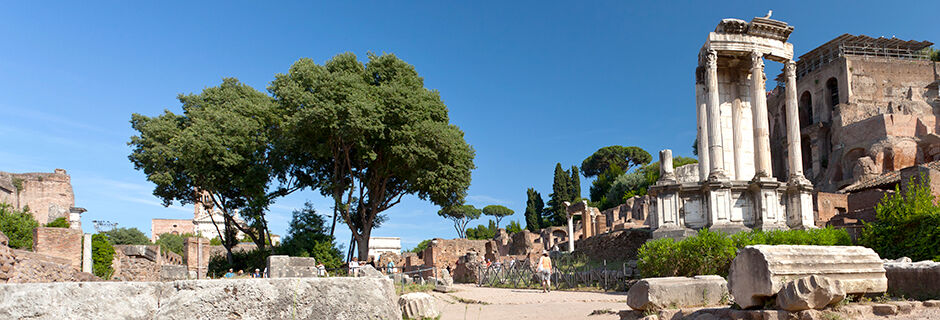
If you're going to Rome be sure to save a 1/2 day to see Ostia Antica, the ancient Roman seaport on the outskirts of Rome. It's very quick and easy to get to on the Metro and/or bus system. If you can't make it to Pompeii, Ostia Antica will give you the same experience (sans the volcano in the distance). Excellent facilties are on site and the ruins are very extensive.
Bonnie
Lombard, IL   USA   04/25/01


The Ulster Folk Museum is a great open air history and culture lesson. I was staying with a family in Newtonbreda who took me there on two separate occasions. In the building that serves as the schoolhouse the map was open displaying America in the 1830's. Atlanta, my hometown, was not on the map but a little suburb of Atlanta was. My how things change! The buildings are arranged in a town-like manner that is easy to manage for the young and old. The interiors were a little cramped, but always charming. Along with a trip up the Irish Ralley road to Giant's Causeway, the Ulster Folk Museum is a must see!
Greg Irvin
Dacula, ga   USA   02/07/01


One of my finest experiences with open-air museums was a visit to Maihaugen in Lillehammer, Norway. This was truly an unforgettable day. The museum offers incredible insights into rural and city life and structures of Scandinavia. I highly recommend the museum.
J Phelps
Bardstown, KY   USA   11/02/00


On our trip to Aarhus in mainland Denmark (Jutland), we visited Den Gamle By, an open-air museum plugged by Rick in his Scandinavian book. It was a great place, quite unique in my fairly extensive open-air museum experiences in that it was a grouping of urban buildings in a town-like setting. Many of the buildings came from downtown Aarhus, but there were many from other Danish towns and one impressive building from Copenhagen. Well worth seeing!
Don Stadler
London,    UK   10/08/00


The best folk museum I have visited is the Ecomusee Alsace located outside of Mulhouse in Haute-Rhine. There was a lot to see, but fairly compact grounds with intelligent groupings of buildings which looked like they belonged together and excellent commentary (sometimes multimedia) made for a great experience. There is a small museum on-site devoted to a French folk artist we enjoyed tremendously. There is a hotel and several eating places on-site (some in historical buildings) which potentially expand your experience. English language commentary was scanty.

By contrast, I found the Black Forest Open-Air museum across the river disappointing when I saw it last fall. The entry was a tourist trap and the number and depth of buildings there was scanty.

A better bet was the Frankisch Freilichtmuseum east of Rothenburg to be much better value. It has a wider range of buildings grouped in several 'villages' scattered around a large site.
Don Stadler
London,    UK   08/05/00


I recommend the De Hoge Veluwe National Park in the Netherlands. One section of it does have a folk museum in a lovely, peaceful, wooded setting. Close by, another section of the park has the Kroller Mueller Museum, with a great little collection of Van Goghs and much more. The fun part is getting to the museum. If you arrive early enough, you can simply borrow one of the very funky, very Euro little white bikes at the entrance to the park. Hop on the most roadworthy one you can find, and pedal a few miles through woods and heather fields up to the museum.
EBurm
WI   USA   07/31/00


Szentendre, Hungary (just outside Budapest) has a great open-air museum! It is still a work in progress, but can easily fill several hours. Buy the English guidebook to really appreciate the exhibits. The restaurant inside the museum offers good local food for a good price. Transportation is easy with the HEV from Budapest and then a local bus.
Marcia
Spokane, WA   USA   06/25/00


I discovered the open-air museum near Arnhem in Holland quite by accident. I was headed for the museum featuring articles from the battles near Arnhem seen in "A Bridge Too Far". It was suggested to me to see the open-air museum instead and I enjoyed it tremendously and have recommended it to friends who travel to NW Germany or Holland.
Clarence Feltman
Waconia, MN   USA   05/21/00


We saw a great open-air museum just outside Szentendre near Budapest. It is still a work in progress and was practically empty of tourists when we saw it in Oct'99. They have recreated or moved old buildings from various parts of Hungary and have placed them in clusters to represent the various cultures in Hungary's history. During the summer they offer tours and folkore programmes and shows. They have a restaurant with tradional meals served and a bakery. Even had a sheepherder with sheep on their extensive grounds. Next time in Hungary, we will definitely spend a whole day there. (See www.hem.hu/szmn/index.htm)
Joanne Pal
Saltspring Island, BC   CAN   03/07/00


I agree that the Welsh folk museum at St. Fagans (outside of Cardiff, Wales) is a must-see. Every time we go there we see something new. Also, if you're interested in the ancient art of falconry I suggest a visit to the Welsh Hawking Center southwest of Cardiff. There is a large selection of falcons, hawks, eagles, owls, exotic birds, and farm animals...children will just love it.
cheri
san diego, ca   USA   02/28/00


When in Brussels, take the train about 20 minutes to the small town of Beersel. Once at the train station walk down the hill and find a well intact medieval castle, moat and all. After you explore the nooks and crannies of this fortress, have lunch at a quaint little cafe outside the castle's gates. This excursion is a great way to spend a day when you have had your fill of museums, brewery tours and the Manneken-Pis dressed as Elvis.
Colleen Leslie
Oakhurst, NJ   USA   02/16/00


Because of a recommendation on this page for the Austrian National Open Air Museum (southwest of Salzburg; see Pettijohn entry from January), we visited in October, 1999. It certainly was informative, educational, and pleasant. In German it is called the Salzburger Freilicht Museum. It was clearly worth 2-3 hours stop on our way back to Munich.

As the earlier entry mentioned, it was difficult to find. From the A1 and A10 "beltway" around Salzburg, there is a sign at the Salzburg-West Exit 297. Take that, toward Wals and then Bad Reichenhall, and in 8-10 minutes hang a left. Open late March through October, 70 shillings admission, discounts for students, seniors, families. Not (yet) friendly for wheelchair, and the nearly-gentle climbing was a bit much for my 72-year-old father-in-law. After more than an hour together, he and his wife sat under the sun another 45 minutes while my wife and I completed the tour. Check their (all in German) page: www.FreilichtMuseum.com.

If you have time after the visit, keep on heading south another 4-5 miles into Grossgmain, where you'll see signs for Berchtesgaden, not many more minutes down/up the road.
Don Climer
Kent, WA   USA   12/06/99


I'm sure this was all the more interesting because my husband's ancestors are from this area and were coal miners, but we especially enjoyed our day at Beamish, just north of Durham, England. It reminded my somewhat of Greenfield Village in Dearborn, Michigan. We toured a drift mine, the colliary, and the pit cottages, and truly got a feel for the life of our "Geordie" ancestors. The costumed reenactors were excellent.
Marcia Scurfield
Derby, KS   USA   11/18/99


While it is not entirely an open-air museum, I am very surprised that you hear little about the branch of the Imperial War Museum in Duxford (just south of Cambridge). Part of this aircraft museum is the new American Air Museum, dedicated to the American men and women who served in BritAIn during World War II. The American Air Museum houses, indoors, everything from a B52, a U2 and other American aircraft from WWI to the present day, all located in a magnificant building. This museum houses one of the best collections of World War II aircraft anywhere in the world. And if you have any interest in World War II it should be a no-miss on your agenda. Duxford is easy to reach from London — about a 90-minute bus trip from Victoria Coach Station directly to the museum. The bus drops you off at the front door and picks you back up for your return to London.
Gary Davis
Costa Mesa , CA   USA   10/14/99


My favorite sight in Eastern Europe by far was a different sort of "open-air museum": the Statue Park, about a thirty-minute commute from the center of Budapest. As I traveled throughout Eastern Europe, I was enthralled with the recent and ongoing transition from communism to capitalism. Statue Park is a fascinating footnote in that transition. When Budapest began to remove all of its communist statues from its streets, rather than simply destroy them, they collected them and built a park to display them on the outskirts of town; the pamphlet brags that it is the only museum of its kind. To walk among these huge statues of Lenin and anonymous, towering Russian soldiers, to see how this monstrous political system has already become the stuff of history, is one of the most thought-provoking sights of Eastern Europe. In short, it was probably the best and most interesting museum I saw while in Europe.

The only problem is that it can be tough to get to, and the directions on the pamphlets are a bit misleading. Take a bus (I took red #7) out to Etele tér in southwest Buda, where there is a regional bus station. Take a bus in the direction of Érd and get off when you see all of the big statues on your right. If you are interested in the communism-to-capitalism transition, I guarantee it's worth the trip. The bus ride and admission are surprisingly cheap, and buy an English guidebook to get the most out of the experience.
Cameron Hewitt
Delaware, OH   USA   10/11/99


In Chichester, see the Weald and Downland Open Air Museum! They've saved medieval houses from all over England and assembled them on a farm. Very interesting and helpful interpretative staff; and a working water mill, grinding wheat into flour — you can get cookies made from the flour. Beautiful domestic architecture, how the half-timbered houses were made, ploughing with horses, a nice English forest. Wow! Nice gift shop, too!

P.S. See Stonehenge if you must, but don't miss Avebury! You can still walk among the stones, etc.
Douglas Sunlin
Mountain View, CA   USA   10/08/99


The most amazing open-air museum has got to be the Imperial War Museum's Duxford Airfield, outside of Cambridge, England. Free shuttle buses take you to and from the Cambridge city center to a Battle of Britain Airfield housing an astounding collection of warplanes, concentrating of course on those of WWII vintage. The day we were there, we saw Spitfires, Hurricanes, Corsairs, Mustangs, and ME 109s not only on the airfield, but FLYING, doing victory rolls and other aerobatics. Rick suggests you see their static museum in London, but for my buck (or pound), Duxford is IT.
Joe Santa Maria
Stratford, nj   USA   09/01/99


We enjoyed very much Den Gamle By, the open-air museum in Arhus, Denmark. This one consisted totally of town buildings, very well presented and with excellent access to all the homes/shops and such. On the other hand, the Norwegian Folk Museum in Oslo, while they have an fine collection, has very limited access. Many of the buildings cannot be entered unless you pay extra for a tour.
Lynne
Union, WA   USA   08/16/99


Northern Irelands' Ulster-American Folk Museum (www.folkpark.com), near Omagh, was very interesting, and I was just about the only one there.
Laurel
Walnut Creek, CA   USA   07/09/99


An $80-million project to be completed in 2004 will enable travellers to experience Mont-Saint-Michel in a way that pilgrams experienced it centuries ago. Much of the causeway will be destroyed and replaced with a curved bridge. Visitors will be forced to park their cars farther away and either take a shuttle (which will help control the flow of visitors) or cross the bridge on foot. Most importantly, Mont-Saint-Michel will once again become an island during high tide as floodgates will be opened periodically on the Couesnon River, which will strengthen the outgoing tide and flush out the sediment and silt that has built up since the 19th century. The regional tourist office is also launching a $8-million project called "Maisons de Baie" which will organise guided crossings across the treacherous sands surrounding Mont-Saint-Michel. They will also offer birdwatching tours and hikes along the cliffs and salt marshes in the surrounding countryside. Hopefully, Mont-Saint-Michel will move closer to open-air museum status rather than a required tour bus stop.
Rob Schaab
Trumbull, CT   USA   07/01/99


Bunratty Folk Park in County Clare, Ireland is a large, open-air exhibit next to Bunratty Castle in Shannon area — a great first stop if you're flying in to Shannon Airport. Take a walking tour of all kinds of architecture types from around Ireland and from all historical eras. These are true examples which have been moved there and restored, not modern re-creations. Most are furnished appropriately to the period, many with a peat fire burning as though the occupants just stepped out. Many of the exhibits have farm animals, too, which kids will enjoy. There is also a re-creation of a small town center with shops & pubs from the 19th century, and a large manor house.

The castle is also a must-see. They hold a medieval banquet nightly for tourists. Next door is "Durty Nellies" pub, in business for hundreds of years. Next door to the castle grounds is the Shannon Shamrock Hotel, which was nice and had an excellent restaurant.
John Bryer
Cincinnati, Oh   USA   06/01/99


There's a Roman ruin/museum outside just outside of Tarifa, Spain, in a town called Bolonia (the TI in Tarifa will give you directions). It's nice because it's virtually vacant and you can go at your own pace. Plus you get to really walk among the ruins and are not cordoned off from them. (EC citizens free; about $5 for everyone else.)
AS
Chicago, IL   USA   05/18/99


I followed Rick's advice when in Interlaken Switz. on a discouragingly rainy day and took the train to Ballenberg. It was a great way to experience the folk life of old Switzerland. I didn't feel nearly as despondent about not getting up on the Jungfraujoch or missing a hike in the Alps. Ballenberg's exhibits were well done, interesting, and offered delight after delight. For a rainy day "plan B" you can't do better. For variety, be sure to take the boat back to Interlaken instead of the train.
John O. Costley
Layton, Ut   USA   05/10/99


Not a folk museum per se, but an activity:

There's an abbey just out of the city limits of Coventry where a Medieval Banquet is performed nightly. Participants pay about L25 to eat like those in King Henry VIII's time. You eat with your fingers, and the food is incredibly good. You drink mead and wine, get served by ladies-in-waiting, the men portray nobles (and monks before Henry 'destroys' the monastaries), and after dinner, the troupe entertains the guests with song and dance.
Scott Pierson
Vermillion, SD   USA   03/09/99


My husband and I heartily recommend two open-air museums in Britain. It can be difficult to find places that welcome children so much as these two places do.

"Cockley Cley" is near Swaffham in Norfolk. This is a reconstruction of an Iceni Village based on life 2000 years ago. The village surrounding Cockley Cley is also interesting but the real treat was to view the Iceni Village, the farm museum, a half timbered cottage that is also a museum, and a SAXON church c.680! We recommend giving it at least a half day's visit.

"West Stow" is the reconstruction of an Anglo-Saxon Village built on a 5th Century site. Children are very welcome and there is even a play-area for them. They have people that do reenactments. Their Visitors Center is very nice. The park is near Bury St. Edmunds (take a trip through this historic town and the smallest Pub in England, also) in Suffolk.
Chris Wallace
San Jose,, CA   USA   02/06/99


If you are visiting Berlin, a wonderful outdoor museum southwest of the city is Museumsdorf-Duppel, which is a reconstructed medieval village. They are still conducting archeological digs on the property and the findings are 1,000 years old. This is a great way to see a different "view" of Berlin, especially when the kids get to take an ox-cart tour of the village. A must for families.
Joan Romig Reed
Lafayette, CO   USA   02/01/99


Check out the Austrian National Open Air Museum about 20 minutes west of Salzburg. It's difficult to find, but is one of the best we've visited in 30 years of back door-style travel in Europe. Not only does the museum contain a great array of residences and farm buildings moved to the location from all over Austria, but the setting is magnificent.
Jim Pettijohn
Springfield, MO   USA   01/06/99


Let me just second what John said about the open air museum in Arnhem: a beautiful — no, spectacular — walk through Dutch farm life over the centuries. One additional note about this museum — if you arrive first thing in the morning when the museum opens, you can buy a loaf of bread freshly baked over an open hearth. The smell is intoxicating, especially on cool mornings!
David Watson
Pearland, TX   USA   01/06/99


The skansen just outside of Sanok, Poland has a great collection of vernacular buildings, as well as many examples of the little wooden churches that are hard to find anymore. Oh, and a nice snack bar...
Craig Wyzik
Joplin, MO   USA   12/25/98


The Weald and Downland Museum in Sussex was a great experience. It contains reconstructed (not reconstructions) of English folk architecture dating from well before the Conquest to the early 18th century.

Included were a lean-to constructed of branches, a working mill, a small museum of farm implements, plus what amounted to middle-class comfort in the days of wattle-and daub walls. A real confrontation with the rigors of life before insulation, glass windows, indoor plumbing, paved floors and livestock somewhere else in their own barn. Much more comprehensive than the Shakespeare houses in Stratford. All in a beautiful rural valle between Chichester and London.
Sue Wallace
Seattle, WA   USA   11/05/98


My husband and I were able to visit the Ulster American Museum in Northern Ireland. It was wonderful. Anyone interested in the Irish Emigration will find this open air museum fascinating as it covers both the Irish experience and the results of their emigration in America.

The museum is accessible by car and by bus from Belfast with a change in Omagh. The museum has docents that add talk, history and interest to the site. It takes a full day to visit the total museum. [We would actually recommend at least two days if possible.] It is divided into two parts with buildings that cover the emigration dates from Ireland and the second half encompasses buildings, etc. that demonstrate life in America when the Irish arrived here. They also have a building for those people interested in geneology where you can do some research if you are so inclined. They have a small shop, a cafe, and plenty of parking. The museum is out in the countryside in a beautiful area in Northern Ireland. It is a not to be missed spot. It is also quite accessible for the handicapped.
Chris Wallace
San Jose, CA   USA   11/05/98


My very favorite open air museum is the Welsh Folk Museum at St. Fagans, not far from Cardiff in South Wales. Some 30 original buildings from all over Wales have been re-erected and show how people lived from 1500 to today. All have been gathered on to the land around St. Fagans Castle, a mansion house built there in 1580.

This house, formal garden and fish ponds show how he rich once lived. I have taken children there and they have been delighted with their visit. They watched working craftsmen, fed the livestock, rode in the carriages and shopped in the turn of the century store. They were also very patient with us oldies who kept getting very nostalgic with, "oh look, do you remember when ..," and, "we had one just like that!" Well worth a visit.( information — tel: 011 44 222 555105)
Joyce
San Diego, CA   USA   11/04/98


We liked the Highland Folk Museum in Kingussie (kin-YOO-see), Scotland. The interior exhibits (furniture such as box beds, clothing, etc) are housed in what used to be an 18th Century shooting lodge. Outside several kinds of Highland buildings have been reconstructed. The work was done by the same artisans who built the homes for the "Braveheart" set.

There are people dressed as they would have been years ago who demonstrate crafts such as weaving or other interesting skills. The day we were there we saw a man demonstrating the many uses found for horns and antlers (spoons, etc) and he showed us just how it was done. Also there are plenty of friendly animals to add to the atmosphere.
Priscilla Footlik
Denver, CO   USA   11/04/98


The open-air folk museum at Arnhem, on the way to Amsterdam from Germany, is one of my favorite places in all of Europe.
john brangwin
Seattle, wa   USA   11/04/98


Even in the fall the Skansen Folk museum in Stockholm has actors displaying glass blowing, bread making, organ grinding and general store selling. The period buildings are well maintained and quite interesting. Wonderful photo opportunities.(This is the world's first open-air museum. It's about 100 years old!)
Ed
San Diego, CA   USA   11/04/98


The Freilichtmuseum Detmold in Northrhine Westfalia / Lippe in Germany features very impressive half-timbered farm buildings, and over the past decades has added a fine collection of windmills. In something more than half a day you can see the most impressive farm buildings of central Germany without trespassing.

There is also a windmill trail close to Minden, Westfalia, along the Weser river, that takes a leasurely day or so and leads from mill to mill (generally no interior access in this case, but different windmill types). This is not really an open-air museum, but impressive in its own way because it shows the exhibits in situ. (Unfortunately I cannot find the address where to obtain the self guided tour map).

If you had not enough of German farming architecture go further north to Cloppenburg in Lower Sachsonia (Niedersachsen), to visit more half-timbered farmhouses.

Interesting in a totally different way is Dessau (although the folks there will resent being cast as open-air museum): There is a self-guided tour map for Bauhaus Bauten in Dessau available — a stark contrast to the places mentioned above.
V. Mueller
Columbus, OH   USA   11/03/98