Home > Plan Your Trip > Best Destinations > General Europe

Medieval Castle Experiences

Europe's dungeons and dragons

Castles excite Americans. Medieval fortresses are rotting away on hilltops from Ireland to Israel, from Sweden to Spain, lining the Loire and guarding harbors throughout the Mediterranean. From the west coast of Portugal to the crusader city of Rhodes, you'll find castle thrills lurking in every direction.

Most of Europe's castles have been discovered, but some are forgotten, unblemished by entrance fees, postcard racks, and coffee shops, and ignored by guidebooks. Since they're free, nobody promotes them. The aggressive traveler finds them by tapping local sources, such as the town tourist office and the friendly manager of your hotel or pension.

Stroll inside the ramparts to see what life was really like in those places your bedtime fairy tales reserved for fairy princesses and Prince Charmings. Life in the Middle Ages was actually a lot like the people: nasty, brutish and short. In cities there was some measure of safety and security, but the countryside was the domain of outlaw bands of "merry men," who invaded farms and villages to fill their pockets and satisfy their thirst for violence. In those days, the difference between robbers and armies was only a matter of "how big."

Most countryside castles began not as palaces for princes, but as armored bunkers to protect landowners, their harvest, hired hands, and the foolhardy traveler who might pass through (some castles also "protected" key roads and rivers, extorting tolls from all who trespassed).

A real castle had all the romance of a fallout shelter. Sure, it had a lofty tower or two, but only to spot trespassers and to give attackers second thoughts. When the bad guys came knocking, a negotiated ransom was the typical outcome — not a swashbuckling battle.

In the 17th and 18th centuries, large-scale European wars made these castles handy tactical tools. But for the most part, they became obsolete against ever-growing armies and cannons (and between wars, better law enforcement made the countryside safer). Most castles fell into ruin, used as quarries to build more practical things.

Suddenly, in the late 19th century everything changed. Under the Prussian leadership of Bismarck, the Germanic cluster of mini-states quickly came together as a single powerful nation. There was a great surge in German nationalism, and a popular obsession with "roots," both real and romantic. Wagner's fairy-tale operas and King Ludwig II's recreated castles epitomized the new German "pop history," which was rewritten to express the ideal spirit of German-ness instead of its grim reality. Modern tourism took root during this same time. So there was not only a patriotic spirit, but also an economic incentive, behind the "reinterpreting" of castles in a romantic style. A few short decades later, Walt Disney made the fairy-tale castle his trademark, and ("authentic" or not) the rest is history.

What travelers see today is a muddle of Middle-Age bunker-mentality and 150-year-old romantic renovation, which also happens to be real. While confusing, this weird mix makes for great sightseeing.

Visiting Europe can overwhelm you, with too many castles to tour in too little time. To help you prioritize, here are my favorites: nine medieval castles — some forgotten, some discovered — where the winds of the past really howl.

Carcassonne, France

Before me lies Carcassonne, the perfect medieval city. Like a fish that everyone thought was extinct, Europe's greatest Romanesque fortress-city somehow survives.

Medieval Carcassonne is a 13th-century world of towers, turrets, and cobblestone alleys. It's a walled city and Camelot's castle rolled into one, frosted with too many day-tripping tourists. At 10 a.m. the salespeople stand at the doors of their main-street shops, their gauntlet of tacky temptations poised and ready for their daily ration of customers. But an empty Carcassonne rattles in the early morning or late-afternoon breeze.

I was supposed to be gone yesterday, but it's sundown and here I sit — imprisoned by choice — curled in a cranny on top of the wall. The moat is one foot over and 100 feet down. Happy little weeds and moss upholster my throne. The wind blows away many of the sounds of today, and my imagination "medievals" me.

Twelve hundred years ago, Charlemagne stood below with his troops, besieging the town for several years. As the legend goes, just as food was running out, a cunning townswoman had a great idea. She fed the town's last bits of grain to the last pig and tossed him over the wall. Splat. Charlemagne's restless forces, amazed that the town still had enough food to throw fat party pigs over the wall, decided they'd never succeed in starving the people out. They ended the siege, and the city was saved. Today, the walls that stopped Charlemagne open wide for visitors.

Back to Top link

Warwick Castle, England

From Land's End to John O'Groats, I searched for the best castle in Britain. I found it. With a lush, green, grassy moat and fairy-tale fortifications, Warwick Castle will entertain you from dungeon to lookout. Standing inside the castle gate, you can see the mound where the original Norman castle of 1068 stood. Under this mound (or motte), the wooden stockade (bailey) defined the courtyard as the castle walls do today. The castle is a 14th- and 15th-century fortified shell holding an 18th- and 19th-century royal residence, surrounded by a dandy gardens landscaped by Lancelot "Capability" Brown in the 1750s.

There's something for every taste: an educational armory, a terrible torture chamber, a knight in shining armor on a horse that rotates with a merry band of musical jesters, a Madame Tussaud re-creation of a royal weekend party that resembles an 1898 game of statue-maker, a queenly garden, and a peacock-patrolled, picnic-perfect park. The great hall and staterooms are the sumptuous highlights. The "King Maker" exhibit (it's 1471 and the townfolk are getting ready for battle...) is highly promoted but not quite as good as a Disney ride. Be warned: The tower is a one-way, no-backing-out, 250-step climb offering a view not worth a heart attack. Even with its crowds of modern-day barbarians and its robber-baron entry fee, Warwick is worthwhile.

Back to Top link

Eltz Castle, Germany

Burt Eltz is my favorite castle in all of Europe. Lurking in a mysterious forest, it's been left intact for 700 years and is furnished throughout as it was 500 years ago. Thanks to smart diplomacy and clever marriages, Burg Eltz was never destroyed. It's been in the Eltz family for nearly 850 years.

Elz is the name of a stream that runs past the castle through a deep valley before emptying into the Mosel. The first Burg (castle) on the Elz appeared in the 12th century to protect a trade route. By 1472 the castle looked like it does today, with the homes of three big landlord families gathered around a tiny courtyard within one formidable fortification. Today, the excellent 45-minute tours wind you through two of those homes while the third remains the fortified quarters of the Eltz family. The elderly countess of Eltz — whose family goes back 33 generations here (you'll see a photo of her family) — enjoys flowers. Each week for 40 years she's had grand arrangements adorn the castle's public rooms.

It was a comfortable castle for its day: 80 rooms made cozy by 40 fireplaces and wall-hanging tapestries. Its 20 toilets were automatically flushed by a rain drain. The delightful chapel is on a lower floor. Even though "no one should live above God," this chapel's placement was acceptable because it fills a bay window — which floods the delicate Gothic space with light. The three families met — working out common problems as if sharing a condo — in the large conference room. A carved jester and a rose look down on the big table, reminding those who gather that they are free to discuss anything ("fool's freedom" — jesters could say anything to the king) , but nothing discussed leaves this room (the "rose of silence").

Rheinfels Castle, Germany's Rhineland

Sitting like a dead pit bull above St. Goar, this mightiest of Rhine castles rumbles with ghosts from its hard-fought past. Burg Rheinfels (built in 1245) withstood a siege of 28,000 French troops in 1692. But in 1797 the French Revolutionary army destroyed it.

Rheinfels was huge. Once the biggest castle on the Rhine, it spent the 19th century as a quarry. So today, while still mighty, it's only a small fraction of its original size. This hollow but interesting shell offers your single best hands-on ruined-castle experience on the river.

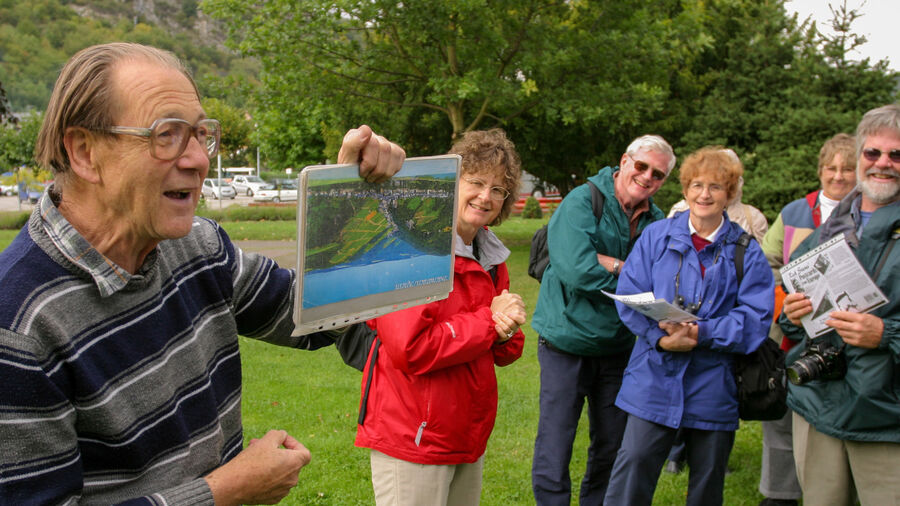
A highlight of your Rheinfels experience may be meeting Gunther — "the last knight of Rheinfels" — who greets visitors at the turnstile and is a wealth of information.

The massive Rheinfels was the only Rhineland castle to withstand Louis XIV's assault during the 17th century. For centuries, the place was self-sufficient and ready for a siege. Circling the central courtyard you'd find a bakery, pharmacy, herb garden, animals, brewery, well, and livestock. During peacetime, around 500 people lived here; during a siege there could be over 4,000.

Any proper castle was prepared to survive a six-month siege. With 4,000 people, that's a lot of provisions. The count owned the surrounding farmland. Farmers — in return for the lord's protection — got to keep 20 percent of their production. Later, in more liberal feudal times, the nobility let them keep 40 percent. (Today the German government leaves the workers with 60 percent after taxes.and provides a few more services.)

Hike around the castle perimeter. Notice the smartly placed crossbow arrow slit. Thoop.you're dead. While you're lying there, notice the fine stonework and the chutes high above. Uh-oh. Boiling oil. You're toast again.

To protect their castle, the Rheinfellas cleverly booby-trapped the land just outside their walls by building tunnels, topped by thin slate roofs and packed with explosives. By detonating the explosives when under attack, they could kill hundreds of approaching invaders. In 1626, a handful of underground Protestant Germans blew 300 Catholic Spaniards to (they assumed) hell.

You're welcome to wander through a set of never blown up tunnels. But be warned: It's completely black, unmarked, and with confusing dead-ends. The ground is generally muddy. Assuming you make no wrong turns, it's a 200-yard-long adventure, never letting you walk taller than a deep crouch. It cannot be done without a light (bring a flashlight or candles are available from Gunther at the turnstile).

A door blasted through the castle wall takes you to the small, barren prison. You walk through a door prisoners only dreamed of 400 years ago. (They came and went through the little square hole in the ceiling.) The holes in the walls supported timbers that thoughtfully gave as many as 15 miserable residents something to sit on to keep them out of the filthy slop that gathered on the floor. Twice a day they were given bread and water. Some prisoners actually survived over two years in this dark hole. While the town could torture and execute, the castle had permission only to imprison criminals in these dungeons. According to town records, the two men who spent the most time down here — 2.5 years each — died within three weeks of regaining their freedom. Perhaps after a diet of bread and water, feasting on meat and wine was just too much.

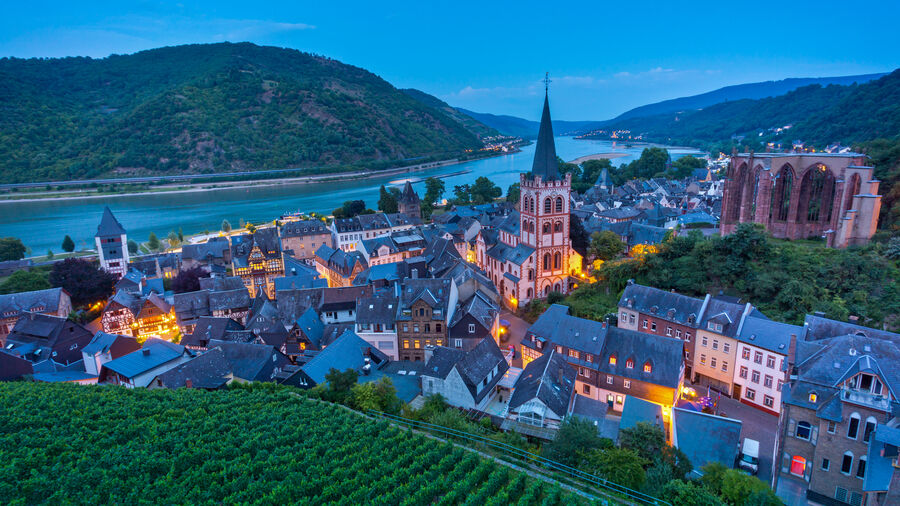
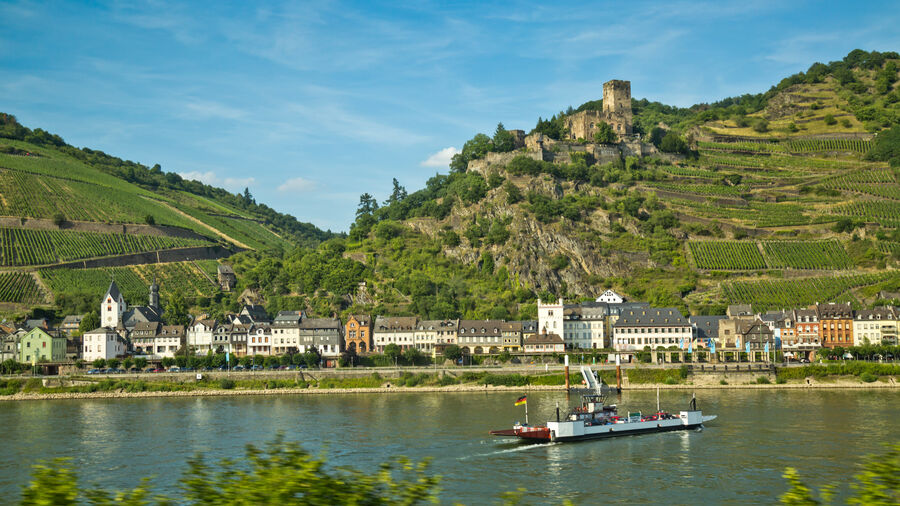
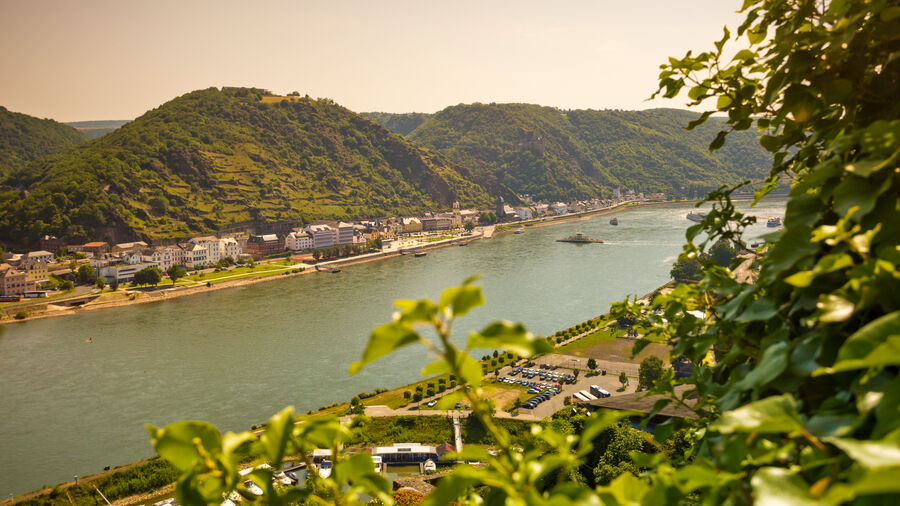
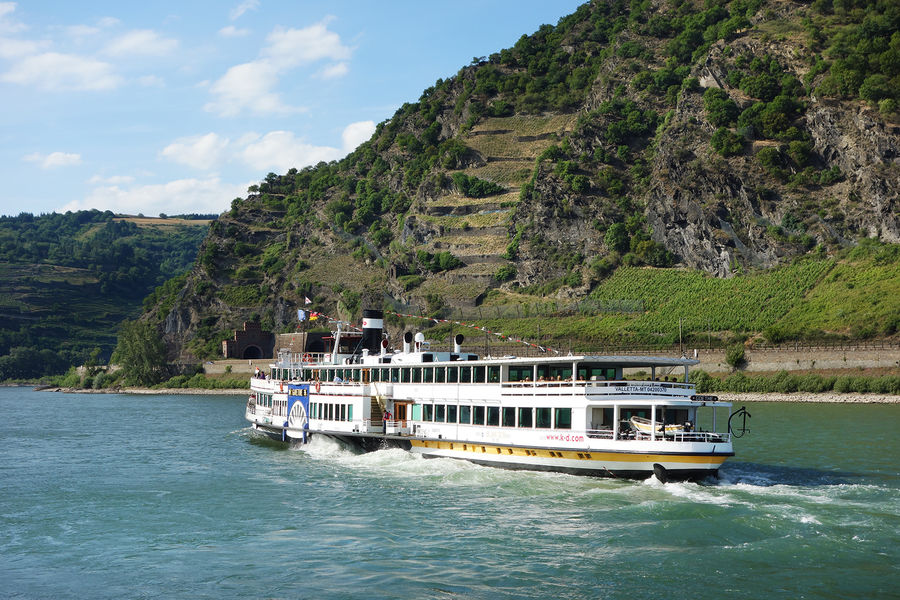
Germany's Rhine River is filled with castle-crowned hills. These can be enjoyed conveniently by train, car, or boat. The best 50-mile stretch is between Koblenz and Mainz. The best one-hour cruise is from St. Goar to Bacharach.

Castle Day: Neuschwanstein (Bavaria) and the Ehrenberg Ruins (Reutte in Tirol)

Three of my favorite castles — two famous, one unknown — can be seen in one busy day. "Castle Day" takes you to Germany's Disney-like Neuschwanstein Castle, the more stately Hohenschwangau Castle at its foot, and the much older Ehrenberg Ruins across the Austrian border in Reutte.

Home base is the small Austrian town of Reutte (just over the German border, three Alp-happy hours by train west of Innsbruck). Reutte has a helpful tourist information (TI) office with a room-finding service that can set you up in a private home for about €20 per person per night. While reservations are nearly impossible for one- or two-night stays, short stops are welcome if you just drop in and fill available gaps. If you travel better with reservations, book at one of the hotels recommended in my guidebook.

From Reutte, catch the early bus 30 minutes across the border to touristy Füssen, the German town nearest Neuschwanstein. (Planning ahead, note times buses return to Reutte.) From Füssen, you can walk, pedal a rented bike, or ride a local bus to Neuschwanstein.Neuschwanstein

Neuschwanstein is the greatest of King Ludwig II's fairy-tale castles. His extravagance and romanticism earned this Bavarian king the title "Mad King Ludwig" (and an early death). His castle is one of Europe's most popular attractions. (For tips on tickets and reservations, see sidebar.)

Take the fascinating (and required) English tour. This castle, which is about as old as the Eiffel Tower, is a textbook example of 19th-century romanticism. After the Middle Ages ended, people disparagingly named that era "Gothic," or barbarian. Then, all of a sudden, in the 1800s, it was hip to be square, and neo-Gothic became the rage. Throughout Europe, old castles were restored and new ones built, wallpapered with chivalry. King Ludwig II put his medieval fantasy on the hilltop, not for defensive reasons, but simply because he liked the view.

The lavish interior, covered with damsels in distress, dragons, and knights in gleaming armor, is enchanting. (A little knowledge of Wagner's operas goes a long way in bringing these stories to life.) Ludwig had great taste — for a mad king. Read up on this political misfit: a poet and hippie king in the "realpolitik" age of Bismarck. He was found dead in a lake under suspicious circumstances, never to enjoy his medieval fantasy come true. After the tour, climb farther up the hill to Mary's Bridge for the best view of this crazy yet elegant castle.

Ludwig's boyhood home, Hohenschwangau Castle at the foot of the hill, offers a better look at Ludwig's life and far fewer crowds. Originally built in the 12th century, it was ruined by Napoleon. Ludwig's father Maximilian rebuilt it, and you'll see it as it looked in 1836. It's more lived-in and historic, and excellent 30-minute tours actually give a better glimpse of Ludwig's life than the more visited and famous Neuschwanstein Castle tour.

Every tour bus in Bavaria converges on Neuschwanstein, and tourists flush in each morning from Munich. A handy reservation system (see sidebar) sorts out the chaos for smart travelers. Tickets come with admission times. (Miss this time and you don't get in.) To tour both castles, you must do Hohenschwangau first (logical, since this gives a better introduction to Ludwig's short life). You'll get two tour times: Hohenschwangau and then, two hours later, Neuschwanstein.

This is a busy day. By lunchtime, catch the bus back to Reutte and get ready for a completely different castle experience. Just a mile outside of Reutte is the Ehrenberg Castle Ensemble — the brooding ruins of four castles that once made up the largest fort in Tirol (built for defense against the Bavarians). Ehrenberg provides a great contrast to King Ludwig's "modern" castles and a super opportunity to let your imagination off its leash.

At the parking lot at the base of the ruin-topped hill, you'll find the café/guest house Gasthof Klause, which offers food, drinks, and a wall painting of the intact castle (closed Mon). Nearby are the recently modernized remains of a Gothic fort, housing a sound-and-light show.

The Kleines Schloss ("small castle") is really ruined but wonderfully free of anything from the 21st century — except for a fine view of Reutte sleeping peacefully in the valley below. You have your own castle. When cloaked in a cloud shroud, you can peer into the spooky mist and almost see medieval knights in distress and damsels in shining armor. Grab a sword fern, lower your hair, and unfetter that imagination.

After locals rained cannonballs on the "small castle" from the bluff above it, a much bigger castle (called Schlosskopf, or "castle head") was built atop that hill. Just a few years ago, the castle was completely overgrown with trees — you couldn't see it from Reutte. Today, the trees are shaved away, and the castle has been excavated. This is part of a huge project to make a European Castle Museum, showing off 500 years of military architecture in one swoop. The European Union is helping fund the project because it promotes the heritage of a region (Tirol) rather than a nation. The EU's vision is for a zone of regions, rather than nations.

Back in the 21st century, ask at your hotel where you can find a folk evening full of slap-dancing and yodel foolery. A hot, hearty dinner and an evening of local Tirolean entertainment is a fitting way to raise the drawbridge on your memorable "Castle Day."

Back to Top link

Château de Chillon, Switzerland Chateau de Chillon

Set romantically at the edge of Lake Geneva near Montreux, this wonderfully preserved 13th-century castle is worth a side-trip from anywhere in southwest Switzerland. Château de Chillon (shee-yon) has never been damaged or destroyed — it's always been inhabited and maintained. Its oldest fortifications dating to the 11th century, the castle was expanded by the Savoy family in the 13th century, when this was a prime location: at a crossroads of a major trade route between England and France and Rome. It was the Savoys' fortress and residence, with four big halls (a major status symbol) and impractically large lakeview windows (their powerful navy could defend against possible attack by sea).

When the Bernese invaded in 1536, the castle was conquered in just two days, and the new governor made Château de Chillon his residence (and a Counter-Reformation prison). Inspired by the revolution in Paris, the French-speaking people on Lake Geneva finally kicked out their German-speaking Bernese oppressors in 1798. The castle became — and remains — property of the Canton of Vaud. It has been used as an armory, a warehouse, a prison, a hospital, and a tourist attraction. Rousseau's writings first drew attention to the castle, inspiring visits by Romantics such as Lord Byron and Victor Hugo, plus other notables including Dickens, Goethe, and Hemingway.

Follow the English brochure, which takes you on a self-guided tour through fascinatingly furnished rooms. The dank dungeon, mean weapons, and 700-year-old toilets will excite even the dullest travel partner. Attack or escape the castle by ferry (free with your train pass).

Reifenstein Castle, Italy

For an incredibly medieval kick in the pants, get off the freeway one hour south of Innsbruck at the Italian town of Vipiteno (called "Sterzing" by residents who prefer German). With her time-pocked sister just opposite, Reifenstein bottled up this strategic valley leading to the easiest way to cross the Alps.

Reifenstein offers castle connoisseurs the best-preserved original medieval castle interior I've ever seen. The lady who calls the castle home, Frau Blanc, takes groups through in Italian, German, and un poco di inglese. You'll discover the mossy past as she explains how the cistern collected water, how drunken lords managed to get their keys into the keyholes, and how prisoners were left to rot in the dungeon (you'll look down the typical only-way-out hole in the ceiling). In the only surviving original knights' sleeping quarters (rough-hewn plank boxes lined with hay), you'll see how knights spent their nights. Lancelot would cry a lot.

The amazing little fortified town of Glurns hunkers down about an hour west of Reifenstein Castle (on the high road to Lake Como). Glurns still lives within its square wall on the Adige River, with a church belltower that has a thing about ringing, and real farms, rather than boutiques, filling the town courtyards.

Moorish Ruins of Sintra, Portugal

The desolate ruins of an 800-year-old Moorish castle overlook the sea and the town of Sintra, just west of Lisbon. Ignored by most of the tourists who flock to the glitzy Pena Palace (capping a neighboring hilltop), the ruins of Sintra offer a reminder of the centuries-long struggle between Muslim Moorish forces and Christian European forces for the control of Iberia. From 711 until 1492, major parts of Iberia (Spain and Portugal) were occupied by the Moors. Contrary to the significance that Americans place on the year 1492, a European remembers the date as the year the Moors were finally booted back into Africa. For most, these ruins are simply a medieval funtasia of scramble-up-and-down-the-ramparts delights and atmospheric picnic perches with vast Atlantic views in an enchanted forest. With a little imagination, it's 800 years ago, and you're under attack.