Home > Plan Your Trip > Best Destinations > Germany

O'er the Ramparts

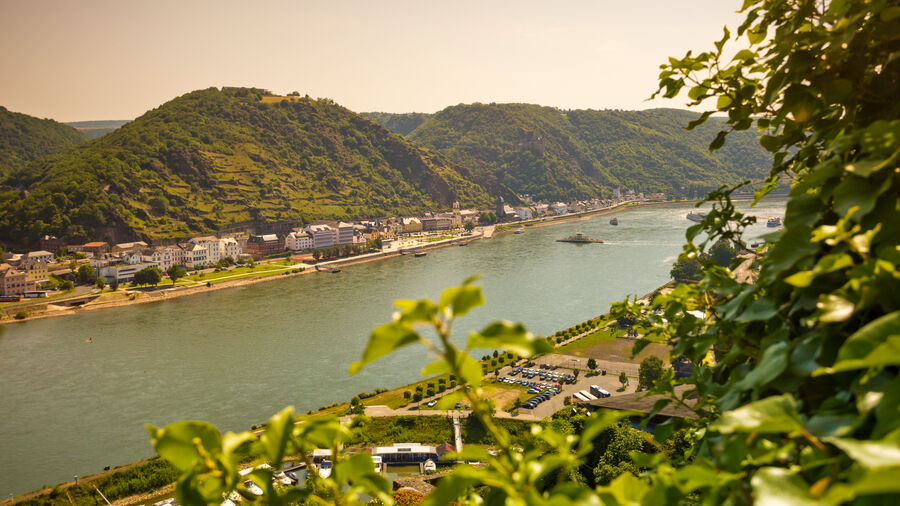
Marksburg Castle
Marksburg Castle's take-no-prisoners architecture still intimidates passers-by on the Rhine.

Three top Rhineland castles

By Rick Steves

The terms "romantic" and "castle" are a match made in heaven for Americans raised on bedtime stories filled with fairy princesses and Prince Charmings. But if you were to travel back in time a few centuries, no two words could have less in common.

To steal a phrase from Thomas Hobbes, life in the Middle Ages was a lot like the people: nasty, brutish and short. In cities there was some measure of safety and security, but the countryside was the domain of outlaw bands of "merry men," who invaded farms and villages to fill their pockets and satisfy their thirst for violence. In those days, the difference between robbers and armies was only a matter of "how big."

Most countryside castles began not as palaces for princes, but as armored bunkers to protect landowners, their harvest, hired hands, and the foolhardy traveler who might pass through (some castles also "protected" key roads and rivers, extorting tolls from all who trespassed).

A real castle had all the romance of a fallout shelter. Sure, it had a lofty tower or two, but only to see trespassers sooner and to give attackers second thoughts. When the bad guys came knocking, a negotiated ransom was the typical outcome — not a swashbuckling battle.

In the 17th and 18th centuries, large-scale European wars made these castles handy tactical tools. But for the most part, they became obsolete against ever-growing armies and cannons (and between wars, better law enforcement made the countryside safer). Most castles fell into ruin, used as quarries to build more practical things.

Suddenly, in the late 19th century everything changed. Under the Prussian leadership of Bismarck, the Germanic cluster of mini-states quickly came together as a single powerful nation. There was a great surge in German nationalism, and a popular obsession with "roots," both real and romantic. Wagner's fairy-tale operas and King Ludwig II's recreated castles epitomized the new German "pop history," which was rewritten to express the ideal spirit of German-ness rather than its grim reality. Modern tourism took root during this same time. So there was not only a patriotic spirit, but also an economic incentive, behind the "reinterpreting" of castles in a romantic style. A few short decades later, Walt Disney made the fairy-tale castle his trademark, and ("authentic" or not) the rest is history.

What travelers see today is a muddle of Middle-Age bunker-mentality and 150-year-old romantic renovation… which also happens to be real. While confusing, this weird mix makes for great sightseeing.

Visiting the Rhineland can overwhelm you with too many castles to tour in too little time. To help you prioritize, here are my favorites:

Marksburg Castle

Marksburg Castle, capping a hill above the Rhine town of Braubach, is a reminder that the best compliment a castle can get is to have never been attacked. I used to think never being attacked meant it was a wasted construction. But the huge investment of building a castle was especially worthwhile if, thanks to its formidable defenses, invaders decided to give it — and the land it protected — a miss. In this sense, Marksburg was hugely successful.

To make up for the castle interior's lack of period artifacts, guides at Marksburg riddle their spiel with the origins of German phrases. For instance, in the kitchen, pot holders over the fire have notches or teeth to control the heat by lowering the pot. To this day, when Germans say hurry up, they say "give it one tooth more." And, in the dining hall, you'll see how a long table was made from an unattached plank. For each course, servants could replace it with another pre-set plank. Still today, when a meal is over and Germans are ready for the action to begin, they say, "Let's lift up the table."

This best-preserved castle on the Rhine can be toured only with a guide, and tours are generally in German only (tours every 30 min in summer, on the hour in winter). Still, it's an awesome castle (€5, daily April-Oct 10:00-18:00, Nov-March 11:00-17:00, last tour departs 1 hour before closing, tel. 02627/206). Marksburg caps a hill above the Rhine town of Braubach (a short hike or shuttle train from the boat dock). Bring along our English version of the 50-minute German-language tour visitors are generally required to take.

Rheinfels Castle
Built in 1245, parts of Rheinfels Castle still stand — tattered but proud — in the 21st century.
Rheinfels Castle

Rheinfels sits like a dead pit bull above St. Goar. This mightiest of Rhine castles rumbles with ghosts from its hard-fought past. Burg Rheinfels (built in 1245) withstood a siege of 28,000 French troops in 1692. But in 1797 the French Revolutionary army destroyed it.

Rheinfels was huge. Once the biggest castle on the Rhine, it spent the 19th century as a quarry. So today, while still mighty, it's only a small fraction of its original size. This hollow but interesting shell offers your single best hands-on ruined-castle experience on the river.

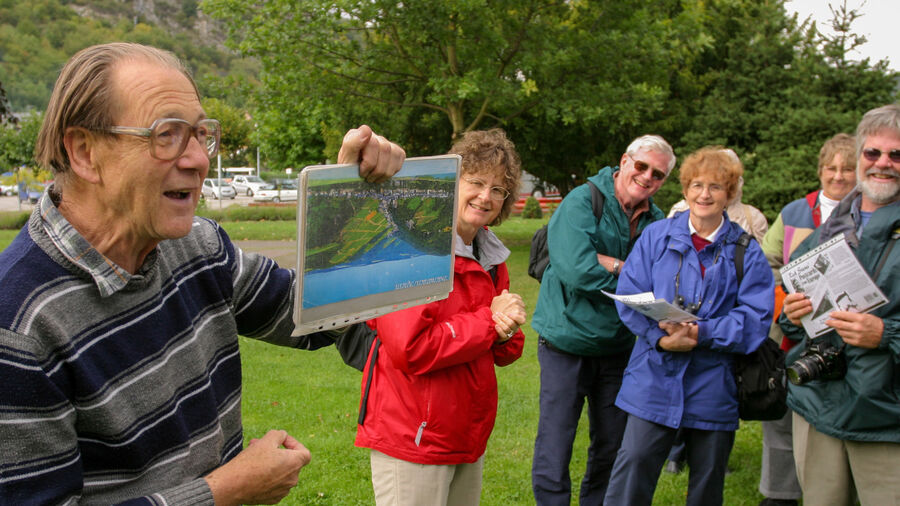
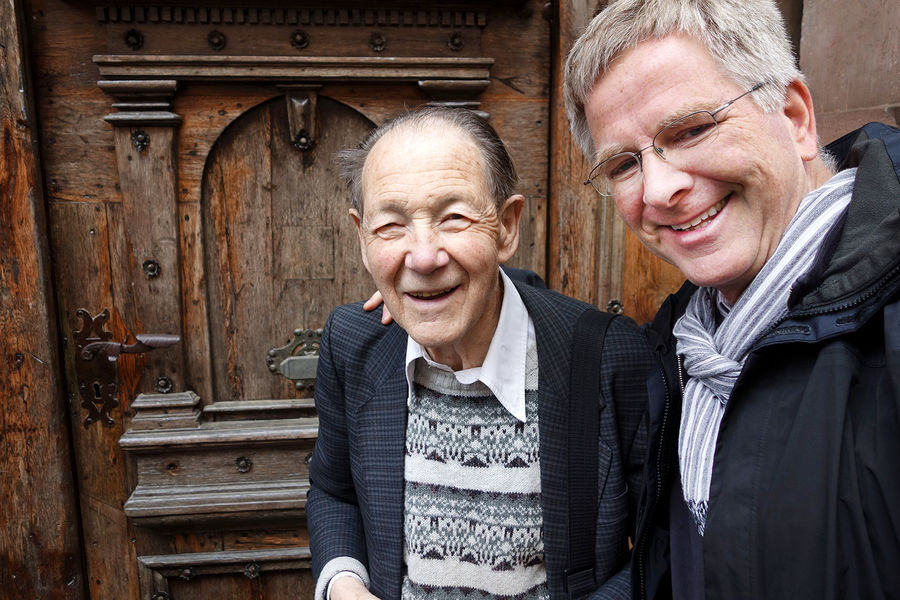
A highlight of your Rheinfels experience may be meeting Günther — "the last knight of Rheinfels" — who greets visitors at the turnstile and is a wealth of information. Günther even helped create a self-guided tour of Rheinfels.

The massive Rheinfels was the only Rhineland castle to withstand Louis XIV's assault during the 17th century. For centuries, the place was self-sufficient and ready for a siege. Circling the central courtyard you'd find a bakery, pharmacy, herb garden, animals, brewery, well, and livestock. During peacetime, around 500 people lived here; during a siege there could be more than 4,000. The extra 3,500 came from surrounding farms and hamlets, seeking refuge from those seige'n bands of merry men.

Any proper castle was prepared to survive a six-month siege. With 4,000 people, that's a lot of provisions. The count owned the surrounding farmland. Farmers — in return for the lord's protection — got to keep 20 percent of their production. Later, in more liberal feudal times, the nobility let them keep 40 percent. (Today the German government leaves the workers with 60 percent after taxes… and provides a few more services.)

Gunther, the last knight of Rheinfels, explores deep beneath the castle in the secret tunnels.
Günther, the "last knight of Rheinfels," explores deep beneath the castle in the secret tunnels.

Hike around the castle perimeter. Notice the smartly placed crossbow arrow slit. Thoop… you're dead. While you're lying there, notice the fine stonework and the chutes high above. Oh-oh… boiling oil… you're toast again.

To protect their castle, the Rheinfellas cleverly booby-trapped the land just outside their walls by building tunnels topped by thin slate roofs and packed with explosives. By detonating the explosives when under attack, they could kill hundreds of approaching invaders. In 1626, a handful of underground Protestant Germans blew 300 Catholic Spaniards to (they assumed) hell.

You're welcome to wander through a set of never blown up tunnels. But be warned: it's completely black, unmarked, and with confusing dead ends. The ground is generally muddy. Assuming you make no wrong turns, it's a 200 yard long adventure, never letting you walk taller than a deep crouch. It cannot be done without a light (flashlights available from Günther at the turnstile).

A door blasted through the castle wall takes you to the small, barren prison. You walk through a door prisoners only dreamed of 400 years ago. (They came and went through the little square hole in the ceiling.) The holes in the walls supported timbers that thoughtfully gave as many as 15 miserable residents something to sit on to keep them out of the filthy slop that gathered on the floor. Twice a day they were given bread and water. Some prisoners actually survived over two years in this dark hole. While the town could torture and execute, the castle had permission only to imprison criminals in these dungeons. According to town records, the two men who spent the most time down here — 2½ years each — died within three weeks of regaining their freedom. Perhaps after a diet of bread and water, feasting on meat and wine was just too much (€4, mid-March-Oct daily 9:00-18:00, last entry at 17:00, Nov-mid-March only open Sat-Sun 11:00-17:00, last entry at 16:00, weather permitting, call in advance or gather 10 English-speaking tourists and beg to get an English tour, tel. 06741/7753).

Burg Eltz

Burg Eltz is my favorite castle in all of Europe. Lurking in a mysterious forest, it's been left intact for 700 years and is furnished throughout as it was 500 years ago. Thanks to smart diplomacy and clever marriages, Burg Eltz was never destroyed. It's been in the Eltz family for 820 years.

Burg Eltz Castle
Rick's favorite castle has passed from generation to generation in the Eltz family for more than eight centuries.

Elz is the name of a stream that runs past the castle through a deep valley before emptying into the Mosel. The first record of a Burg (castle) on the Elz is from 1157, built to protect a trade route. By 1472 the castle looked like it does today: the homes of three big landlord families gathered around a tiny courtyard within one formidable fortification. Today, the excellent 45-minute tours wind you through two of those homes while the third remains the fortified quarters of the Eltz family. The elderly countess of Eltz — whose family goes back 33 generations here (you'll see a photo of her family) — enjoys flowers. Each week for 40 years she's adorned the castle's public rooms with grand bouquets.

It was a comfortable castle for its day: 80 rooms made cozy by 40 fireplaces and wall-hanging tapestries. Its 20 toilets were automatically flushed by a rain drain. The delightful chapel is on a lower floor. Because "no one lives above God," this was problematic. But because the chapel fills a bay window, which floods the delicate Gothic space with light, its position was acceptable. The three families met — working out common problems as if sharing a condo — in the large conference room. A carved jester and a rose look down on the big table, reminding those who gathered that they were free to discuss anything (“fool’s freedom” — jesters could say anything to the king), but nothing discussed could leave the room (the “rose of silence”).

Burg Eltz is between Koblenz and Cochem, about an hour's drive from the Rhine River. The only way to see the castle is with a 40-minute tour (included in admission ticket). German tours go constantly (with helpful English fact sheets, €0.50). Guides speak English and thoughtfully collect English-speakers into their own tours — well worth waiting for (rarely more than 20 minutes). It doesn't hurt to call ahead to see if an English tour is scheduled. Or organize your own by corralling 20 English speakers in the inner courtyard, then push the red button on the white porch and politely beg for an English guide (€6 castle entry plus €3 for treasury, €8 combo-ticket for both, April-Oct daily from 9:30, last tour departs at 17:30, closed Nov-March, tel. 02672/950-500).

Updated for 2008. For lots more information, check out our best-selling Rick Steves' Guidebooks — or join us on one of our free-spirited tours in Germany.