

European B&Bs: A Place to Call Home
By Rick Steves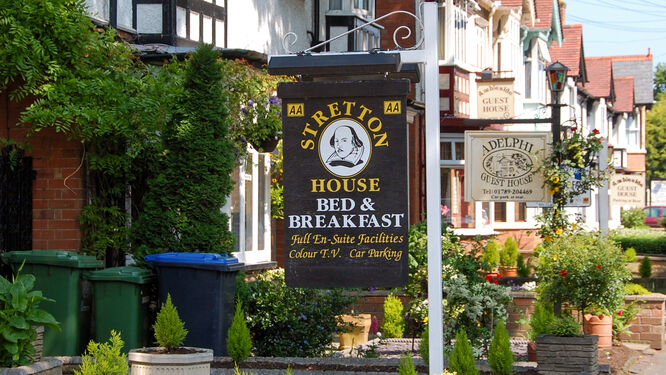
Staying at a European bed-and-breakfast is a bit like having your own temporary mother while you travel. In the morning, your hostess might help plan your day, tipping you off to the best places for lunch and about the live folk music in the village pub that evening. She then sends you out the door with a smile, handing you an umbrella — just in case it rains. The best B&Bs ooze warmth and local color, making these some of my favorite accommodations in Europe.
B&Bs are generally small, warm, and family-run, and offer a personal touch at a reasonable price. While B&Bs often lack the conveniences of a hotel — such as fancy lobbies, restaurants, and in-room phones — I happily make the trade-off for the personal touches that they do offer, whether it's joining my hosts for tea in the afternoon or relaxing by a common fireplace at the end of the day. And unlike American bed-and-breakfasts, which are usually frilly, fancy places that cost just as much as hotels, B&Bs in Europe are generally cheaper than comparable hotels.
Each country in Europe has these friendly accommodations in varying degrees of abundance, facilities, and service. While I commonly refer to all of them as bed-and-breakfasts, some include breakfast and some don't. They have different names from country to country, but all have one thing in common: They satisfy the need for an affordable place to stay that gives you the privacy of a hotel while keeping you closer to the everyday life of the culture you came to experience.
Guesthouses offer double the cultural intimacy for less money than most hotel rooms of comparable comfort. While you may lose some of the conveniences hotels offer — such as lounges and credit-card payments — I happily make the trade-off. For instance, I love it when Kathleen in western Ireland runs out after me because she's noticed I've left for the day without an umbrella, hands me hers...and reminds me to be back by 8 o'clock that night, when her brother's playing folk music in the pub around the corner. It's a bit like having your own temporary mother while you travel.
You'll find guesthouses in every European country, though they're more popular in certain regions. In general, you're more likely to find guesthouses in the countryside and smaller towns. They're an especially smart choice in regions where budget hotels are hard to come by. In Scandinavia, for example, guesthouse rooms are often good quality and surprisingly cheap compared to nearby hotels. And in Croatia — where mass tourism and overpriced resort hotels reign — rooms in private homes provide a safe, comfortable place for value-minded independent travelers.
Guesthouses don't work for every type of traveler. For instance, some places don't allow kids or require them to be over a certain age (often around 8–12). If mobility is a challenge, you're probably better off at a hotel with an elevator, as guesthouses commonly have rooms tucked away in attics or perched at the top of several flights of stairs (inquire about a ground-floor room before ruling a place out). En suite bathrooms aren't a given, nor are the usual hotel trappings (such as air-conditioning, TV, or a staff that's reliably fluent in English). Many guesthouse owners are also pet owners. If you're allergic, ask about resident pets when you reserve. Absentee management — where the proprietors live off-site (or even in another town) — is becoming more common.
It's not uncommon for guesthouses to require a two-night stay, especially in popular vacation areas and in private homes. Some guesthouses give a discount for longer stays, while others levy a surcharge for single-night stays. In popular weekend-getaway spots, you may have a hard time finding a guesthouse willing to take you for Saturday night only.
Finding and booking a guesthouse is no different than reserving a hotel. Even most smaller places are listed on hotel-booking sites — but a direct booking is especially appreciated at mom-and-pop places and will likely net you a better price.
B&Bs
Bed-and-breakfasts are my favorite way to sleep cheap — or at least reasonably affordably — in Britain and Ireland. (True B&Bs are somewhat rare on the Continent, though there are some in the Low Countries, Scandinavia, and elsewhere.) Across the British Isles, small towns and villages are littered with charming, older B&Bs with three to eight lovingly tended guest rooms. Don't confuse these with their frilly, fancy cousins in America. In a European B&B, rather than seven pillows and a basket of jams, you get a warm welcome and a good price.
B&Bs are typically run by a charming couple or family who call their guesthouse home. Hosts tend to be gregarious and genuinely invested in your visit (it's hard work — those who don't love meeting their guests don't tend to stick with it).
Some places have a common room that you're free to use for reading or hanging out. Free Wi-Fi and a well-stocked tea table are standard in your room. Your hosts may offer to make you a simple dinner for a good price, and if you have time to chat, you might get in on an evening social hour.
Of course, breakfast comes with the bed (something to remember when comparing prices against hotels) — and in the British Isles, this is no ordinary breakfast. Because your host is often also the cook, breakfast hours are usually relatively short: It's bad form to show up at the very end of the breakfast period and expect the whole shebang. Some B&Bs ask guests to commit to a breakfast time — and put in their food order — the night before, avoiding a situation where all the guests arrive at the same time.
While you are finishing your tea, your host may present you with her guest book, inviting you to make an entry and pointing out others from your home state who have stayed in her house. When you bid your hosts farewell in the morning and thank them for the good sleep and full stomach, it can be difficult to get away: Determined to fill you with as much information as food, your hosts want you to have the best day of sightseeing possible.
Pensions
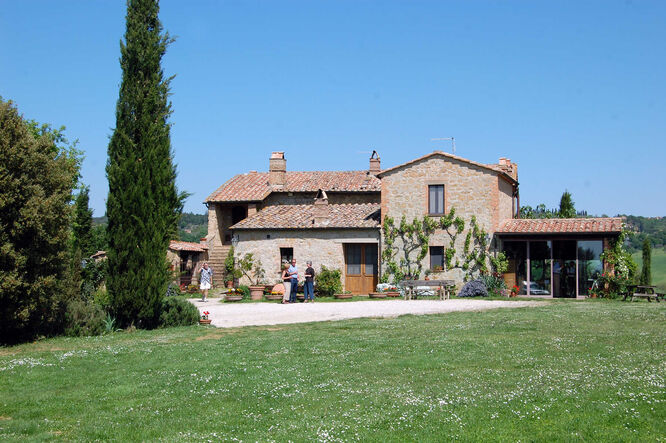
Continental Europe's equivalent to the B&B is the pension. Typically located in charming older buildings, with 10 or fewer rooms, most pensions are relatively inexpensive, cozy, and friendly. Most hosts — though generally not as chatty as B&B owners in Ireland and Britain — speak at least some basic English. Rooms are reasonably simple, but usually well cared for.
In many countries the name for this kind of guesthouse is a variant of the French word pension. They may also go by local names, such as Gasthaus and Gasthof in German; albergo and locanda in Italian; or fonda, casas de huespedes, and hostal in Spanish (not to be confused with "hostel" — two very different things).
Breakfast isn't always included (even at places that have appended "B&B" to their name in hopes of attracting English-speaking guests). When it is offered, a pension's breakfast rarely approaches the magnificence of the full British or Irish version. Quality and quantity depend mostly on what's considered standard in each country. For instance, a cheap place in Austria will likely serve up a heartier spread than a fancier pension in Sicily.
The lines separating a charming small hotel from a larger pension are pretty blurry — but on the whole hotels are more formal, more regulated, and more expensive. Legally, Italy's alberghi, locande, and pensioni all technically belong to a nationwide hotel-rating system — but places boasting these traditional names tend to be synonymous with family-run enterprises offering simple, budget beds.
Rooms in Private Homes
The cheapest guesthouse is a (mostly) private residence that runs a business regularly renting out a room or two to travelers. For under $50 per person you get your own room, a bathroom down the hall, and an even more intimate peek into small-town Europe (like other guesthouses, these kinds of rooms are most common outside big cities).
Staying in one of these places is not too different from being in a small pension. You'll likely have your own entrance, with a clear separation between your space and the owner's residence. One-night stays are discouraged in the smallest operations (in Croatia, for example, most charge extra for guests staying less than three nights).
Rooms like this are often listed on Airbnb and similar sites, and at the tourist information office. If you're scouting for a place, keep your eye out for posted signs with the local word for "rooms": Zimmer in Germany and Austria, but also commonly used in countries to their east, chambres (d'hôte) in France (often abbreviated "CH"), affittacamere in Italy, sobe in Croatia and Slovenia, pokoje in Poland, dhomatia in Greece, (hus) rum in Sweden, rom in Norway, værelser in Denmark, and quartos in Portugal. In Spain, look for camas (beds), habitación, or casa particular.
In more remote but touristy locales, hardworking entrepreneurial hosts await the arrival of trains and buses at any hour, eager to whisk backpackers away to see their rooms. Along the Croatian coast, soba skimmers meet every arriving ferry. If you don't see any promising prospects on arrival, ask around town. Italy's small-town bars are plugged into the affittacamere grapevine. In Greek villages with no hotels, ask for dhomatia at the town taverna.
Expect some personal attention from your host (but no more than you'd like), simple, stripped-down rooms, and little or nothing in the way of public spaces. Your bathroom may be across the hall, but at most you'll share it with just one other set of guests. You probably won't have a TV or air-conditioning, and breakfast may or may not be included. In southwestern Europe (France, Italy, Spain, and Portugal), hosts may not speak more than a handful of English words, but they're almost always enthusiastic and welcoming.