Eastern Europe: More Recommended Reading and Viewing
Non-Fiction
Lonnie Johnson's Central Europe: Enemies, Neighbors, Friends is the best history overview of the countries in this book. Rebecca West's classic, bricklike Black Lamb and Grey Falcon is the definitive travelogue of the Yugoslav lands (written during a journey between the two World Wars). For a more recent take, Croatian journalist Slavenka Drakulić has written a trio of insightful essay collections from a woman's perspective: Café Europa: Life After Communism; The Balkan Express; and How We Survived Communism and Even Laughed. Timothy Garton Ash has written several good "eyewitness account" books analyzing the transition in Eastern Europe over the last two decades, including History of the Present and The Magic Lantern. For information on Eastern European Roma (Gypsies), consider the textbook-style We Are the Romani People by Ian Hancock, and the more literary Bury Me Standing by Isabel Fonseca. Tina Rosenberg's dense but thought-provoking The Haunted Land asks how those who actively supported communism in Eastern Europe should be treated in the post-communist age.
Fiction
The most prominent works of Eastern European fiction have come from the Czechs. These include I Served the King of England (Bohumil Hrabal), The Unbearable Lightness of Being (Milan Kundera), and The Good Soldier Švejk (Jaroslav Hašek). The Czech existentialist writer Franz Kafka wrote many well-known novels, including The Trial and The Metamorphosis. Bruce Chatwin's Utz is set in communist Prague. James Michener's Poland is a hefty look into the history of the Poles. Joseph Roth's The Radetzky March details the decline of an aristocratic family in the Austro-Hungarian Empire. Zlateh the Goat (Isaac Bashevis Singer) includes seven folktales of Jewish Eastern Europe.
Films
Each of these countries has produced fine films. Here are a few highlights:
Czech Republic: Kolya (1996); The Trial (1993); Kouř (Smoke, 1991); The Unbearable Lightness of Being (1988); The Firemen's Ball (1967); Closely Watched Trains (1966); The Loves of a Blonde (1965).
Poland: Karol: A Man Who Became Pope (2005); The Pianist (2002, multiple-Oscar winner); Schindler's List (1993, multiple-Oscar winner); The Wedding (1972).
Hungary: Kontroll (2003); Csinibaba (1997); Time Stands Still (1981); The Witness (1969).
Croatia: How the War Started on My Island (1996); Underground (1995); Tito and Me (1992); When Father Was Away on Business (1985).
Slovenia: No Man's Land (2002, Slovenian-produced, but deals with Bosnian war; Oscar winner for Best Foreign Film).
The BBC produced a remarkable (but difficult-to-find) six-hour documentary series called The Death of Yugoslavia, featuring interviews with all of the key players. For a funny and nostalgic look at Eastern Europe's fitful transition to capitalism, the 2003 German film Good Bye Lenin! can't be beat.
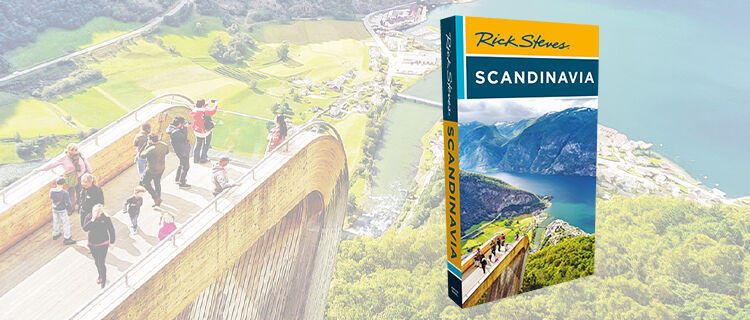
For lots more information, check out our best-selling Rick Steves' Eastern Europe guidebook — or join us on one of our free-spirited tours in Europe.