Charismatic Kraków
![]() |
| Kraków Rocks: Poland's top tourist attraction promises to be "the next Prague." Tourism has brought Kraków prosperity: great restaurants, comfy hotels, and plenty of welcoming sights. |
By Rick Steves
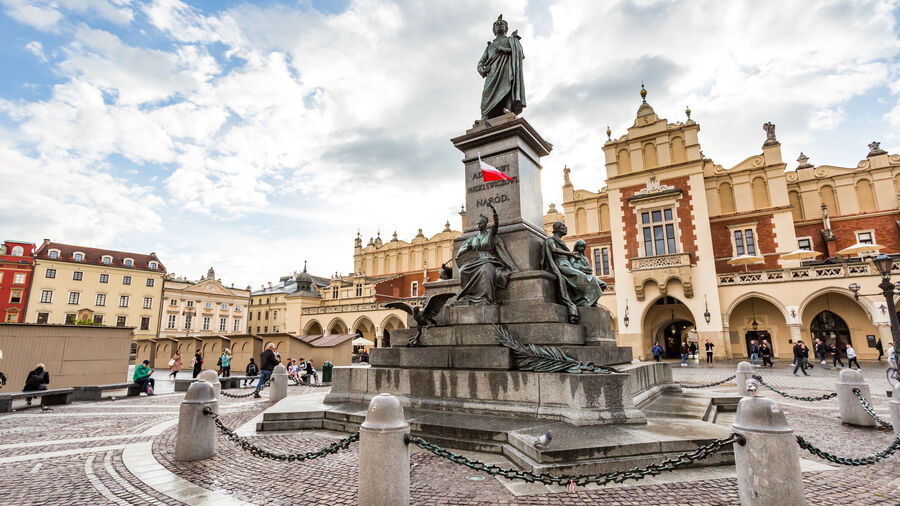
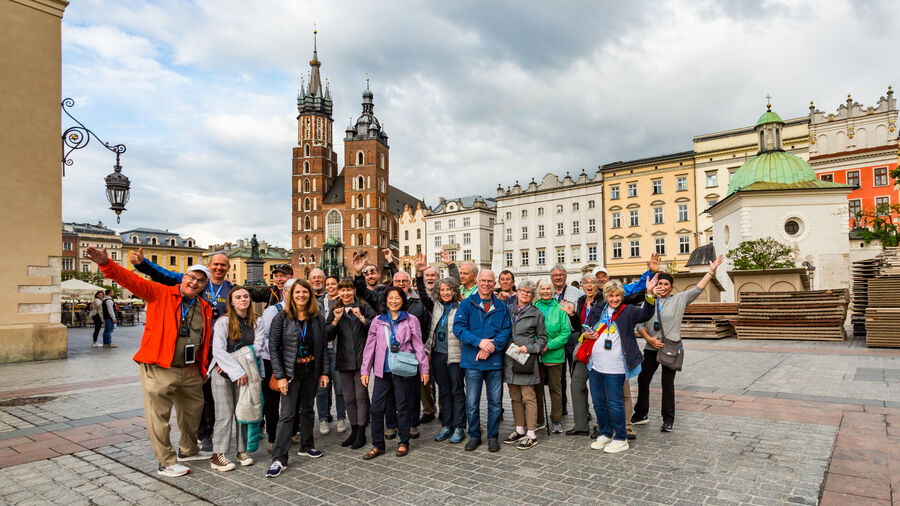
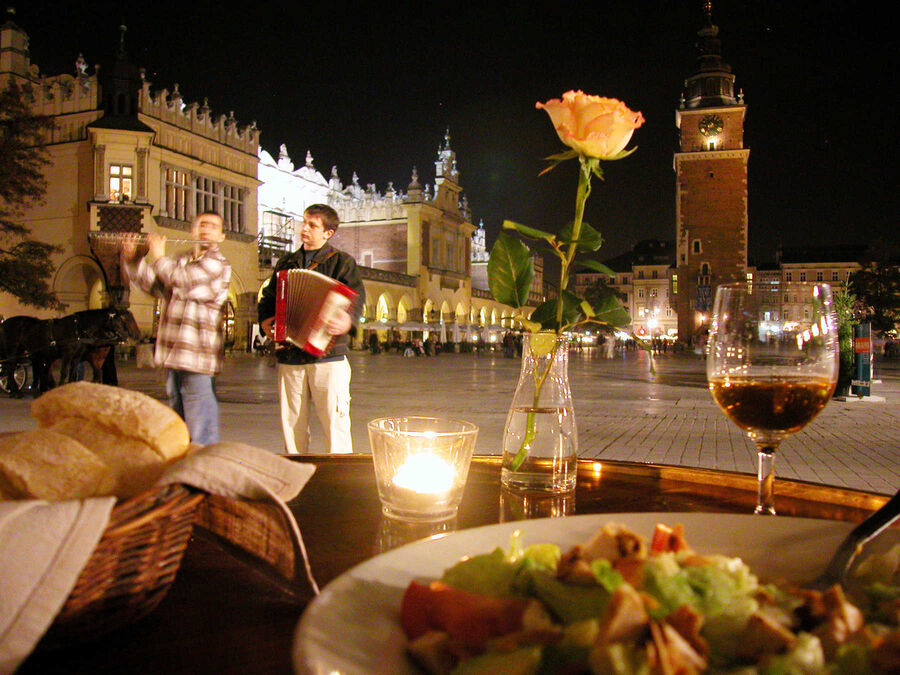
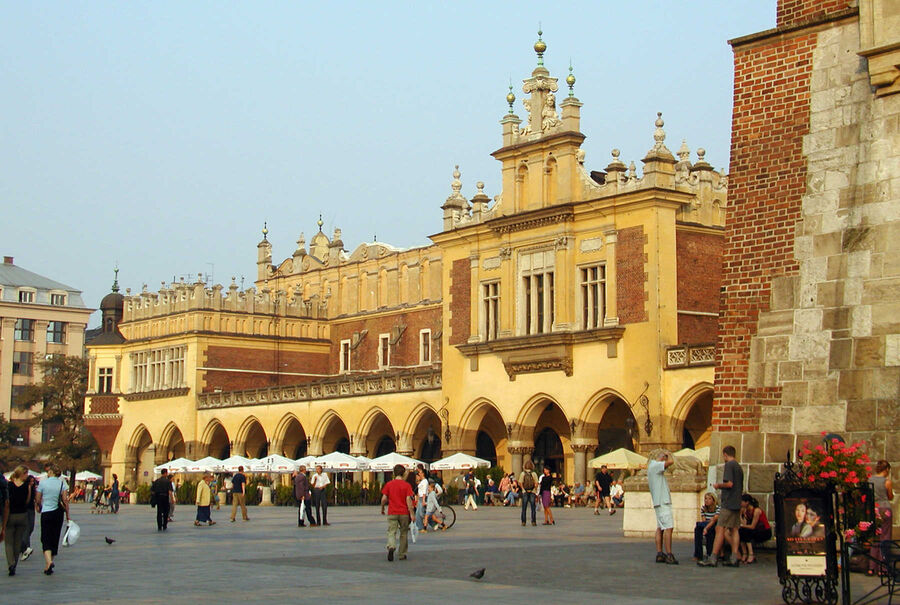
The top stop in Poland is Kraków. And enjoying a drink on its marvelous main market square, you'll know why. The biggest square in medieval Europe remains one of Europe's most gasp-worthy public spaces.
Knowing this is one of Europe's least expensive countries, I choose the fanciest café on Kraków's fanciest piece of real estate and order without even considering the price. Sinking deep into my chair and sipping deep into my drink, I ponder the bustle of Poland, just a decade and a half after it won its freedom.
Vast as it is, the square has a folksy intimacy. It bustles with street musicians, fragrant flower stalls, cotton-candy vendors, loitering teenagers, businesspeople commuting by bike, gawking tourists, and the lusty coos of pigeons. This square is where Kraków lives (and visitors like me find themselves hanging out). To my left, activists protested Poland's EU membership. To my right, local teens practiced break-dancing moves.
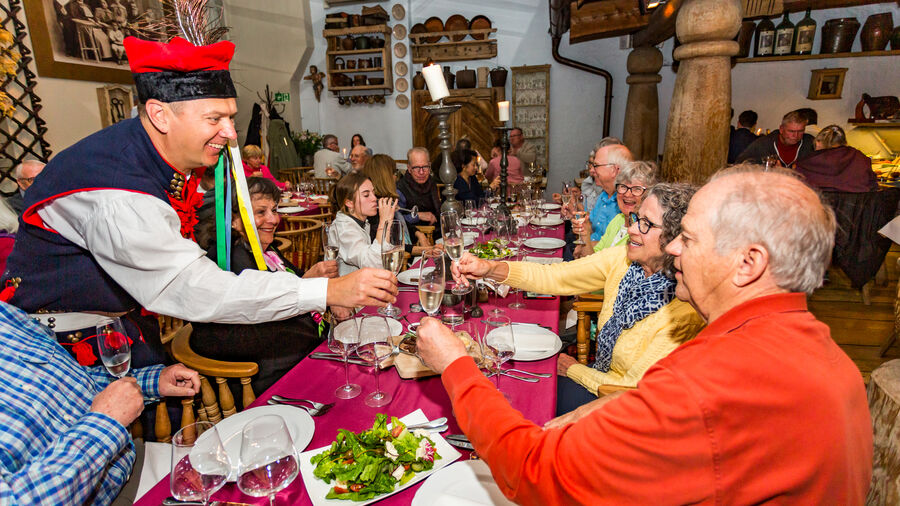
The folk band — swaggering in their colorful peasant costumes — gives me a private little concert. Feeling flush, I tip them royally. (Perhaps too royally. Be warned: A big tip gets you "The Star-Spangled Banner.")
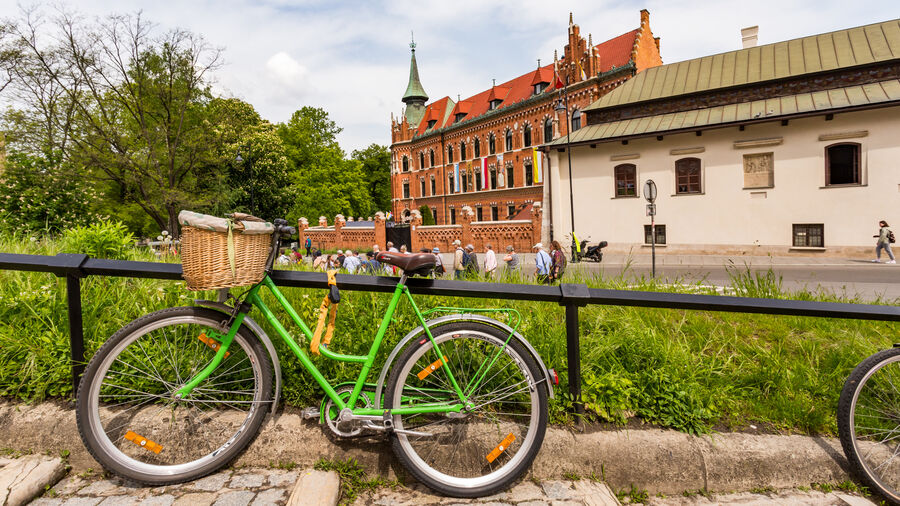
Kraków is the Boston of Poland: a captivating old-fashioned city buzzing with history, intriguing sights, colorful eateries, and college students. Even though the country's political capital moved from here to Warsaw 400 years ago, Kraków remains Poland's cultural and intellectual center. Flat and easy to navigate, Kraków is made for walking. A greenbelt called the Planty rings the Old Town, where the 13th century protective walls and moat once stood (a great place for a stroll or bike ride).
![]() |
| Eastern Europe Goes Better with a Local Guide: A bright and fun generation of new young guides (with or without cars) all across Eastern Europe are proud to share their cities and cultures. It's local guides like these that make your visit especially meaningful. For a reasonable fee, the TI can get you set up. |
With its diverse sights, Kraków can keep a speedy tourist busy for three days. Most sights are inside this ring, except for the historic hilltop Wawel Castle grounds and the Jewish quarter in Kazimierz. You may also want to take side-trips to the notorious concentration camp Auschwitz, and the Wieliczka Salt Mine — my vote for the deepest art gallery in Europe.
Kraków grew wealthy from trade in the 12th century. Traders passing through were required to stop here for a few days and sell their wares cheap. Local merchants then sold those goods with big price hikes...and Kraków thrived. It was Poland's capital.
Tartars invaded in 1241, destroying the city. Krakóvians took this opportunity to rebuild their streets in a near-perfect grid around the spectacular main market square. King Kazimierz the Great sparked Kraków's golden age in the 14th century. He established the university that still defines the city (and counts Copernicus and Pope John Paul II among its alumni).
But Kraków's power waned and the capital moved to Warsaw. Two centuries later, Poland was partitioned. Warsaw ended up as a satellite of oppressive Moscow, and Kraków became a poor provincial backwater of Vienna. But despite Kraków's reduced prominence, Austria's comparatively liberal climate helped turn the city into a haven for intellectuals and progressives (including a young revolutionary thinker from Russia named Vladimir Lenin).
Kraków emerged from World War II virtually unscathed. But when the communists took over, they decided to give intellectual (and potentially dissident) Kraków an injection of good Soviet values — in the form of heavy industry. They built Nowa Huta, an enormous steelworks on the city's outskirts, dooming the city to decades of smog. Thankfully, Kraków is now much cleaner than it was 20 years ago.
![]() |
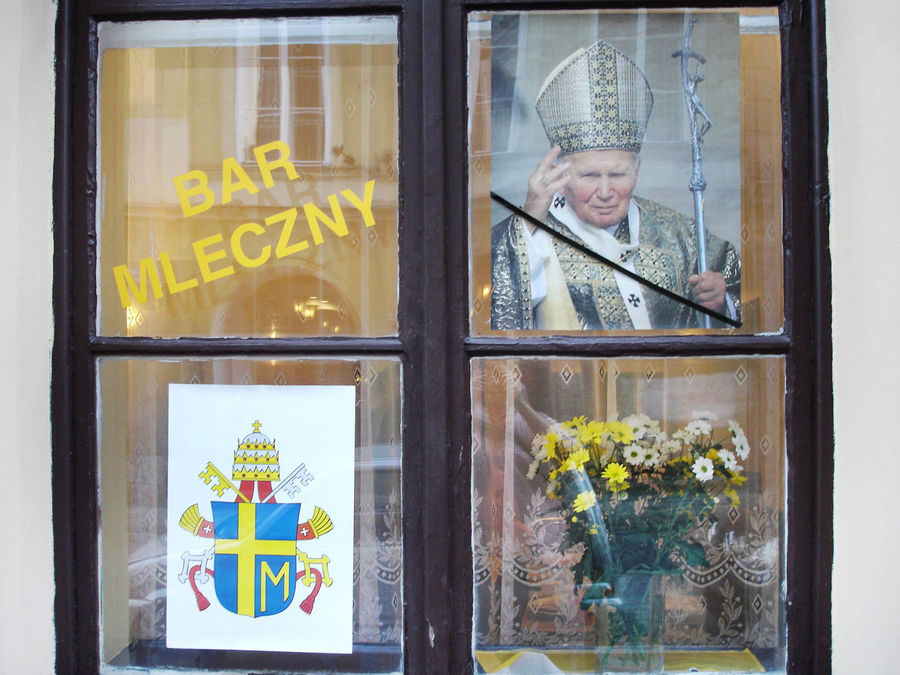
| Got Milk? Poland does. During communist rule, the government — wanting to be sure workers could afford to eat out once in a while — subsidized Bar Mleczny ("Milk Bar") cafeterias. |
Entering through the main gate past a section of the wall that serves as an outdoor gallery for struggling art students, you walk down Florianska Street, passing one McDonald's worth a visit. When renovating this building, they discovered a Gothic cellar. They excavated it and added seating. Today you can super-size your ambience by dining on a Big Mac and fries under a medieval Mc-vault.
Even better, a block away, step into a bar mleczny or "milk bar." In the communist era, the government subsidized the food at these restaurants to provide working class Poles with an affordable meal out. The tradition continues, and today Poland still subsidizes your milk-bar meal. Prices are astoundingly low (soup for less than a dollar) and while communist-era fare was unappetizing, today's milk bar cuisine is tastier. Just head to the counter, point to what you want, and get a quick and hearty meal for a half the cost of McDonald's.
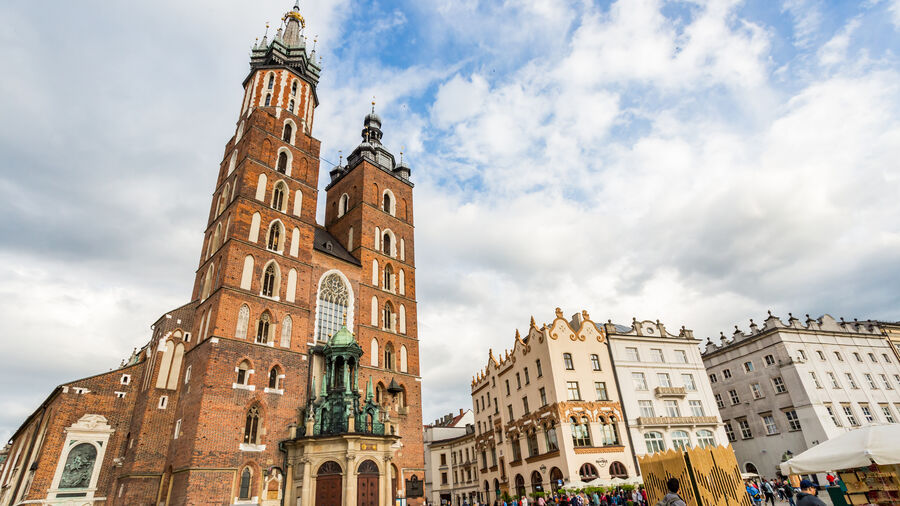
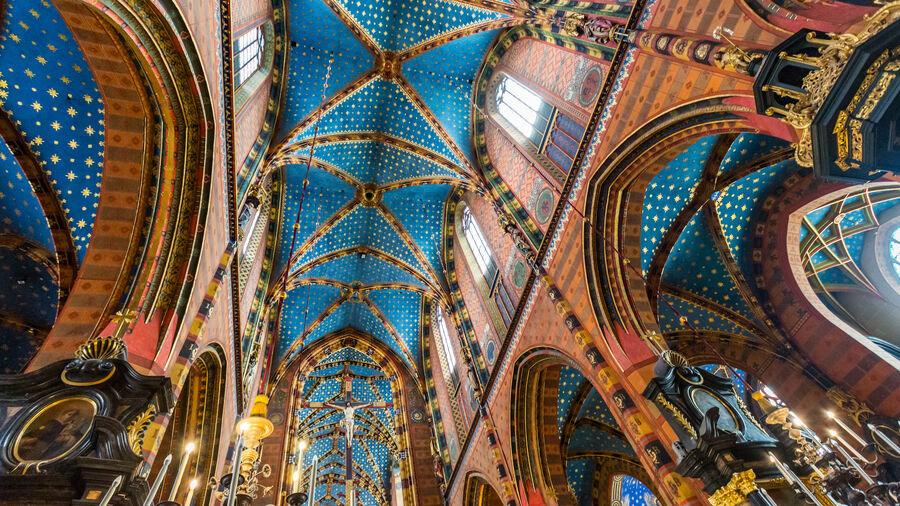
St. Mary's Church, overlooking the main square, marks the center of Kraków. Looking down at the building's foundations, you see how the square has risen six feet since it was built eight centuries ago. From its tower (actually the city's watchtower), a bugler plays half a tune at the top of each hour. During that Tartar invasion, the story goes, a watchman in the tower saw the enemy approaching and sounded the alarm. Before he could finish the tune, an arrow pierced his throat — which is why even today, the music stops subito partway through. Today's buglers are firemen, serving as fire lookouts first and musicians second.
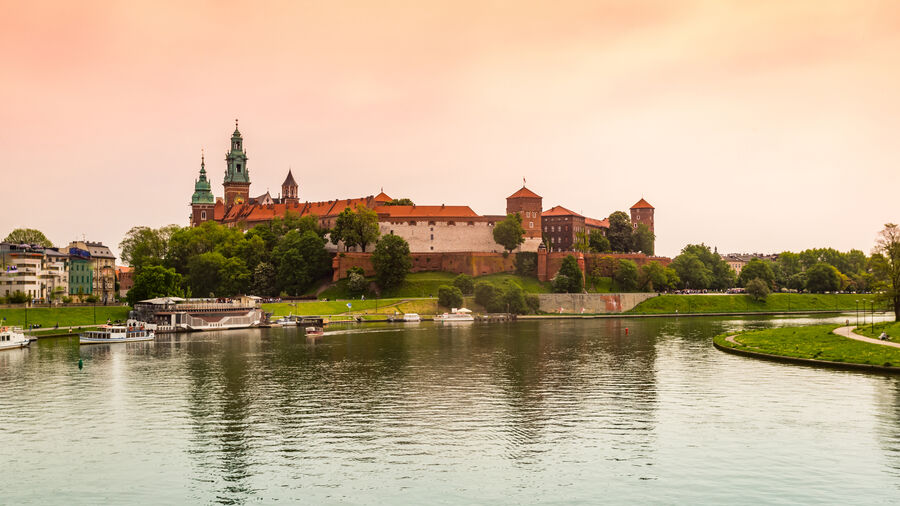
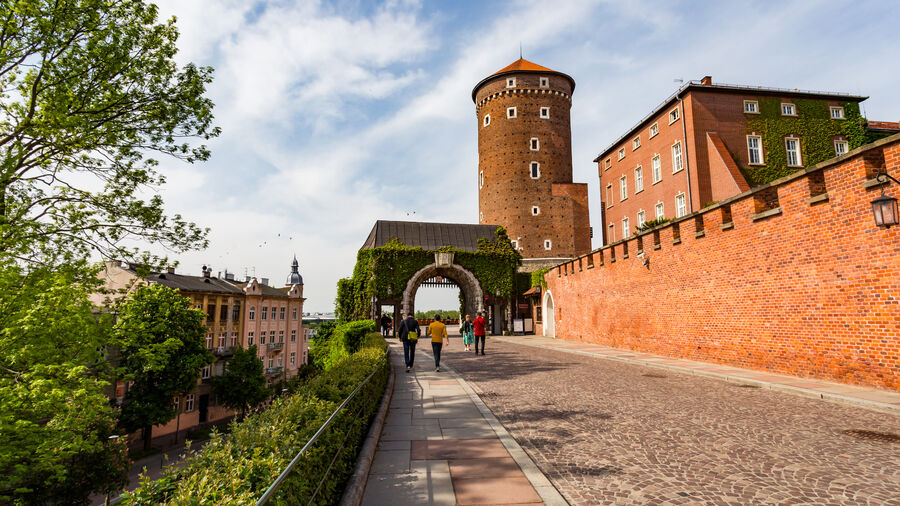
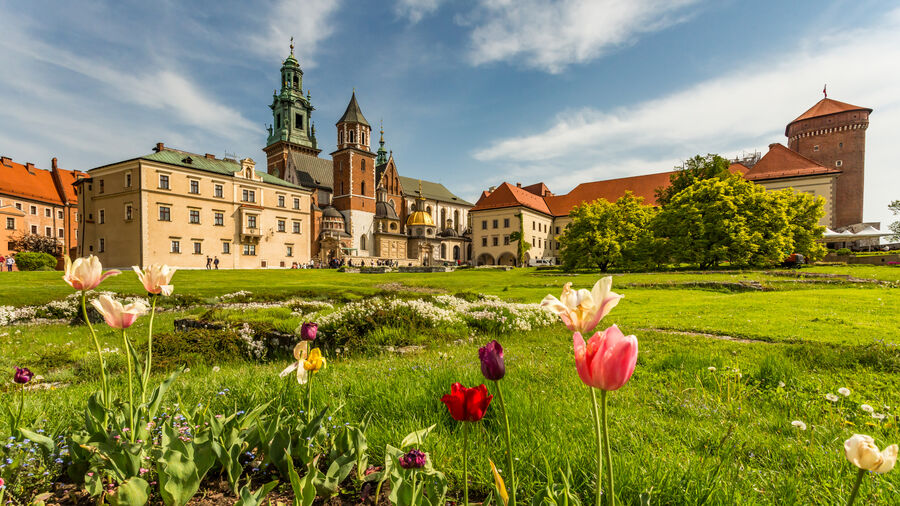
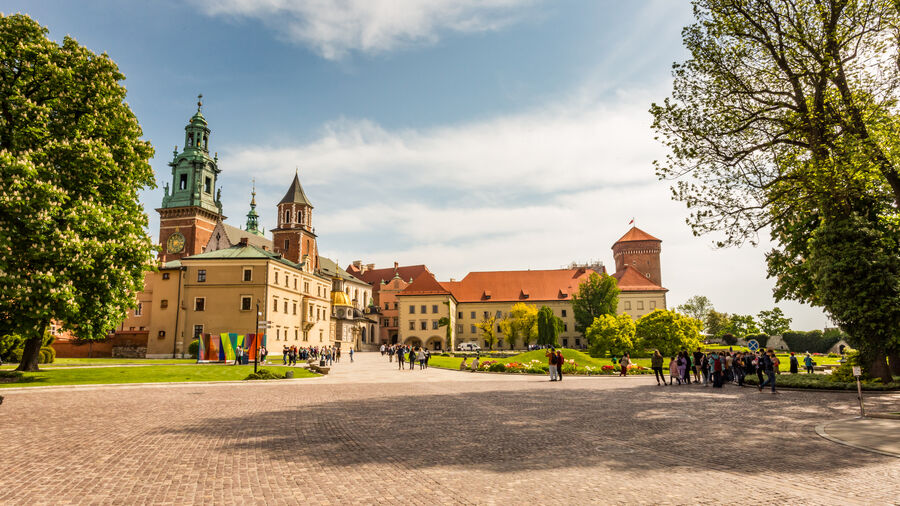
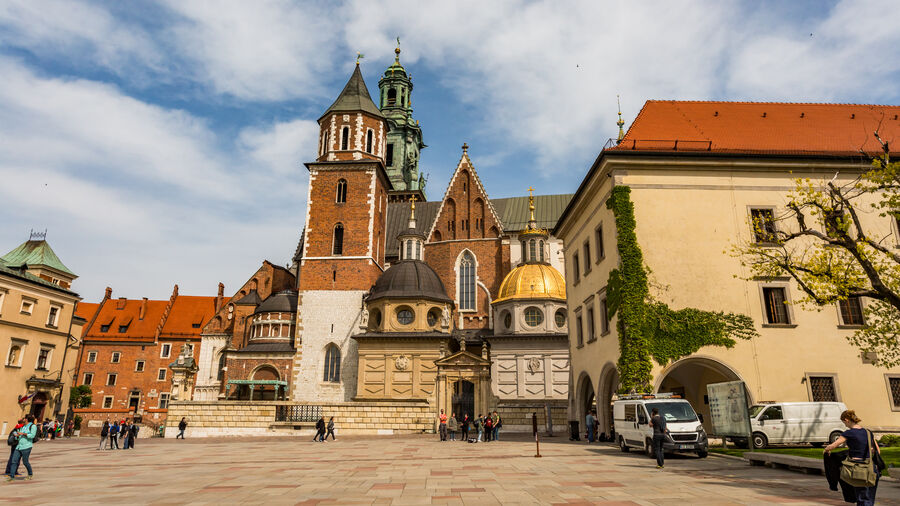
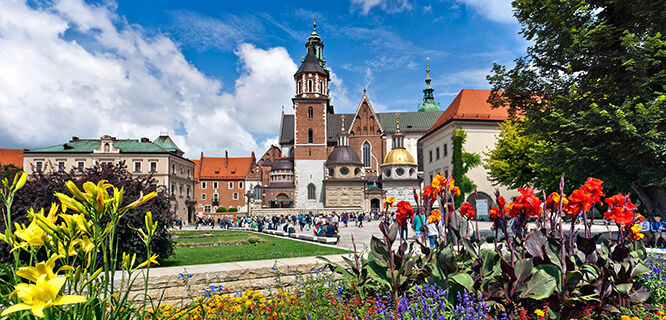
Wawel Hill (VAH-vehl) towers over old Kraków. This hill, with its castle, cathedral, and complex of sights, is a symbol of Polish royalty and independence. It's sacred ground to every Pole and the country's leading tourist attraction. Crowds and a ridiculously complex admissions system for the hill's many historic sights can be exasperating. Thankfully, for most non-Polish visitors, a stroll through the cathedral and around the castle grounds covers the site adequately and requires no tickets. Wawel's many museums are mildly interesting but skippable.
Wawel Cathedral is Poland's national church — its Westminster Abbey. The national mausoleum, it holds the tombs of Poland's most important rulers and historical figures. The interior is slathered in Baroque memorials and tombs. Everyone visits the tomb of Kazimierz the Great. But even Kazimierz is outdone by a black crucifix marking the relics of St. Jadwiga, the 14th-century "Queen of Poland," who helped Christianize Lithuania and was made a saint by Pope John Paul II in 1997. All the candles flickering here indicate she's popular with Poles today.
Marshal Pilsudski, the WWI hero who ruled Poland from 1926 to 1935, is buried downstairs in the crypt. His tomb was moved here so the soldiers who came to party on his grave wouldn't disturb the others. (It's interesting to note that Pilsudski encouraged Britain and France to preemptively attack Hitler in 1933. He was ignored and Poland was devastated a decade later. Perhaps that is why Poles were predisposed to support America's preemptive war against Iraq.)
The Wawel Castle museums may be forgettable. But the complex has one "sight" which — while invisible — attracts travelers from around the world: the chakra. Hindus believe the chakra is part of a powerful energy field which connects all living things. There are seven points on the surface of the earth where this chakra energy is most concentrated. These points include Jerusalem, Mecca, Rome...and Kraków's Wawel Hill. Look for peaceful people with their eyes closed. One thing's for sure: they're not thinking of Kazimierz the Great. The Wawel administration seems creeped out by all this. They've done what they can to discourage this ritual, but believers still gravitate from far and wide to hug the wall in the castle courtyard. (Just for fun, ask a Wawel tour guide about chakra and watch him squirm — they're forbidden to talk about it.)
A twenty minute walk beyond Wawel takes you to the historic center of Jewish Kraków, Kazimierz. After King Kazimierz the Great encouraged Jews to come to Poland in the 14th century, a large Jewish community settled in and around Kraków. According to legend, Kazimierz (the king) established Kazimierz (the village) for his favorite girlfriend — a Jewish woman named Ester — just outside the city walls. Kazimierz was an autonomous community, with its own Town Hall, market square, and city walls. By 1800, the walls came down, Kazimierz became part of Kraków, and the Jewish community flourished. By the start of World War II, 65,000 Jews lived in Kraków (mostly in Kazimierz), making up more than a quarter of the city's population. Only 6,000 Kraków Jews survived the war.
Today's Kraków has only about 200 Jewish residents. Kazimierz still has an empty feeling, but the neighborhood has enjoyed a Renaissance of Jewish culture following the popularity of Schindler's List (which was filmed partly in Kazimierz). The spirit of the Jewish tradition survives in the neighborhood's evocative synagogues, soulful cemeteries, and the lilting Klezmer folk concerts put on by local restaurants.
Kazimierz has two Jewish cemeteries, both more undiscovered and powerful than the famous one in Prague. Locals shop at plac Nowy's market stalls, a gritty factory-workers-on-lunch-break contrast to Kraków's touristy main square. Fans of Spielberg's movie, and the compassionate Kraków businessman who did his creative best to save the lives of his Jewish workers, can see Oskar Schindler's former factory, currently the Telpod electronics manufacturing plant.
Most of Kazimierz's Jews ended their lives at Auschwitz, a Nazi concentration camp in the Polish town of Oswiecim (an hours' drive from Kraków). One of Europe's most moving and certainly the most important of all the Holocaust memorials, this was the site of the systematic murder of over a million innocent people. Auschwitz was the biggest, most notorious concentration camp in the Nazi system. Seeing the camp can be difficult: many visitors are both overwhelmed with some combination of sadness and anger over the tragedy and inspired at the remarkable stories of survival. Auschwitz survivors and victims' families want tourists to come here and experience the scale and the monstrosity of the place to be sure that the Holocaust is always remembered — so it never happens again.
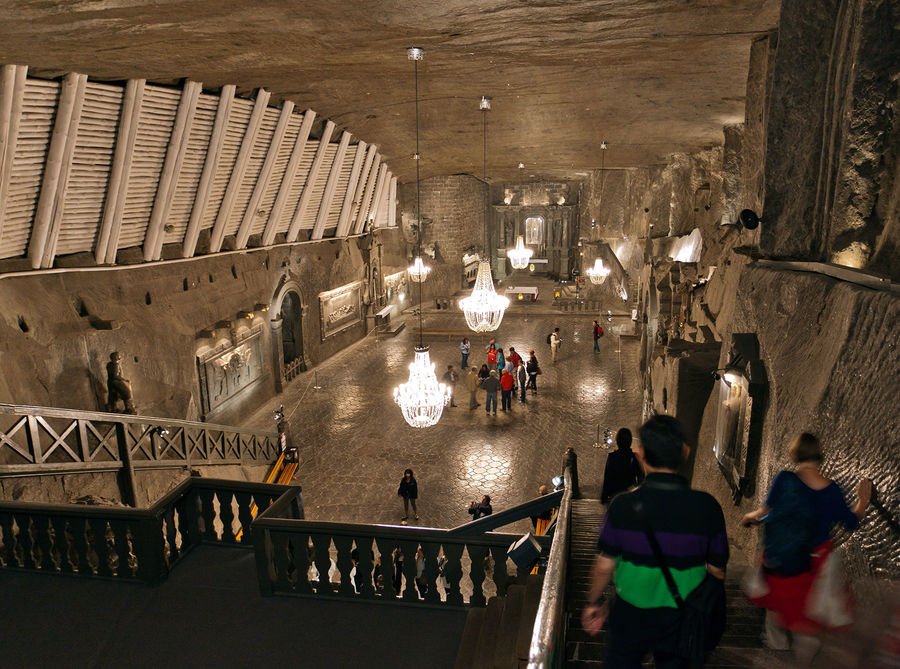
Another evocative but much cheerier sight is Kraków's remarkable Wieliczka Salt Mine, which has been producing salt since 1250. Under Kazimierz the Great, one-third of Poland's income came from these precious deposits. Wieliczka miners spent much of their lives underground, rarely emerging into daylight. To pass the time, 19th-century miners began carving figures, chandeliers, and eventually even an entire chapel out of the salt.
From the lobby, your guide escorts you 200 feet down a long staircase from where you begin a 1.5-mile downhill stroll visiting twenty of the mine's 200 chambers. The tour shows how the miners lived and worked (using horses who lived their whole lives without ever seeing the light of day). It takes you through some impressive underground caverns, past subterranean lakes, and introduces you to some of the mine's many salt sculptures (including an army of salt elves and a life-size statue of this region's favorite son, Pope John Paul II). Your jaw will drop as you enter the enormous Chapel of the Blessed Kinga. Don't miss the extremely salty bas-relief of The Last Supper.
Your walk finishes over 400 feet below the surface, where a traditional miners' lift hoists you back up to a sunlit world that seems particularly bright.
Updated for 2008. For lots more information, check out our best-selling Rick Steves' Eastern Europe guidebook — or join us on one of our free-spirited Europe tours!