Bad Towns and Tourist Traps
By Rick Steves
It's generally not considered "in good taste" to write negatively about tourist destinations. But since I'm the kind of tour guide who burps with the microphone on, I'll give you my opinion on Europe's dullest places. You probably have too many stops on your trip wish list and not enough time. To make your planning a little easier, take my advice and skip the places described here.
Zurich and Geneva are two of Switzerland's largest and most sterile cities. Both are pleasantly situated on a lake like Buffalo and Cleveland. And both are famous. But name familiarity is a rotten reason to go somewhere. If you want a Swiss city, see Bern. But it's almost criminal to spend a sunny Swiss day anywhere but high in the Alps.
![]() |
| Lots of hype and little substance, some destinations are best avoided. |
Bordeaux must mean "boredom" in some ancient language. If I were offered a free trip to that town, I'd stay home and clean the fridge. Connoisseurs visit for the wine, but Bordeaux wine country and Bordeaux city are as different as night and night soil. There's a wine-tourist information bureau in Bordeaux which, for a price, will bus you out of town into the more interesting wine country nearby. For fine wine country and a delightful look at rural France consider exploring Burgundy, using Beaune as a homebase town.
Andorra, a small country in the Pyrénées between France and Spain, is as scenic as any other chunk of those mountains. People from all over Europe flock to Andorra to take advantage of its famous duty-free shopping. As far as Americans are concerned, Andorra is just a big Spanish-speaking Radio Shack. There are no bargains here that you can't get at home. Enjoy the Pyrénées with less traffic elsewhere.
Germany's famous Black Forest disappoints more people than it excites. If that's all Germany offered, it would be worth seeing. For Europeans, any large forest is a popular attraction. But I'd say the average American visitor who's seen more than three trees in one place would prefer Germany's Romantic Road and Bavaria to the east, the Rhine and Mosel country to the north, the Swiss Alps to the south, and France's Alsace region to the west all high points that cut the Black Forest down to stumps.
Norway's Stavanger, famous for nearby fjords and its status as an oil-boom town, is a large port that's about as exciting as, well, put it this way . . . emigrants left it in droves to move to the wilds of Minnesota. Time in western Norway is better spent in and around Bergen.
Bucharest, the capital of Romania, has little to offer. Its top-selling postcard is of the Intercontinental Hotel.
If you're heading from eastern Europe to Greece, skip Thessaloníki, which deserves its place in the Bible but doesn't belong in travel guidebooks.
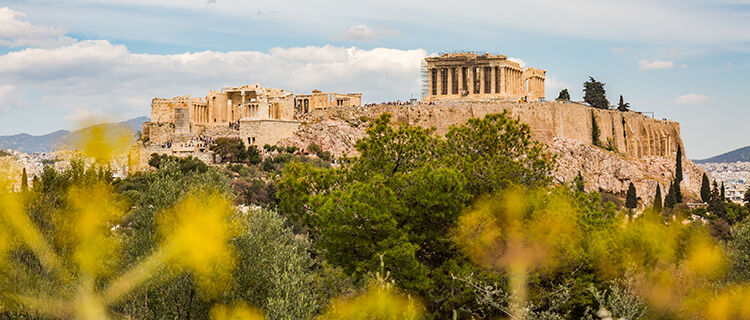
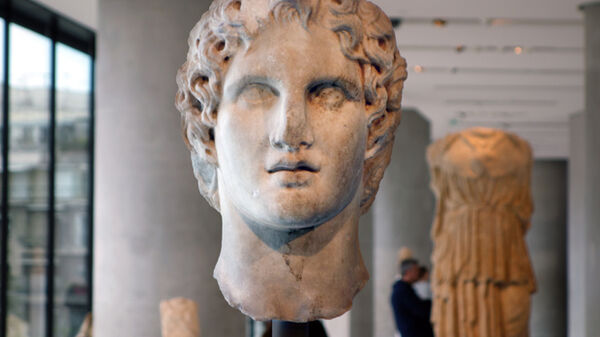
Athens, while worth visiting, is probably the most overrated city in Europe. A century ago Athens was a sleepy town of 8,000 people with a pile of ruins in its backyard. Today it's a giant mix of concrete, smog, noise, tourists, and 4 million Greeks. See the four major attractions (the Acropolis, the Agora, the Plaka, and the great National Archaeological Museum) and get out to the islands or countryside.
Extra caution is merited in southwest England, a minefield of tourist traps. The British are masters at milking every conceivable tourist attraction for all it's worth. Here are some booby traps worth avoiding if you're traveling on limited time or money:
Cornwall, England's southernmost region, has more than its share of cotton-candy touristic fluff. I'll never forget driving past signs prepping me for the "Devil's Toenail." "Only five miles — The Devil's Toenail." Then, "The Devil's Toenail — next left!" Well, I figured I'd better check it out. I pulled into the parking lot. Paid to park. Paid again to pass through the turnstile. Walked to the bottom of the ravine. And there was a watermelon-sized rock that looked just like . . . a toenail. Disappointed and a bit embarrassed, I vowed never again to fall for such a sly snare.
Predictably, Land's End, the far southwest tip of England, is geared up to attract hordes of tourists. You pay to park, pay to enter, walk to the point for a photo to prove you were there, grab a postcard, and leave.
On the north Cornwall coast, above Land's End, are two more tourist magnets. Tintagel's famous castle is the legendary birthplace of King Arthur. Its exciting windswept and wave-beaten ruins are well worth exploring. Meanwhile, the town does everything in its power to exploit the profitable Arthurian legend — there's even a pub called the Excali Bar.
Just up the coast is Clovelly. It sounds so cute "daintily clinging to the rocky coast, desperately trying not to plunge into the wicked seas." But when you arrive, reality rules. You'll pay to park your car 100 yards away and join the crowds funneling into the little town's one street. You can shop your way down one side to the waterfront and up the other side past cute knickknack shops, all selling the same goodies, like "clotted cream you can mail home." Don't let tourist traps get between you and the real beauties of England.
The towns and places I've mentioned here are worth skipping only because they're surrounded by so many places much more worthy of the average traveler's limited vacation time. If you have a villa in Andorra or a cuckoo clock shop in the Black Forest, no offense is meant. Just remember to distinguish carefully between entrepreneurial ventures and legitimate sightseeing attractions.
For up-to-date specifics, see the latest edition of the Rick Steves' Europe Through the Back Door guidebook. We also offer free-spirited tours of Europe.