The Palace of Versailles
By Rick Steves and Steve Smith
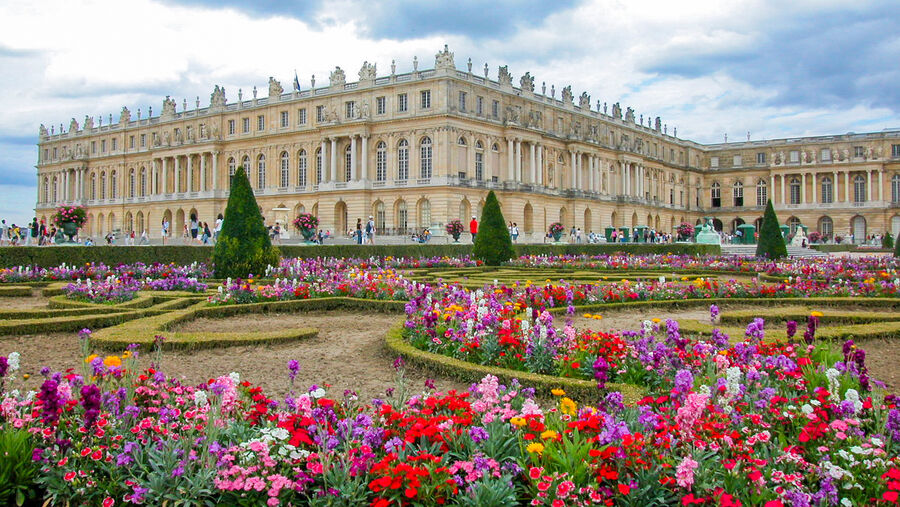
Every king's dream, Versailles was the residence of the French king and the cultural heartbeat of Europe for about 100 years — until the Revolution of 1789 ended the notion that God deputized some people to rule for him on Earth. Louis XIV spent half a year's income of Europe's richest country turning his dad's hunting lodge into a palace fit for a divine monarch. Louis XV and Louis XVI spent much of the 18th century gilding Louis XIV's lily. In 1837, about 50 years after the royal family was evicted, King Louis Philippe opened the palace as a museum. Europe's next-best palaces are Versailles wannabes.
Visiting Versailles can seem daunting because of its size and the hordes of visitors. Fortunately, new changes are making it easier. Before you go, read the "Orientation," below, to avoid wasting your time and money.
Versailles has two main areas with separate entries: the all-important Château (the main palace) and the less-important Domaine de Marie-Antoinette (the queen's estate). The entire complex is undergoing a complete renovation that may change entry points and exits. The information listed here is accurate as of mid-2007, and most should still apply in 2008. Still, expect some changes in fees and entry points.
Information
Visit Versailles' good website before you go: www.chateauversailles.fr. Versailles has two information offices: the town's official TI (helpful, less crowded), and one at the palace (books tours, but has long lines). Both sell palace tickets and Le Passeport passes. You'll go by the town TI on your walk from the main RER station to the palace — it's just past the Sofitel Hôtel (daily April–Sept 9:00–19:00, Oct–March 9:00–18:00, tel. 01 39 24 88 88). The palace's information office is on the left side of the Château courtyard (as you face the Château, tel. 01 30 83 78 00). The useful Versailles Orientation Guide brochure explains your sightseeing options.
- Download our Versailles Château and entrance map PDF to take with you.
Orientation
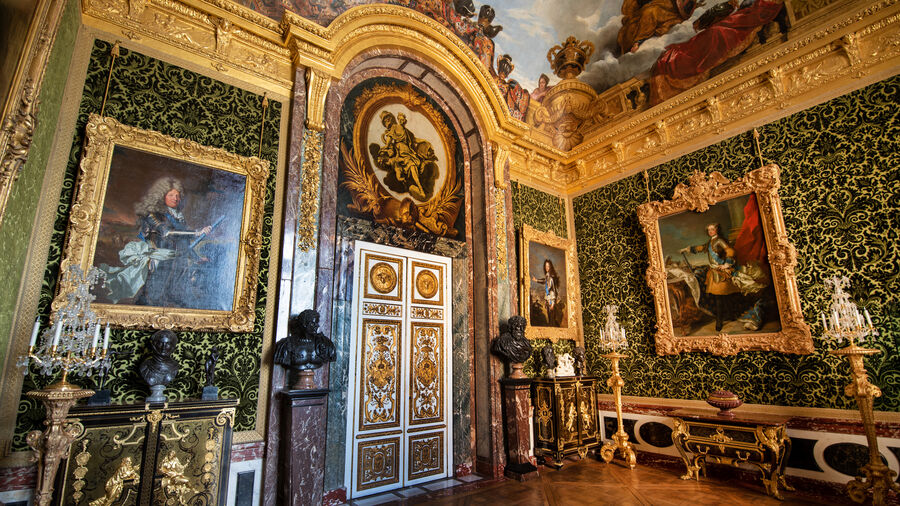
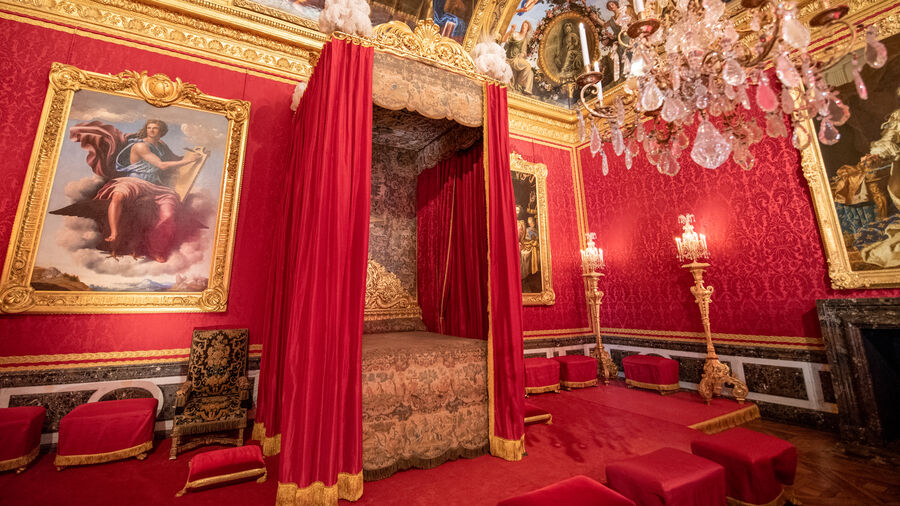
Cost: The Château — the main palace — costs €13.50 (€10 after 16:00, under 18 always free, covered by Paris Museum Pass and Le Passeport pass, see below). The Château contains the Chapel and Opera House (likely closed in 2008), the King's and Queen's State Apartments (with the famous Hall of Mirrors), the French History Galleries (rarely open), the Dauphin's Apartments (heirs to the throne), and the Mesdames Apartments (Louis XV's daughters, open weekends only); all are included with your Château ticket.
Entry to the Domaine de Marie-Antoinette, the estate of the queen, costs €9 from April through October (€5 after 17:00, under 18 always free; covered by Le Passeport and the Paris Museum Pass). In winter, it costs €5 to enter the Petit Trianon (free for rest of Domaine grounds). Tickets are available at the entry to the Domaine or at the main Château ticket office. With this ticket, you'll see the queen's Hamlet, the Grand and Petit Trianons, and a smattering of other nearby buildings.
The gardens are free, except on April–Sept weekends, when the fountains blast and the price shoots up to €7 (see "Fountain Spectacles").
Passes: Smart travelers arrive at Versailles with one of these two passes.
The Le Passeport one-day pass is a good deal for most sightseers (April–Oct it's €20 Mon–Fri, €25 Sat–Sun; Nov–March it's €16 Tue–Sun). The pass covers your entrance to just about everything, as well as audioguides. (The pass is not a good value on Mon, when only the Domaine de Marie-Antoinette and gardens are open.) The pass gives you access to all open sections of the Château, the Domaine de Marie-Antoinette, and the fountain spectacles (that flow only on spring and summer weekends — hence the higher weekend pass prices). If you're coming by train from Paris, buy this pass before you leave the city — you'll pay €1.50 more, but it will cover your round-trip train ride (a €6 value). This buy-in-Paris option makes the pass an even better deal, as it saves you money and lets you avoid the palace's long ticket lines. Le Passeport passes are sold at RER stations that serve Versailles (listed under "Getting There," below), the Ile de France TI in the Louvre, the TI in Versailles, and the palace itself. The palace's website may also be selling the pass by the time you visit (see www.chateauversailles.fr).
The Paris Museum Pass works at Versailles, covering entrance to the Château and the Domaine de Marie-Antoinette but not the gardens (on fountain spectacle weekends) or audioguides. Since a visit to Versailles can take up an entire sightseeing day, you'll likely get better use out of the Museum Pass in Paris, where it's easy to visit several sights in a day.
Hours: The Château is open April–Oct Tue–Sun 9:00–18:30, Nov–March Tue–Sun 9:00–17:30, closed Mon. The Domaine de Marie Antoinette is open daily April–Oct 12:00–19:30; Nov– March 9:00–17:00. The gardens are open daily from 9:00 to sunset (17:30 to 21:30). Last entry to all of these areas is one hour before closing.
When to Go: From May through September, Versailles can be a zoo between 10:00 and 13:00, and all day Tue and Sun. For fewer crowds, go early or late: Arrive by 9:00 (when the palace opens — tour the palace first, then the gardens) or after 16:00 (you'll get a reduced-price ticket, but note that the last guided tours of the day generally depart by 15:00).
Pickpocket Alert: As you jostle through the crowded corridors of the palace, pickpockets will be working the tourist crowds.
Length of Visit: Allow two to three hours for the Château and two for the Domaine de Marie-Antoinette and the gardens. Add another two hours to cover your round-trip transit and walking time, and it's a five- to ten-hour day trip from Paris.
Baggage Check: There's a free checkroom at the main entrance — use it to check forbidden items (food, big bags, baby carriages, and so on). Strollers are not allowed inside the Château, so today's a good day for parents to either hire a babysitter or carry their toddler in a backpack with a child seat.
WCs: Reminiscent of the days when dukes urinated behind the potted palm trees, WCs are few and far between, and come with long lines. Use the public WC just before the palace gates.
Cuisine Art: In the palace, the cafeteria and WCs are at the main entrance. There's a sandwich kiosk and a restaurant at the canal in the gardens. In the town, you'll find restaurants on the street to the right of the parking lot (as you face the Château), though the best eateries line the lively market square, place du Marché, in the town center. A handy McDonald's is immediately across from the train station (WC without crowds, Internet café next door). An appealing assortment of affordable restaurants line rue de Satory between the station and the palace.
Photography: Allowed indoors without a flash.
Welcome to Versailles
This commentary, which leads you through the various attractions at Versailles, covers just the basics. For more details, download our free audioguide tour of the State Apartments at www.ricksteves.com. If you don't have Rick's Paris guidebook, the guidebook called The Châteaux, The Gardens, and Trianon gives a more detailed room-by-room rundown (sold at Versailles).
Stand in front of the palace, in the central courtyard, with two of the palace's wings on either side of you. If you don't have a ticket or if you want to book a tour, you must stand in the line to your left. If you already have a ticket or pass, go directly to the entry on your right.
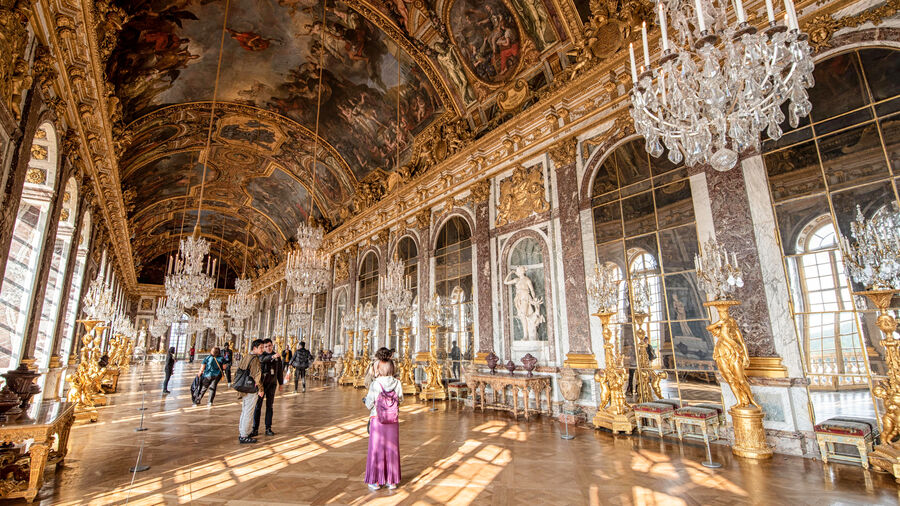
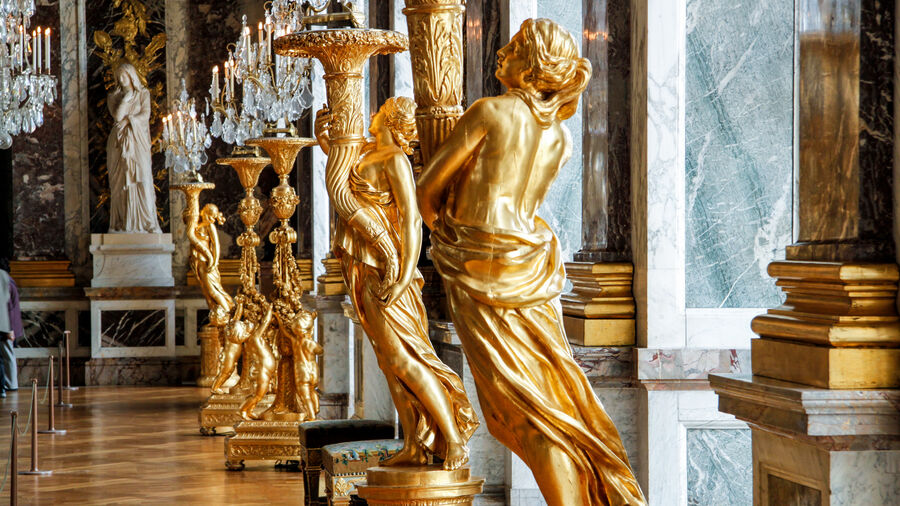
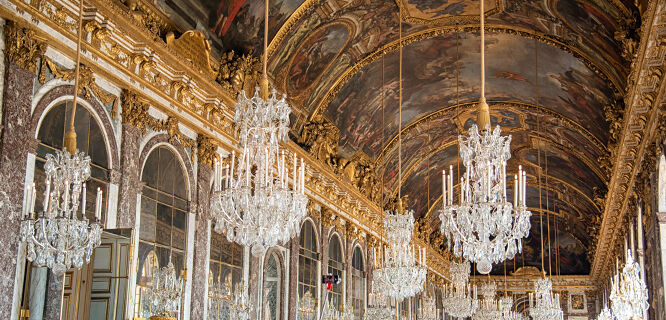
The Château: Enter the palace and take a one-way walk through the State Apartments from the King's Wing, through the Hall of Mirrors, and out via the Queen's Wing. The Hall of Mirrors was the ultimate hall of the day — 250 feet long, with 17 arched mirrors matching 17 windows with royal garden views, 24 gilded candelabra, eight busts of Roman emperors, and eight Classical-style statues (seven of them ancient). The ceiling is decorated with stories of Louis XIV's triumphs. Imagine this place filled with silk gowns and powdered wigs, lit by thousands of candles. The mirrors — a luxury at the time — were a reflection of an era when aristocrats felt good about their looks and their fortunes. In another age altogether, this was the room in which the Treaty of Versailles was signed, ending World War I.
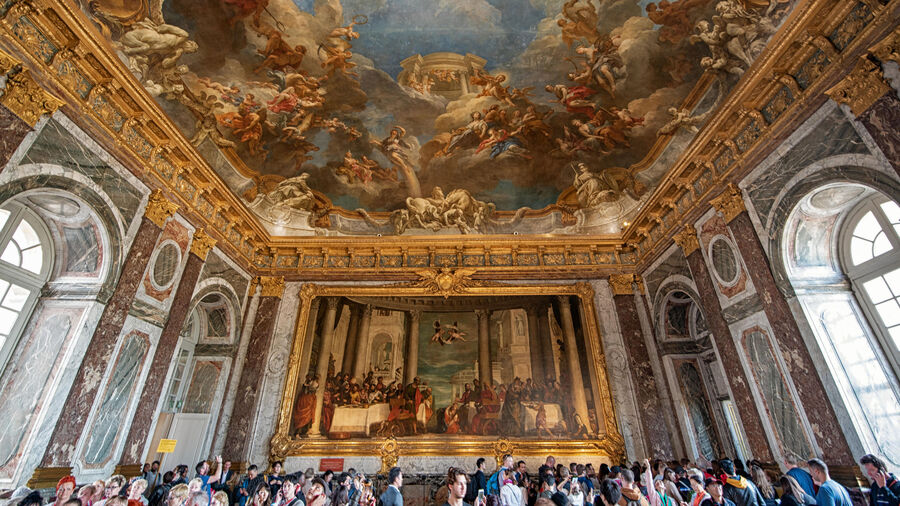
Before going downstairs at the end, take a stroll clockwise around the Hall of Battles, the long room filled with murals depicting the great battles of France (rarely open, in the History of France Gallery).
Getting Around the Gardens: It's a 50-minute hike from the palace, down to the canal, past the two Trianon palaces to the Hamlet — the heart of the Domaine de Marie-Antoinette. Renting a bike (€6/hr, near the Grand Canal) gives you the most freedom to explore the gardens effortlessly, freely, and economically. The fast-looking, slow-moving tram (petit train) leaves from behind the Château (north side) and serves the Grand Canal and the Domaine. You can hop on and off as you like (€6, possible discount with Le Passeport, 4/hr, three stops, commentary is nearly worthless). Another option is to rent a golf cart for a fun drive through the gardens (€28/hr, pick up at Orangerie side of palace, shuts off automatically if you diverge from prescribed route).
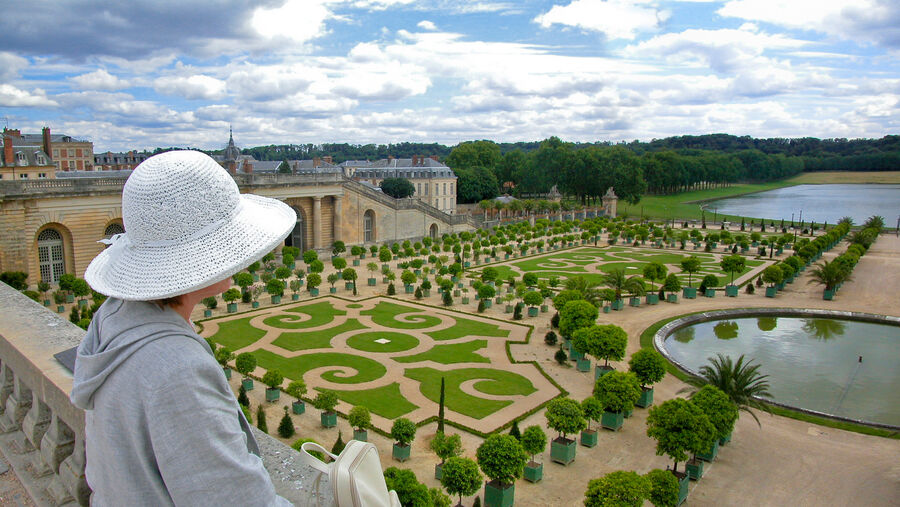
Palace Gardens: The gardens offer a world of royal amusements. Outside the palace is the Orangerie. The warmth from the Sun King was so great that he could even grow orange trees in chilly France. Louis XIV had a thousand of these to amaze his visitors. In winter, they were kept in the greenhouses that surround the courtyard. On sunny days, they were wheeled out in their silver planters and scattered around the grounds. A promenade leads from the palace to the Grand Canal, an artificial lake that, in Louis' day, was a mini-sea with nine ships, including a 32-cannon warship. France's royalty floated up and down the canal in Venetian gondolas.
Domaine de Marie-Antoinette (Marie-Antoinette's Estate): While Louis XIV cleverly used palace life at Versailles to "domesticate" his nobility, turning otherwise meddlesome nobles into groveling socialites, all this pomp and ceremony hampered the royal family as well. For an escape from the public life at Versailles, they built more intimate palaces as retreats in their garden. Later, his successors retreated still farther into the garden and built a fantasy world of simple pleasures, allowing them to ignore the real world that was crumbling all around them.
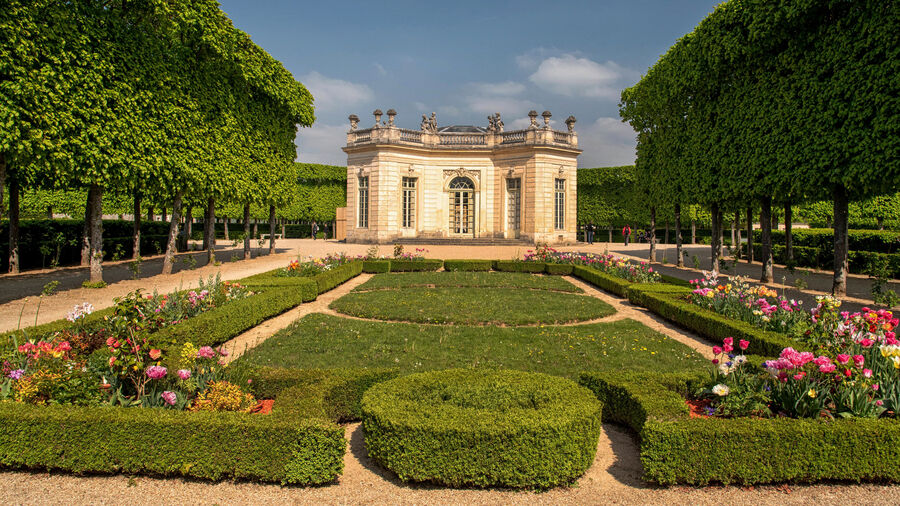
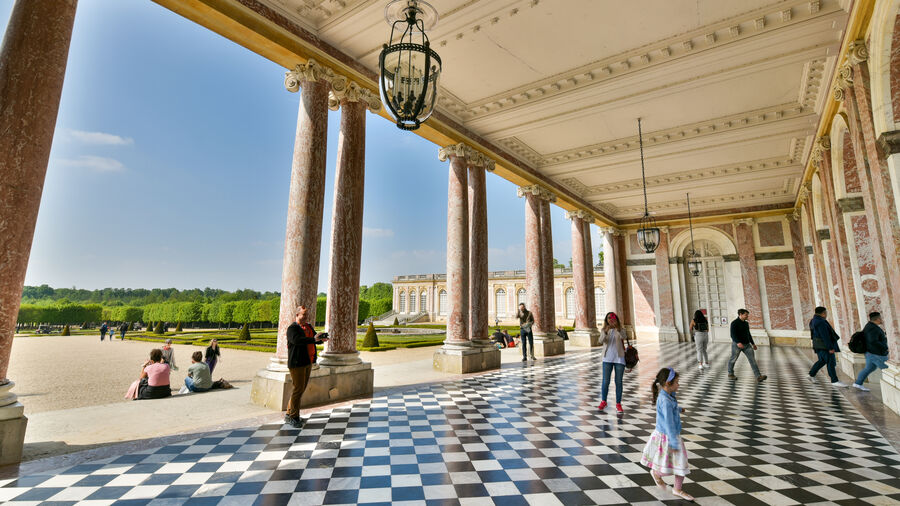
The beautifully restored Grand Trianon Palace is as sumptuous as the main palace, but much smaller. With its pastel-pink colonnade and more human scale, this is a place you'd like to call home. Nearby are the French Pavilion and the Petit Trianon, which has a fine Neoclassical exterior and an interior that can be skipped. It was Marie-Antoinette's favorite residence (and should remain open during the renovation planned for this year).
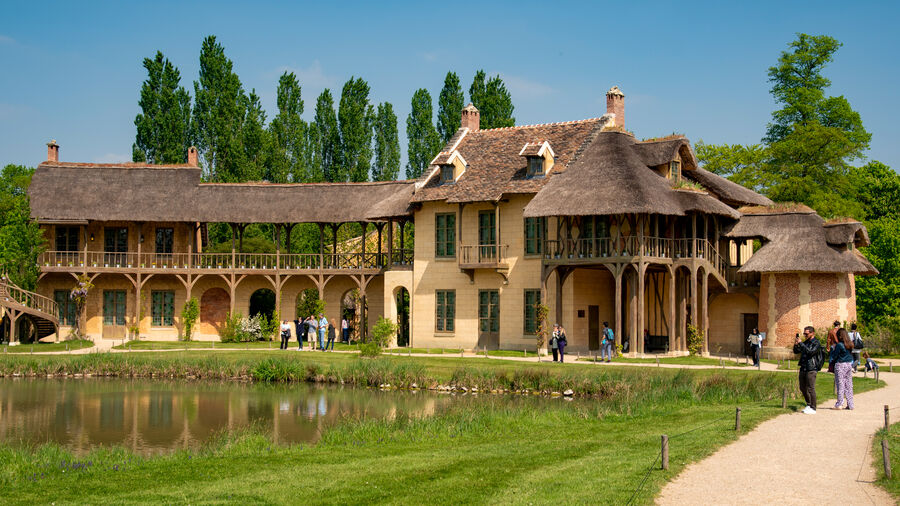
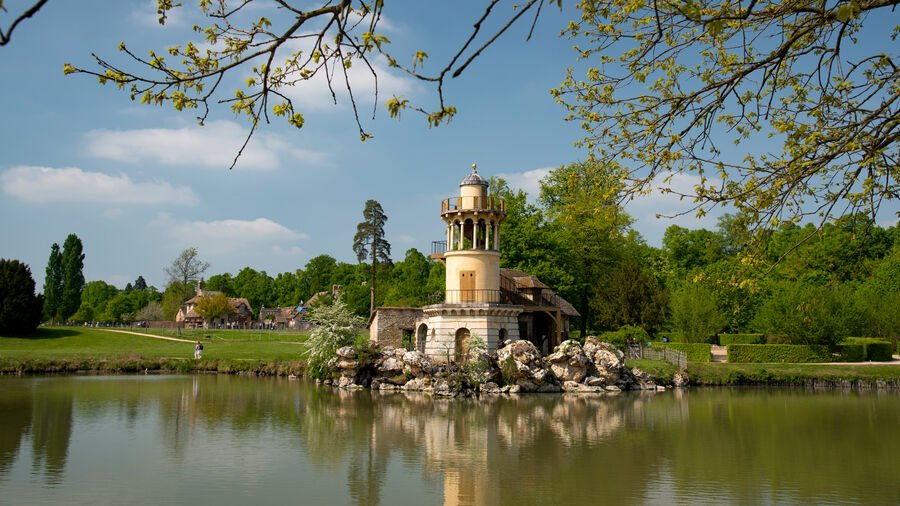
You can almost see princesses bobbing gaily in the branches as you walk through the enchanting forest, past the white marble Temple of Love to the queen's fake-peasant Hamlet (le Hameau). Palace life really got to Marie-Antoinette. Sort of a back-to-basics queen, she retreated further and further from her blue-blooded reality. Her happiest days were spent at the Hamlet, under a bonnet, tending her perfumed sheep and her manicured gardens in a thatch-happy wonderland.
Activities
Fountain Spectacles — On spring and summer weekends, classical music fills the king's backyard, and the garden's fountains are in full squirt (April–Sept Sat–Sun 11:00–12:00 & 15:30–17:00, finale from 17:20–17:30). On these " spray days," the gardens cost €7 (pay at ticket booth near golf-cart rental in the gardens; covered by Le Passeport but not Paris Museum Pass). Pick up the helpful Les Grandes Eaux Musicales brochure at any information or ticket booth. Louis had his engineers literally reroute a river to fuel these fountains. Even by today's standards, they are impressive. Also ask about the various impressive evening spectacles (Sat in July–Aug).
Equestrian Performances — The Equestrian Performance Academy (Academie du Spectacle Equestre) has brought the art of horseback riding back to Versailles. You can watch its rigorous training sessions, including "equestrian fencing," performed to classical music inside Versailles' main arena (€9.50, 60-min shows at 10:30 and 11:15 only on Sat–Sun; musical shows-€21, Sat at 20:30 and Sun at 15:00). The stables (Grande Ecurie) are across the square from the Château, next to the post office. For information, call 01 39 02 07 14. For reservations, call 08 92 68 18 91 or visit www.acadequestre.fr.
Town of Versailles — After the palace closes and the tourists go, the prosperous, wholesome town of Versailles feels a long way from Paris. The central market thrives on place du Marché on Sunday, Tuesday, and Friday until 13:00 (leaving the RER station, turn right and walk 10 min). Consider the wisdom of picking up or dropping your rental car in Versailles rather than in Paris. In Versailles, the Hertz and Avis offices are at Gare des Chantiers (Versailles C.H., served by Paris' Montparnasse station).
Getting There
Take the RER-C train (every 15 min, €6 round-trip, or included in Le Passeport if you buy it in Paris — 30–40 min one-way) from any of these RER stops: Gare d'Austerlitz, St. Michel, Musée d'Orsay, Invalides, Pont de l'Alma, or Champ de Mars. Any train whose name starts with a V (e.g., "Vick") goes to Versailles; don't board other trains. Get off at the last stop (Versailles R.G., or "Rive Gauche"), and exit through the turnstiles by inserting your ticket. To reach the château, turn right out of the train station, then left at the first boulevard. It's a 10-minute walk to the palace.)
Your Eurailpass covers this inexpensive trip, but it uses up a valuable "flexi" day. To get free passage, show your railpass at an SCNF ticket window — for example, at the Invalides or Musée d'Orsay RER stop — and get a contremarque de passage. Keep this ticket to exit the system.
All trains leaving Versailles from the Rive Gauche station serve all downtown Paris RER stops on the C line.
Taxis for the 30-minute ride between Versailles and Paris cost about €50.
It's a 30-minute drive to reach Versailles from Paris by car, if the traffic's not bad. Get on the périphérique freeway that circles Paris, and take the toll-free A-13 autoroute toward Rouen. Follow signs into Versailles, then look for château signs and park in the huge pay lot (€4.50/2 hrs, €8/4 hrs, €12/8 hrs, free 19:00–8:30).