Home > Plan Your Trip > Best Destinations > Spain

Spain's Basque Country

By Rick Steves

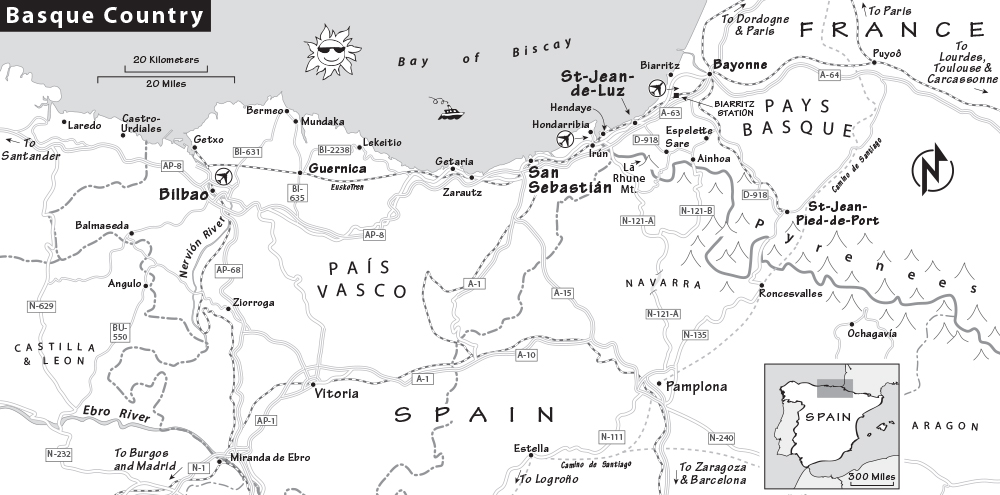
If you're traveling between Spain and France, the coastal resort of San Sebastián and the Guggenheim Bilbao modern art museum merit a quick visit, if only to see what all the fuss is about.

This is Basque Country, or in Spanish, País Vasco. The Basque region stretches 100 miles from Bilbao north to Bayonne, France. And in some ways, the País Vasco has more in common with the neighboring Pays Basque in France than it does with Spain. The Spanish and French Basque regions share a Union Jack–style flag (green, red, and white), cuisine, and common language (Euskara), spoken by about a half million people.

Insulated from mainstream Europe for centuries, the plucky Basques have just wanted to be left alone for more than 7,000 years. For 40 years, Generalissimo Franco did his best to tame this area; the bombed city of Guernica (Gernika), halfway between San Sebastián and Bilbao, survives as a tragic example of his efforts to suppress Basque independence.

Today the Basque terrorist organization, ETA (which stands for the Euskara phrase Euskadi Ta Askatasuna, or “Basque Country and Freedom”), is supported by a tiny minority of the population. The ETA, which tends to focus on political targets (and has been blamed for 800 deaths since 1968), goes largely unnoticed by tourists.

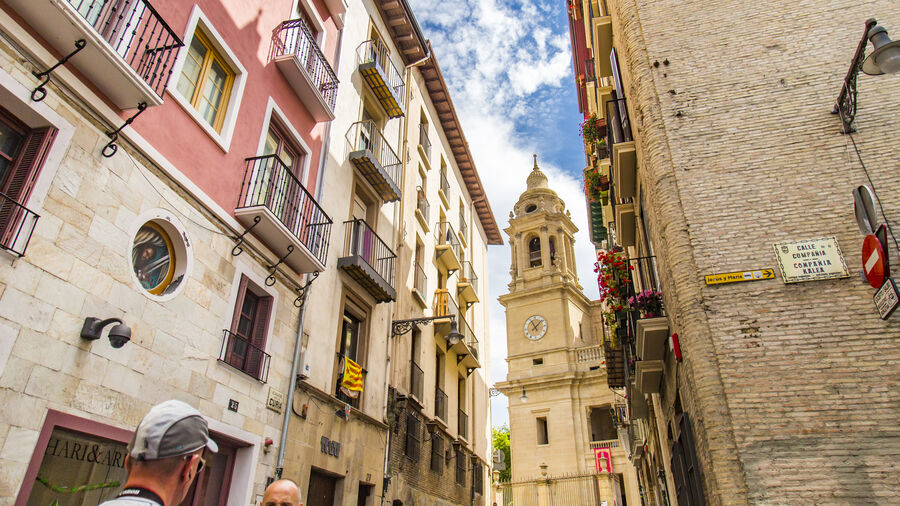
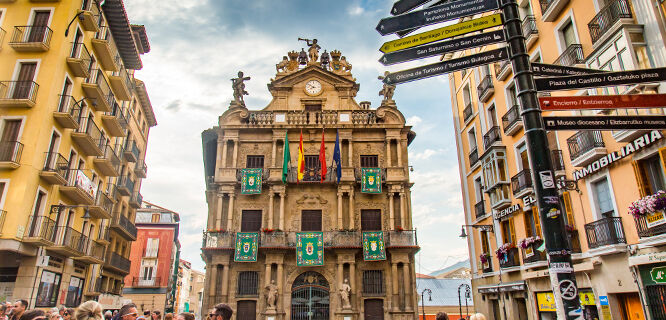
Even though the region was technically bilingual (Euskara and Spanish), Franco so effectively blunted Basque expression that the language was primarily Spanish by default. But after several Franco-free decades, there’s a renewed awareness of the importance of the Basque language (which is absolutely unrelated to any other). Look for it first on street signs, menus, and signs in shops — the Euskara word will be above any Spanish translation.

Similarly, today’s Basque lands are undergoing a 21st-century renaissance, as the dazzling new architecture of the Guggenheim Bilbao modern-art museum and the glittering resort of San Sebastián are drawing enthusiastic crowds. For small-town fun, drop by the fishing village of Lekeitio (near Bilbao) and little Hondarribia near the border — either is a good last (or first) stop in Spain.

San Sebastián

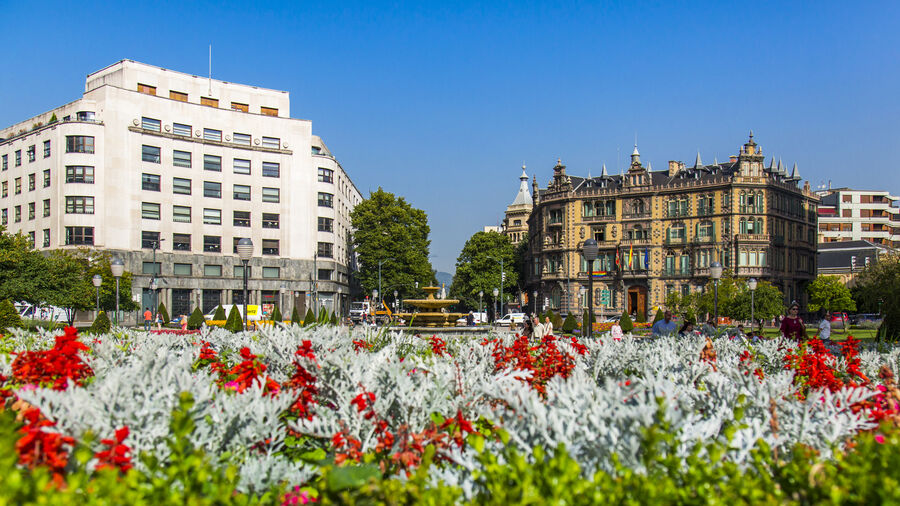
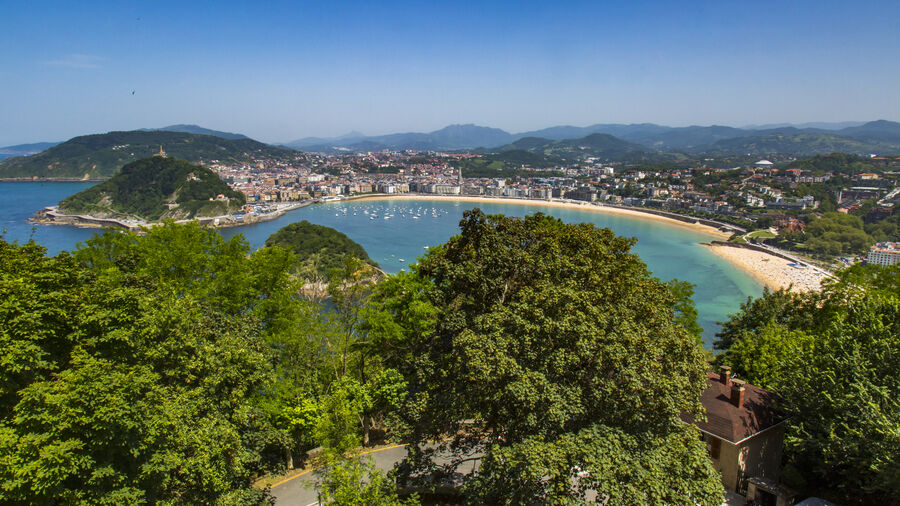
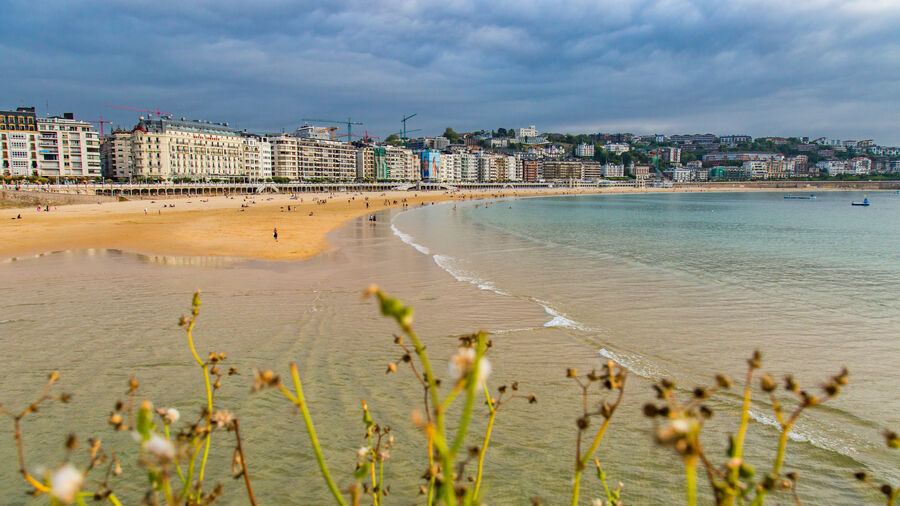
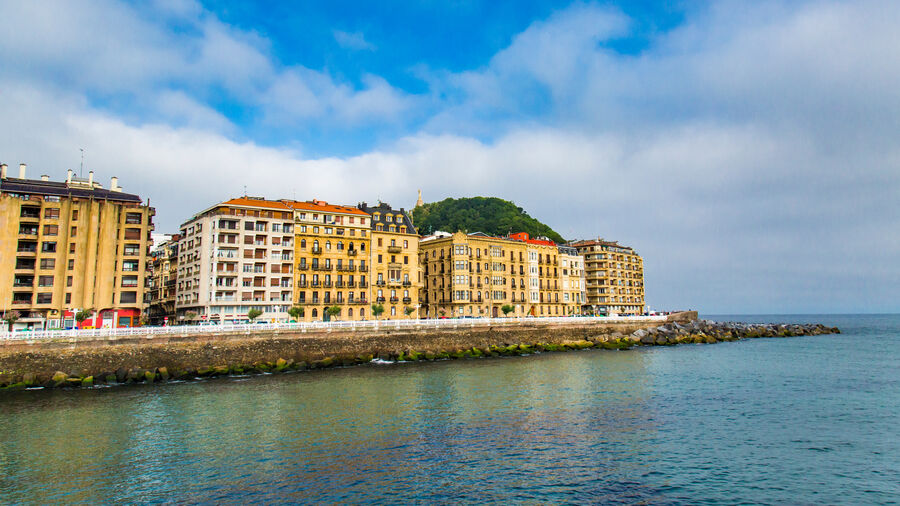
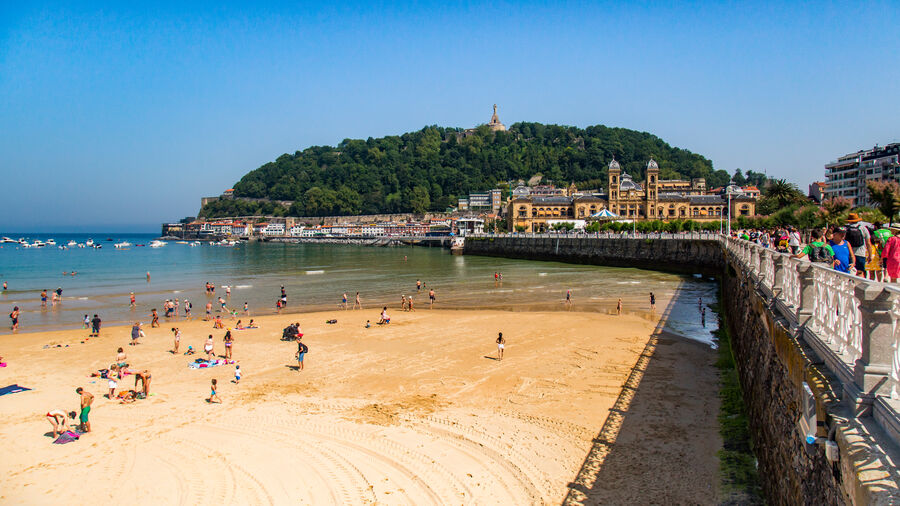
Shimmering above the breathtaking bay of La Concha, elegant and prosperous San Sebastián (Donostia in Euskara) has a favored location with golden beaches, capped by twin peaks at either end, and a cute little island in the center. A delightful beachfront promenade runs the length of the bay, with an intriguing Old Town at one end and a smart shopping district in the center. It has 180,000 residents and almost that many tourists in high season (July–Sept). With a romantic setting, a soaring statue of Christ gazing over the city, and a late-night lively Old Town, San Sebastián has a Rio de Janeiro aura. While there’s no compelling museum to visit, the scenic city provides a pleasant introduction to Spain’s Basque Country.

In 1845, Queen Isabel II’s doctor recommended she treat her skin problems by bathing here in the sea. Her visit mobilized Spain’s aristocracy, and soon the city was on the map as a seaside resort. By the turn of the 20th century, Donostia was the toast of the belle époque, and a leading resort for Europe’s beautiful people. Before World War I, Queen María Cristina summered here and held court in her Miramar Palace overlooking the crescent beach. Hotels, casinos, and theaters flourished. Even Franco enjoyed 35 summers in a place he was sure to call San Sebastián, not Donostia.

Planning Your Time

San Sebastián is worth a day. Stroll the two-mile-long promenade and scout the place you’ll grab to work on a tan. The promenade leads to a funicular that lifts you to the Monte Igueldo viewpoint. After exploring the Old Town and port, walk up to the hill of Monte Urgull. A big part of any visit to San Sebastián is enjoying tapas in the Old Town bars.

Orientation

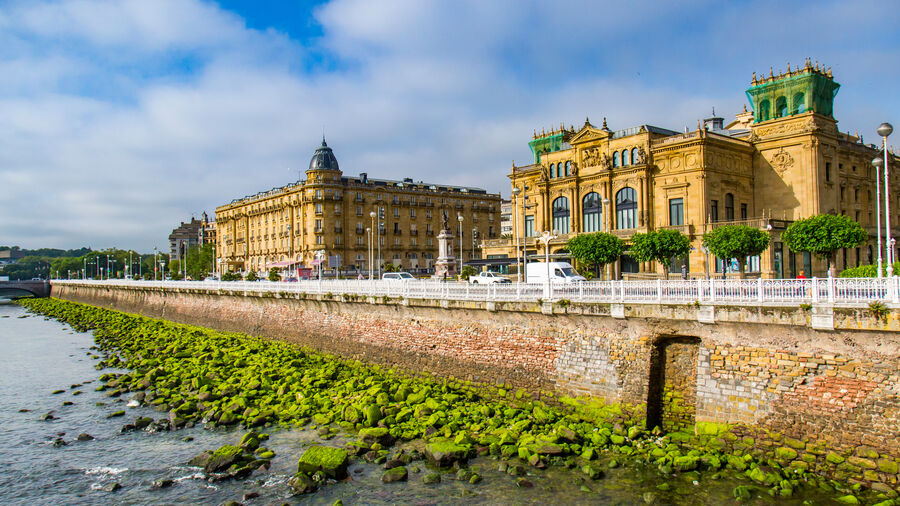
The San Sebastián we’re interested in surrounds Concha Bay (Bahía de la Concha), and can be divided into three areas: Playa de la Concha (best beaches), the shopping district (called Centro Romántico), and the skinny streets of the grid-planned Old Town (called Parte Vieja, to the north of the shopping district). The Centro Romántico, just east of Playa de la Concha, has beautiful turn-of-the-20th-century architecture, but no real sights.

It’s all bookended by mini-mountains: Monte Urgull to the north and east, Monte Igueldo to the south and west. The river (Río Urumea) divides central San Sebastián from the district called Gros (which has a lively night scene and surfing beach).
San Sebastián

Tourist Information: San Sebastián’s TI, a block from the river on the boulevard that separates the Centro Romántico from the Old Town, has information on city and regional sights, as well as bus and train schedules. Pick up the excellent town booklet, which has English descriptions of the three walking tours — the Old Quarter/Monte Urgull walk is best (TI open July–Sept Mon–Sat 9:00–20:00, Sun 10:00–14:00 & 15:30–19:00; Oct–June Mon–Sat 9:00–13:30 & 15:30–19:00, Sun 10:00–14:00; just off Zurriola bridge at Calle Reina Regente 3, tel. 943-481-166, www.sansebastianturismo.com). Skip the San Sebastián Card unless you plan to use the bus a lot (€10 for 3 days of free bus transport plus minor sightseeing discounts).

English-language walking tours of the Old Town (Parte Vieja), Monte Urgull, and Centro Romántico cost €5 (most routes July–Aug only, times and meeting places vary — confirm with TI). The TI also rents audioguides (€10/2 hours).

Arrival in San Sebastián

By Train: If you’re coming on a regional Topo train from Hendaye (“Hendaia” in Euskara) on the French border, get off at the EuskoTren station (end of the line, called Amara). Nearby Continental Auto provides luggage storage (€2/day, Mon–Sat 7:00–13:00 & 15:00–20:30, Sun 7:00–12:00 & 15:00–20:30, tel. 943-469-074). It’s a level 15-minute walk to the center; exit the station and walk across the long plaza, then walk eight blocks down Calle Easo to the beach. The Old Town will be ahead on your right, with Playa de la Concha to your left. To speed things up, catch bus #26 or #28 along Calle Easo and take it to the Boulevard stop, near the TI at the bottom of the Old Town.

If you’re arriving by train from elsewhere in Spain (or from France with a transfer in Irún), you’ll get off at the main RENFE station (luggage lockers available, €3/day, daily 7:00–22:00). It’s just across from the Centro Romántico shopping district. To reach the Old Town and most recommended hotels, cross the fancy, dragon-decorated María Cristina Bridge (across and left when exiting station), turn left on Paseo de los Fueros, and follow the Urumea River until the last bridge.

By Bus: If you’re arriving by bus from Hondarribia, hop off at pretty Plaza de Gipuzkoa (first stop after crossing the river, in shopping area, near TI). To reach the TI, walk down Legazpi, cross Alameda del Boulevard, and turn right.

By Car: Take the Amara freeway exit, follow Centro Ciudad signs into the city center, and park in a pay lot (many are well-signed). If you’re picking up or returning a rental car, “The Big Autorental” — which includes Hertz (Zubieta 5, tel. 943-461-084) and Avis (Triunfo 2, tel. 943-461-527) — is near Hotel Niza, and Europcar is at the RENFE train station (tel. 943-322-304).

Getting around San Sebastián
 

By Bus: At Alameda del Boulevard, along the bottom edge of the Old Town, you’ll find a line of public buses ready to take you anywhere in town; give any driver your destination, and he’ll tell you the number of the bus to catch (€1.10, pay driver).

Some handy bus routes: #26 and #28 connect the bus and EuskoTren stations to the TI (get off at the Boulevard stop); #16 begins at the Boulevard/TI stop, goes along Playa de la Concha and through residential areas, and eventually arrives at the base of the Monte Igueldo funicular. The TI has an excellent bus-route map, if you want to see exactly where you’re going (www.ctss.es).

By Taxi: Taxis start at €3, then charge €0.50 per kilometer. You’ll do better calling one or finding a taxi stand (such as along Alameda del Boulevard, described above) rather than trying to hail one (tel. 943-464-646 or 943-404-040).

By Tourist Train or Bus: Two options are available, but they’re not necessary in this walkable city: The “txu-txu” tourist train (€4.40, daily July–Aug 11:00–19:00, Sept–June 11:00–13:00 & 16:00–19:00, 40-min round-trip, tel. 943-422-973) and the Donosti hop-on, hop-off bus tour (€10, 60 min, ticket good for 24 hours, leaves from theater across from TI, tel. 696-429-847). Both do similar routes with minimal commentary along the Playa de La Concha, toward Monte Igueldo, and back through Centro Romántico — but only the bus tour goes up Monte Igueldo and also crosses the river into the Gros neighborhood (neither tour goes into the mainly pedestrian Old Town).

Useful Phone Numbers: For the police, dial 943-538-920. For flight information, call San Sebastián’s airport (in Hondarribia, 12 miles away) at tel. 943-668-500.

Sights — San Sebastián

La Concha Beach and Promenade — The shell-shaped Playa de La Concha, the pride of San Sebastián, has one of Europe’s loveliest stretches of sand. Lined with a two-mile-long promenade, it allows even backpackers to feel aristocratic. While pretty empty off-season, in summer, sunbathers pack its shores. But year-round, it’s surprisingly devoid of eateries and money-grubbing businesses. There are free showers, and cabinas provide lockers, showers, and shade for a fee. The Miramar palace and park, which divides the crescent in the middle, was where Queen María Cristina held court when she summered here. Her royal changing rooms are used today as inviting cafés, restaurants, and a fancy spa. For a century, the lovingly painted wrought-iron balustrade that stretches the length of the promenade has been a symbol of the city; it shows up on everything from jewelry to headboards.

La Perla Spa — The spa attracts a less royal crowd today and appeals mostly to visitors interested in sampling “the curative properties of the sea.” You can enjoy its Talaso Fitness Circuit, featuring a hydrotherapy pool, relaxation pool, panoramic Jacuzzi, cold-water pools, seawater steam sauna, dry sauna, and a relaxation area. For those seriously into spas, they offer additional services, from Dead Sea mud wraps to massages to day-long “personalized programs” (€19 for 2.5-hour fitness circuit, €24.50 for 3-hour circuit, daily 8:00–22:00, caps sold and towels rented, bring or buy a swimsuit, on the beach at the center of the crescent, Paseo de La Concha, tel. 943-458-856, www.la-perla.net).

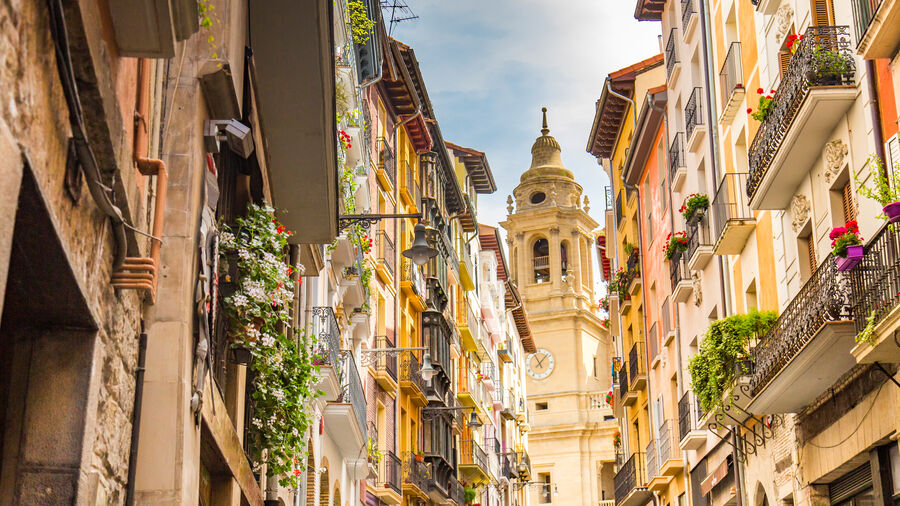
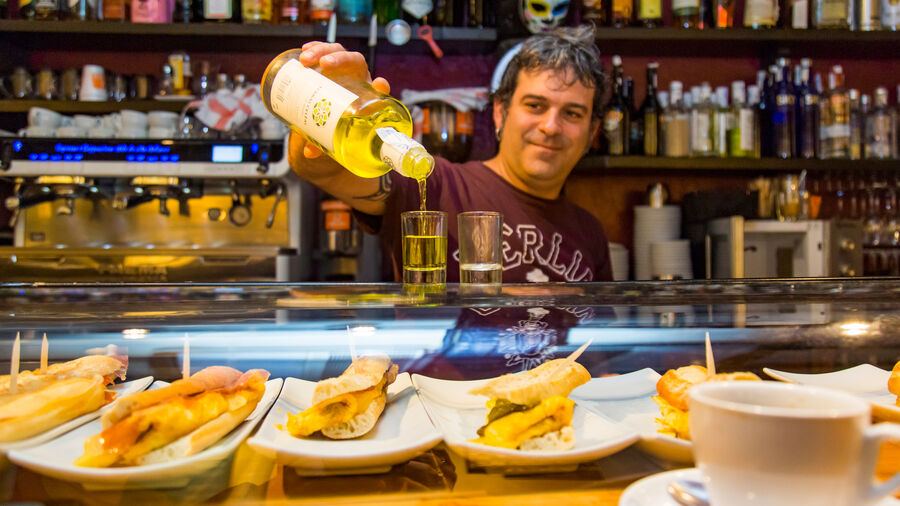
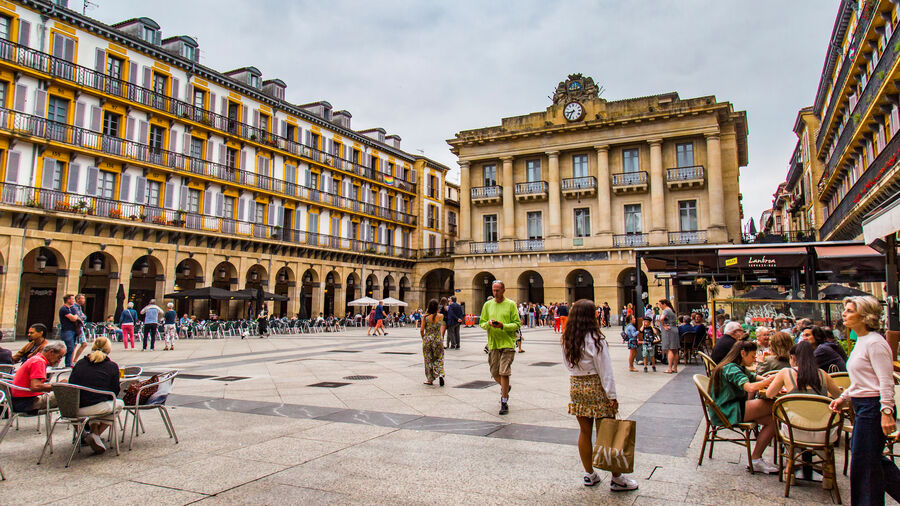
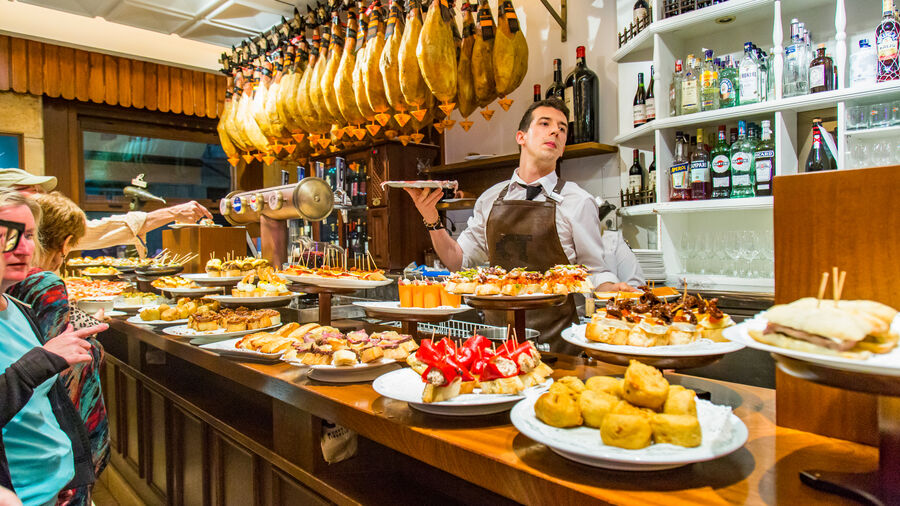
Old Town (Parte Vieja) — Huddled in the shadow of its once-protective Monte Urgull, the Old Town is where San Sebastián was born about 1,000 years ago. The grid plan of streets hides heavy Baroque and Gothic churches, surprise plazas, and fun little shops, including venerable pastry stores, rugged produce markets, Basque-independence souvenir shops, and seafood-to-go delis. “THC shops” offer the latest from the decriminalized marijuana scene in Spain — adults are allowed to grow two plants. Be sure to wander out to the port to see the fishing industry in action. The Old Town’s main square, Plaza de la Constitución (where bullfights used to be held — notice the seat numbering on the balconies) features inviting café tables spilling from all corners. The highlight of the Old Town is its array of incredibly lively tapas bars — though here, these snacks are called pintxos (see sidebar, above right).

Museum of San Telmo — This humble museum displays exhibits and paintings in rooms arranged around the peaceful cloister of a former Dominican monastery. There are a few exhibits on Basque folk life, and a small collection of 19th- and 20th-century paintings by Basque artists that offers an interesting peek into the spirit, faces, and natural beauty of this fiercely independent region (free, other featured artists include El Greco and Rubens, minimal English information, Tue–Sat 10:30–13:30 & 16:00–19:30, Sun 10:30–14:00, closed Mon, Plaza Zuloaga 1, tel. 943-481-580).

Cruise — Small boats cruise from the Old Town’s port to the island in the bay (Isla Santa Clara), where you can hike the trails and have lunch at the lone café, or pack a picnic before setting sail (€7.50 round-trip; departures hourly on the hour 12:00–13:00 & 16:00–20:00, boats don’t run Oct–May).

Aquarium — San Sebastián’s impressive aquarium exhibits include a history of the sea, fascinating models showing various drift-netting techniques, a petting tank filled with nervous fish, a huge whale skeleton, and a 45-foot-long tunnel that allows you to look up at floppy rays and menacing sharks (€10, €6 for kids under 13; May–Sept 8:00–21:00, Oct–April 8:00–19:00; ongoing renovations may close some exhibits, Paseo del Muelle 34, tel. 943-440-099, www.aquariumss.com).

Naval Museum — Located at the port, this museum’s two floors of exhibits describe the seafaring city’s history, revealing the intimate link between the Basque culture and the sea (€1.20, free on Thu, borrow the English translation booklet, Tue–Sat 10:00–13:30 & 16:00–19:30, Sun 11:00–14:00, closed Mon, just before aquarium at Paseo del Muelle 24, tel. 943-430-051).

Monte Urgull — The once-mighty castle (Castillo de la Mota) atop the hill deterred most attackers, allowing the city to prosper in the Middle Ages. The museum located within the castle features San Sebastián history and is mildly interesting. The best views from the hill are not from the statue of Christ, but from the ramparts on the left side (as you face the hill), just above the port’s aquarium. Café El Polvorín, nestled in the park, is a friendly place with salads, sandwiches, and good sangria. A new walkway allows you to stroll the mountain’s entire perimeter near sea level. This route is continuous from Hotel Parma to the aquarium. Paths are technically open only from sunrise to sunset (daily May–Sept 8:00–21:00, Oct–April 8:00–19:00). Why are some of the directional signs defaced? Because you’re in the land of Euskadi, not Spain — and to remind you, some proud Basque has spray-painted over the Spanish.

Monte Igueldo — For commanding city views (if you ignore the tacky amusements on top), ride the funicular up Monte Igueldo, a mirror image of Monte Urgull. The views over San Sebastián, along the coast, and into the distant green mountains are sensational day or night. The entrance to the funicular is on the road behind the tennis club on the far western end of Playa de Ondarreta, which extends from Playa de la Concha to the west (funicular-€2 round-trip; July–mid-Sept daily 10:00–22:00; April–June and mid-Sept–Oct daily 11:00–20:00; Nov–March Mon–Tue and Thu–Fri 11:00–18:00, Sat–Sun 11:00–20:00, closed Wed). If you drive to the top, you’ll pay €1.50 to enter. The #16 bus takes you here from the Old Town in about 10 minutes, stopping at the funicular station.

Transportation Connections — San Sebastián

Remember that San Sebastián has two train stations: RENFE and EuskoTren. Which station you use depends on your destination.The RENFE station handles long-distance destinations within Spain, including Barcelona (reservation required, 2/day, 8.5 hrs; 1 at night except Sat, 10 hrs), Madrid (reservation required, 3/day, 6–8.5 hrs, or 10.5-hr night train), and Santiago de Compostela (1/day, 11–14 hrs, final destination A Coruña). If you’re going into France, it’s best to take the regional Topo train (which leaves from the EuskoTren station) over the French border into Hendaye (2/hr, 30 min, departs EuskoTren station at :15 and :45 after the hour 7:15–21:45). From Hendaye, connect to France’s SNCF network, including Paris (from Hendaye: 4/day, 5.5 hrs, or 8.5-hr night train, reservations required). Unfortunately, San Sebastián’s EuskoTren station doesn’t have information on Paris-bound trains from Hendaye. Don’t buy the Spanish ticket too far in advance — EuskoTren tickets to Hendaye must be used within two hours of purchase (or else they expire).


Also leaving from San Sebastián’s EuskoTren station are slow regional trains to destinations in Spain’s Basque region, including Bilbao (hourly, €10.50 round-trip ticket saves €2, 2.25–2.75 hrs — the bus is faster; EuskoTren info: tel. 902-543-210, www.euskotren.es). Although the train ride from San Sebastián to Bilbao takes twice as long as the bus, it passes through more interesting countryside.

By Bus: There is no real bus station in San Sebastián — it’s more a congregation of bus parking spots, called Amara, at Plaza Pío XII (on the river, four blocks south of EuskoTren station). Some schedules are posted at various stops, but confirm departure times and buy your tickets in advance at any of the bus companies with offices along Avenida de Sancho el Sabio. Pesa, which serves St. Jean-de-Luz and Bilbao, is located on the same side as the “station,” along Avenida de Sancho el Sabio (www.pesa.net).

From San Sebastián, buses go to Madrid (8/day, 6 hrs direct, otherwise 7 hrs), Bilbao (2/hr, hourly on weekends, 6:30–22:00, 1.25 hrs, get €9.15 ticket from Pesa office, departs from Amara, bus tel. 902-101-210; morning buses fill with tourists, commuters, and students so consider buying your ticket the day before; once in Bilbao, buses leave you at Termibús stop with easy tram connections to the Guggenheim modern-art museum), and St. Jean-de-Luz, France (2/day direct, at 9:00 and 14:30, 45 min, €4.15 one-way, €7.50 round-trip, runs only 1/week off-season, departs from Amara, tel. 902-101-210).

Bilbao and the Guggenheim Museum

In recent years, the cultural and economic capital of the País Vasco, Bilbao (pop. 500,000), has seen a transformation like no other Spanish city. Entire sectors of the industrial city’s long-depressed port have been cleared away to allow construction of a new opera house, convention center, and the stunning Guggenheim Museum. Still, the city will always be a Marseille-like port; for most, it’s worth a visit only for its incredible modern-art museum.

Tourist Information: Bilbao’s handiest TI is across from the Guggenheim (Mon–Fri 11:00–18:00, Sat 11:00–19:00, Sun 11:00–14:00, Avenida Abandoibarra 2, tel. 944-710-301, www.bilbao.net). If you’re interested in anything besides the Guggenheim, pick up a map, the bimonthly Bilbao Guide newsletter, and the museum brochure (describing museums dedicated to everything from Basques and bullfighting to Holy Week processionals).

Arrival in Bilbao

Most travelers — whether arriving by train, bus, or car — will want to go straight to the museum. Thanks to a perfectly planned tram system (EuskoTran), getting to the museum is a snap. From any point of entry, simply buy a €1.10 single-ride ticket at a user-friendly green machine, hop on a green-and-gray tram, enjoy the Muzak, and head for the Guggenheim stop (only one line so you can’t get lost, trams come every 10–15 min, www.euskotran.es). When you buy your ticket, validate it at the machine (follow the red arrow), since you can’t do it once on board. An all-day pass costs €3.

The Metro system, designed by prominent architect Lord Norman Foster, is a work of art...but not practical for most visitors. If you get lost, ask: “¿Dónde está el museo Guggenheim?” (DOHN-day ay-STAH el moo-SAY-oh “Guggenheim”).

By Train: Bilbao’s RENFE station (trains from most parts of Spain) is on the river in central Bilbao. Luggage storage is available (daily 7:30–22:00, small locker-€3, large locker-€4.50). The train station connects to a shopping mall. To reach the tram to the Guggenheim, descend into the stores. Leave from the exit marked Hurtado de Amézaga, and go right to find the BBK bank. Enter, find the Automatikoa door on the right, and buy your ticket at the green machine marked Abando (the machine is mixed in with a bunch of ATMs). Leave the bank and continue right around the corner. Validate your ticket at the machines at the tram stop before boarding the tram marked Basurtu.

Trains coming from San Sebastián arrive at the riverside Atxuri station, southeast of the museum. Buy and validate your ticket, hop on a tram, and follow the river to the Guggenheim stop.

By Bus: Buses stop at the Termibus station on the western edge of downtown, about a mile southwest of the museum. Luggage storage is available at the station. Follow the steel CTB signs to take the tram (San Mamés station, direction: Atxuri) to Guggenheim.

By Car: Parking at the museum itself is a hassle; the closest option is the garage two blocks in front (Calle Iparraguirre 18). But to avoid stressful city traffic and frustrating one-ways, the best plan is this: Use the expressway exit marked Centro, following signs to Guggenheim. You’ll pass the long train station on your right; continue straight through the traffic circle, veer left at the river, and park at the big garage (called Pío Baroja). Walk 10 minutes to the museum, or hop on the tram (direction: San Mamés/Basurtu).

Sights — Bilbao's Guggenheim Museum

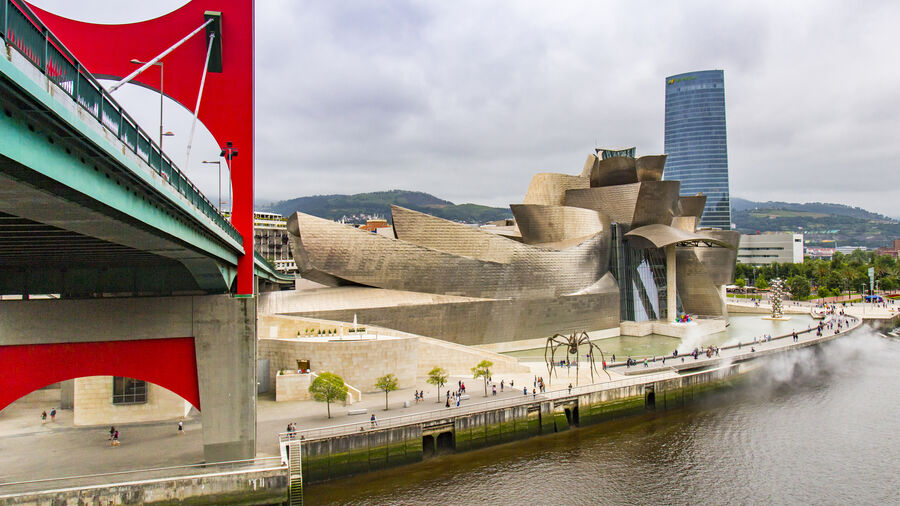
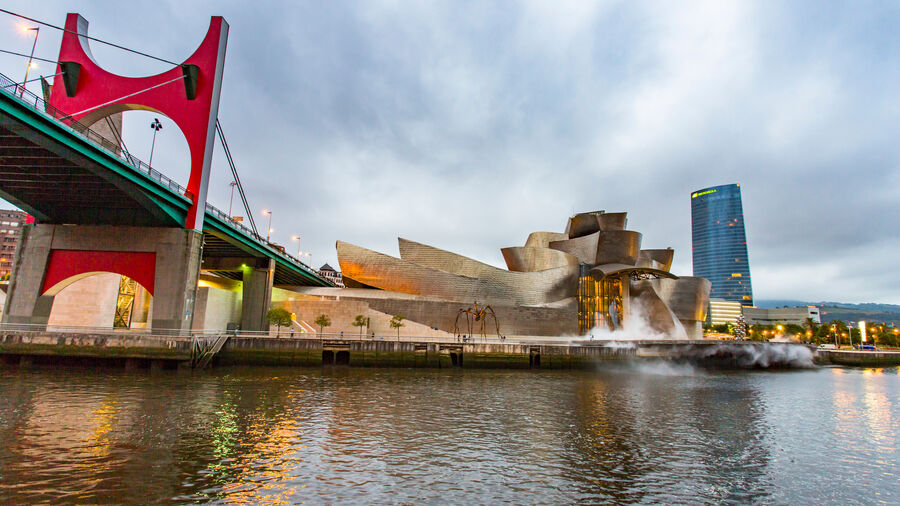
Bilbao's Guggenheim MuseumWhile the collection of art in this museum is no better than that in Europe’s other great modern-art museums, the building itself — designed by Frank Gehry and opened in 1997 — is the reason why so many travelers happily splice Bilbao into their itineraries.

Gehry’s triumph offers a fascinating look at 21st-century architecture. Using cutting-edge technologies, unusual materials, and daring forms, he created a piece of sculpture that smoothly integrates with its environment and serves as the perfect stage for some of today’s best art.

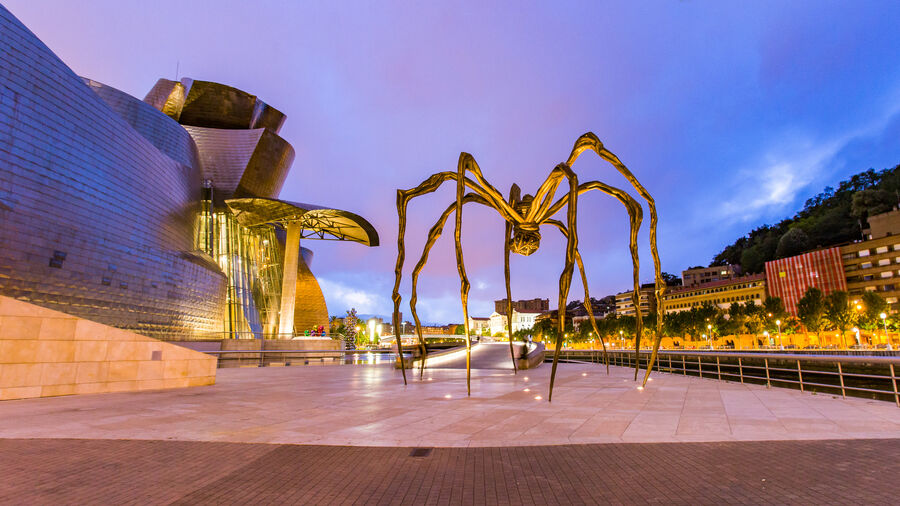
This limestone- and titanium tile–clad building looks like a huge, silvery fish, and connects the city with its river. Gehry meshed many visions. To him, the building’s multiple forms jostle like a loose crate of bottles. They also evoke sails heading out to sea. Gehry keeps returning to his fish motif, reminding visitors that, as a boy, he was inspired by carp...even taking them into the bathtub with him. The building’s skin — shiny, metallic, fish-like scales — is made of thin titanium, carefully created to give just the desired color and reflective quality.

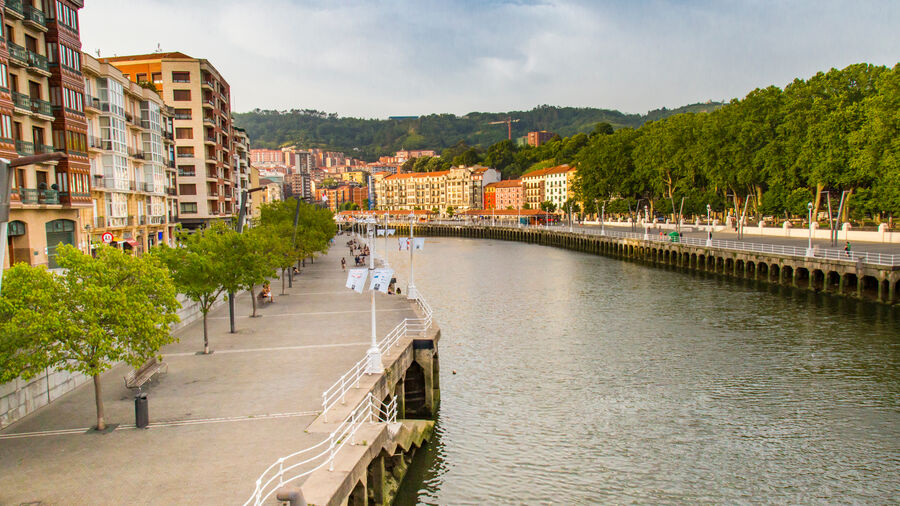
A great way to really enjoy the exterior is to take a circular stroll up and down each side of the river along the handsome promenade and over the two modern pedestrian bridges.

Guarding the main entrance is artist Jeff Koons’ 42-foot-tall West Highland Terrier. Its 60,000 plants and flowers, which blossom in concert, grow through steel mesh. A joyful structure, it brings viewers back to their childhood...perhaps evoking humankind’s relationship to God...or maybe it’s just another notorious Koons hoax. One thing is clear: It answers to “Puppy.”

Descend to the ticket counters. Be sure to pick up a free audioguide when you pay — it explains Gehry’s architecture in vivid detail and describes the rotating exhibits.

After presenting your ticket, you come upon the atrium. This is clearly the heart of the building, pumping visitors from various rooms on three levels out and back, always returning to this central area before moving on to the next. Only the floor is straight. The architect invites you to caress the sensual curves of the walls. Notice the sheets of glass that make up the elevator shaft: They overlap like scales on a fish. The various glass and limestone panels are each unique, designed and shaped by a computer — as will likely be standard in constructing the great buildings of the future.

From the atrium, step out onto the riverside terrace. The shallow pool lets the river lick at the foundations of the building. Notice the museum’s commitment to public spaces: On the right, a grand and public staircase leads under a big green bridge to a tower designed to wrap the bridge into the museum’s grand scheme.

As you enter, pick up the English brochure explaining the architecture and museum layout, and the monthly bulletin detailing the art currently on display. It’s a nice supplement to the audioguide. Because this museum is part of the Guggenheim “family” of museums, the collection perpetually rotates among the sister Guggenheim galleries in New York, Venice, and Berlin. The best approach to your visit is simply to immerse yourself in a modern-art happening, rather than to count on seeing a particular piece or a specific artist’s works. Gehry designed the vast ground floor mainly to show off the often-huge modern-art installations. Computer-controlled lighting adjusts for different exhibits. Surfaces are clean and bare, so you can focus on the art.

Twenty galleries occupy three floors. Use the handy touch-screens scattered throughout the museum to figure out exactly where you are and what’s left to see, since the organic floor plan can be confusing. If you’ve always confused Klimt with Matisse, be sure to visit the espacio didáctico (learning area) on the third floor for its brilliantly concise timeline of all major art movements.

Details: €12.50, includes excellent audioguide; July–Aug daily 10:00–20:00; Sept–June Tue–Sun 10:00–20:00, closed Mon; same-day re-entry allowed — get sticker on your way out; café, no photos inside, tram stop: Guggenheim, Metro stop: Moyua, Avenida Abandoibarra 2, tel. 944-359-080, www.guggenheim-bilbao.es. For guided tours in English, call 944-359-090 for a schedule.

Transportation Connections — Bilbao

By bus to: San Sebastián (2/hr, hourly on weekends, 6:00–22:30, 1.25 hrs, departs Bilbao’s Termibus station, arrives in San Sebastián at Plaza Pío XII), Santander (hourly, 90 min, transfer there to bus to Santillana del Mar or Comillas).

From Bilbao by Train to: San Sebastián (hourly on Eusko¬Tren, long and scenic 2.25–2.75-hr trip, departs from Atxuri station, arrives in San Sebastián at Amara).

Lekeitio

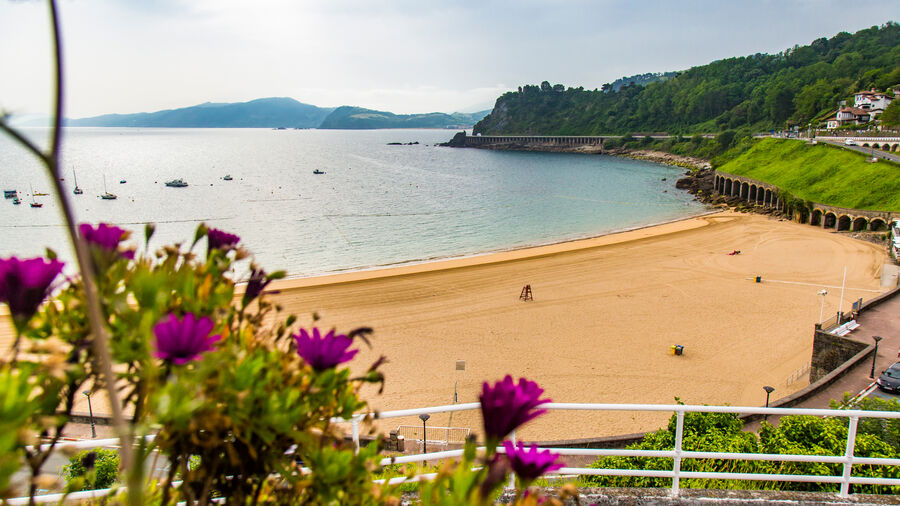
A small fishing port with an idyllic harbor and a fine beach, Lekeitio is an hour by bus from Bilbao and an easy stop for drivers. It’s protected from the Bay of Biscay by a sand spit that leads to the lush and rugged little San Nicolás Island. Hake boats fly their Basque flags and proud Basque locals black out the Spanish translations on street signs.

Lekeitio is a teeming resort during July and August (when its population of 7,000 triples as big-city Basque folks move in to their vacation condos), and it’s a sleepy backwater the rest of the year. It’s isolated from the modern rat race by its location down a long, windy little road.

While sights are humble here, the 15th-century St. Mary’s Parish Church is a good example of Basque Gothic with an impressive altarpiece. The town’s back lanes are reminiscent of old days when fishing was the only industry. Fisherwomen sell their husbands’ catches each morning from about 10:30 at the tiny Plaza Arranegi market (a block off the harbor). The golden crescent beach is as inviting as the sandbar, which — at low tide — challenges you to join the seagulls out on San Nicolás Island.

The TI faces the fish market next to the harbor (mid-June–mid-Sept daily 10:00–14:00 & 16:00–20:00; off-season Tue–Sat 10:30–13:30 & 16:00–19:00, Sun 10:00–14:00, closed Mon; tel. 946-844-017). While buses connect Lekeitio with Bilbao hourly (and San Sebastián 4/day), this stop is most logical for those with a car.

The TI recommends Lekeitio as a base for car explorations of the area (coastal and medieval hill villages). The nearby town of Guernica (Gernika in Euskara, nine miles toward Bilbao) is near and dear to Basques and pacifists alike for good reason. This is the site of the Gernikako Arbola (oak tree of Gernika), which marked the ancient assembly point where the Lords of Bizkaia (Basque leaders) met through the ages to assert their people’s freedom. Long the symbolic heart of Basque separatism, this was a natural target for Franco in the Spanish Civil War. His buddy Hitler agreed to use Guernica as a kind of target practice in 1937. This historic “first air raid” — a prelude to the horrific aerial bombings of World War II — was made famous by Picasso’s epic work, Guernica (now in Madrid).

Hondarribia

For a taste of small-town País Vasco, dip into this enchanting, seldom-visited town. Much smaller and easier to manage than San Sebastián, and also closer to France (across the Bay of Txingudi from Hendaye), Hondarribia allows travelers a stress-free opportunity to enjoy Basque culture. While it’s easy to think of this as a border town (between France and Spain), culturally it’s in the middle of Basque Country.

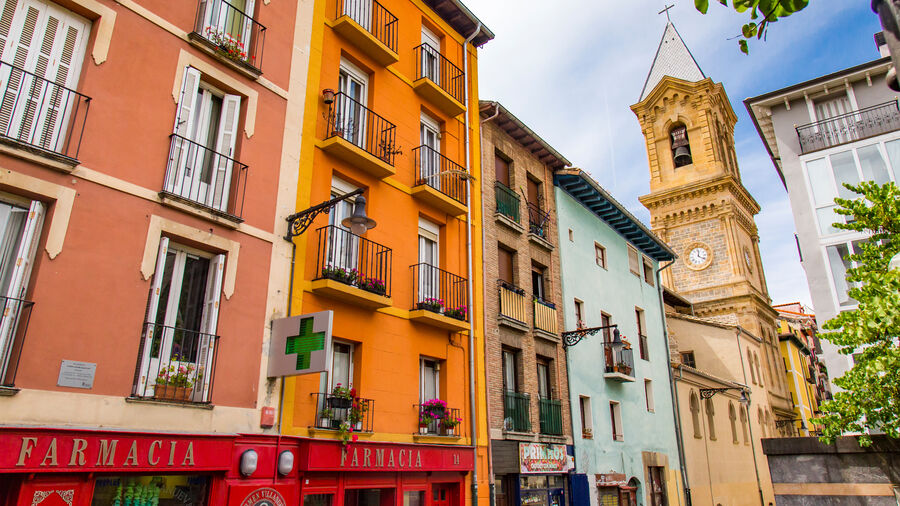
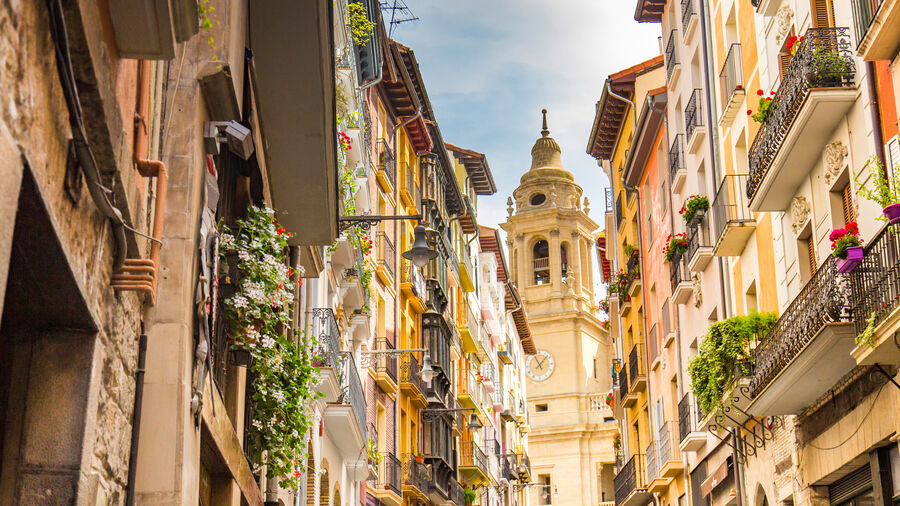
The town comes in two parts: the lower port town and the historic, balcony-lined streets of the hilly and walled upper town. The TI is located between the two parts, two blocks up from the port on Jabier Ugarte 6 (Mon–Fri 9:00–13:30 & 16:00–18:30, Sat 10:00–14:00, closed Sun, tel. 943-645-458). You can follow their self-guided tour of the old town (English brochure available) or just lose yourself within the walls. Explore the plazas of the upper city.

Transportation Connections — Hondarribia

By bus to: San Sebastián (3/hr, 45 min to go 12 miles), Hendaye on the French border (2/hr, 20 min, June–Sept only). A bus stop in Hondarribia is across from the post office, one block below the TI.

By boat to: Hendaye (4/hr, 15 min, runs about 11:00–19:00 or until dark).

For more on the Basque Country in France, see our article.