

Understanding European Gestures
By Rick Steves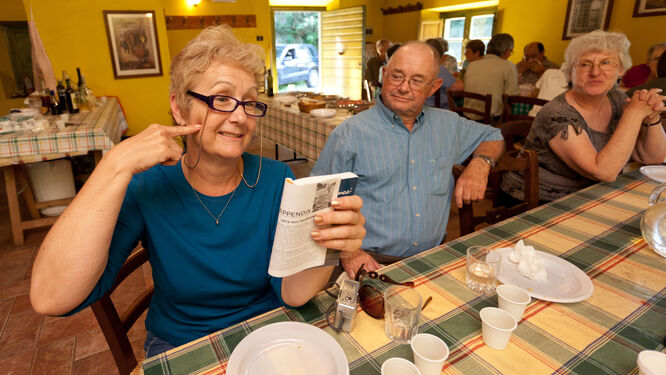
In Europe, while some gestures can help you communicate, others can contribute to the language barrier. For example, if you count with your fingers, in Europe remember to start with your thumb, not your index finger (if you hold up your index finger, you'll probably get two of something).
The thumbs-up sign popular in the United States is used widely in most of Europe to say "OK." The "V for victory" sign is used in most of Europe as in the United States, but may get you a punch in the nose in parts of Britain, where it's an obscene gesture (if you make the "V" with your palm toward you.)
Some cultures also indicate "yes" and "no" differently: In Turkey, they shake their heads as Americans do, but someone may also signal "no" by tilting their head back. In Bulgaria and Albania, "OK" is indicated by happily shaking your head left and right — as if you were signaling "no" in the US.
Here are a few more common European gestures, their meanings, and where you're likely to see them.
Fingertips Kiss: Gently bring the fingers and thumb of your right hand together, raise to your lips, kiss lightly, and joyfully toss your fingers and thumb into the air. This gesture is used commonly in Italy, France, Spain, Greece, and Germany as a form of praise. It can mean sexy, delicious, divine, or wonderful. Make it subtle — tourists look silly when they overemphasize this subtle action.
Hand Purse: With palm facing up, bring together the fingers and thumb of one hand and point them upward. Place your hand about a foot in front of your face, and either hold it still or move it up and down a bit. This is a common and very Italian gesture for a query, such as "What do you want?" or "What are you doing?" or "What is it?" or "What's new?" It can also be used as an insult to say "You fool." In other countries, the hand purse can also mean fear (France), a lot (Spain), and good (Greece and Turkey).

Hand Shake: "Expensive" is often indicated by shaking your hand and sucking in like you just burned yourself.
Cheek Screw: Make a fist, stick out your index finger, and (without piercing the skin) screw it into your cheek. The cheek screw is used widely and almost exclusively in Italy to mean good, lovely, beautiful, or delicious. Many Italians also use it to mean clever. But be careful: In southern Spain, the cheek screw is used to call a man effeminate.
Eyelid Pull: Place your extended forefinger below the center of your eye and pull the skin downward. In France and Greece, this means "I am alert. I'm looking. You can't fool me." In Italy and Spain, it's a friendlier warning, meaning "Be alert, that guy is clever."
Forearm Jerk: Clench your right fist and jerk your forearm up as you slap your right bicep with your left palm. This is a rude phallic gesture that men throughout southern Europe often use the way many Americans "give someone the finger." This jumbo version of "flipping the bird" says "I'm superior" (it's an action some monkeys actually do with their penises to insult their peers). This gesture is occasionally used by rude men in Britain and Germany as more of an "I want you" gesture about (but never to) a sexy woman.
Chin Flick: Tilt your head back slightly and flick the back of your fingers forward in an arc from under your chin. In Italy and France, this means "I'm not interested, you bore me," or "You bother me." In southern Italy, it can mean "No."