

Packing Smart and Traveling Light
By Rick Steves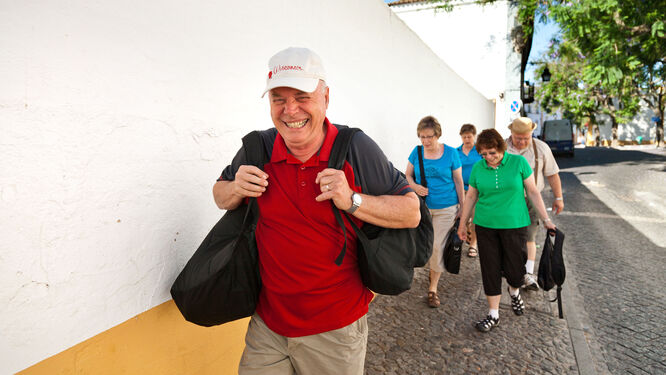
The importance of packing light cannot be overemphasized, but for your sake, I'll try. You'll never meet a traveler who, after five trips, brags: "Every year I pack heavier." You can't travel heavy, happy, and cheap. Pick two. With flight disruptions becoming more common, I'm more committed than ever to my rule of never checking a bag. With only a carry-on, I can be nimble at the airport. It's not a hardship to always have my bag with me — it's peace of mind.
One Bag — That's It
My self-imposed limit is 20 pounds in a 9" × 21" × 14" carry-on-size bag (it'll fit in an airplane's overhead bin, at least on your transatlantic flight; some intra-European airlines restrict carry-on luggage to even smaller specs). At my company, we take tens of thousands of people of all ages and styles on tours through Europe. We allow only one carry-on bag, plus a small day pack. For many, this is a radical concept: 9" × 21" × 14"? That's my toiletries kit! But they manage, and they're glad they did. After you enjoy that sweet mobility and freedom, you'll never go any other way.
You'll walk with your luggage more than you think you will. Before flying to Europe, give yourself a test. Pack up completely and walk around your house or block. Or practice being a tourist in your hometown for an afternoon. Fully loaded, you should enjoy window-shopping. If you can't, stagger home and thin things out.
When you carry your own luggage, it's less likely to get lost, broken, or stolen. Lengthy delay or quick, last-minute flight change? No problem —your bag is with you. Had you checked it, who knows where it might end up? Bag in hand, it's easy to adapt to whatever the airline throws at you. And when you arrive, you can hit the ground running. It's a good feeling. When I land in London, I'm on my way downtown while everyone else stares anxiously at the luggage carousel. When I fly home, I'm the first guy the dog sniffs.
You can also save money by bringing less. Read the fine print when you are choosing flights to understand add-on fees for checked (and sometimes even carry-on) baggage. While major airlines generally allow one free checked bag on overseas flights, some charge extra. Airlines also have weight limits for bags, and often charge more for overweight bags. If you're taking a separate flight within Europe, expect to be charged to check a bag. Challenge yourself to pack according to the most restrictive baggage policy.
It can be a drag, dragging your bag through airports, and even I sometimes wonder why I followed my own advice to bring only a carry-on. But then I'm reminded of the joy of having everything with me — like the time I avoided a long layover by hopping on an earlier flight from Copenhagen to Bergen. If I'd checked my bag, I wouldn't have had that kind of flexibility. Arriving at my hotel two hours early, I enjoyed a jumpstart on my Norway time with a lovely evening in a salty port town, where summer's "magic hour" lasts until 11 p.m.
Packing light isn't just about saving time and money — it's about your traveling lifestyle. Too much luggage limits your options. It slams the Back Door shut. Serendipity suffers. Changing locations becomes a major operation. Con artists figure you're helpless. Porters are a problem only to those who need them. With only one bag, you're mobile and in control. Take this advice seriously.
Packing 101
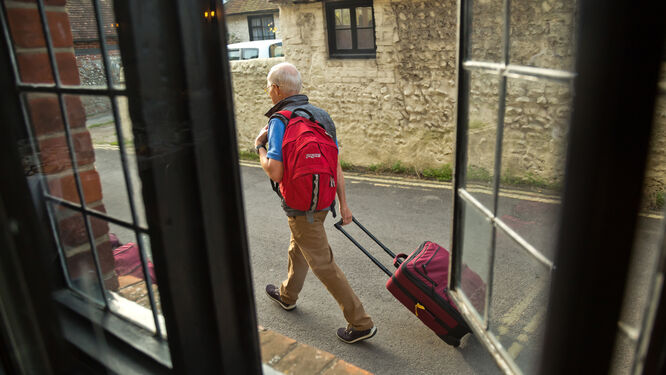
How do you fit a whole trip's worth of luggage into a small backpack or suitcase? The answer is simple: Bring very little.
Spread out everything you think you might need on the living-room floor. Scrutinize each item. Ask yourself, "Will I really use my snorkel and fins enough to justify carrying them around all summer?" Not "Will I use them?" but "Will I use them enough to feel good about hauling them over the Swiss Alps?" Frugal as I may be, I'd buy a set in Greece and give them away before I'd carry that extra weight for weeks. Remember that you can rent the gear you need for all kinds of outdoor activities — or look for lightly used goods at secondhand stores, which are as popular in Europe as they are in the US.
Don't pack for the worst-case scenario. Pack for the best-case scenario and buy yourself out of any jams; if there's only a slight chance you will need a parka or a third pair of shoes, rest assured you can find what you need in Europe. Bring layers rather than a heavy coat. Think in terms of what you can do without — not what might be handy on your trip. I've seen people pack a whole summer's supply of deodorant or razors, thinking they can't get them in Europe. The world is small: You can buy Dial soap, Colgate toothpaste, Nivea cream, and Gillette razors in Sicily and Slovakia. Tourist shops in major international hotels are a sure bet whenever you have difficulty finding a personal item. If you can't find one of your essentials, ask yourself how a half-billion Europeans can live without it. Rather than carry a whole trip's supply of toiletries, take enough to get started and look forward to running out of toothpaste in Bulgaria. Then you have the perfect excuse to go into a Bulgarian department store, shop around, and pick up something you think might be toothpaste.
Whether I'm traveling for three weeks or three months, I pack exactly the same. To keep your clothes tightly packed and well organized, fold and roll them before zipping them up in packing cubes. To really maximize bag space, consider airless baggies or a clothes compressor (look for heavy-duty ones made to withstand everyday use). I also like specially designed folding boards (such as Eagle Creek's Pack-It Folder) to fold and carry clothes with minimal wrinkling. Mesh bags also come in handy. I use one for underwear and socks, another for miscellaneous stuff such as a first-aid kit, earplugs, clothesline, sewing kit, and gadgets.
Remember to leave room for souvenirs, or bring along an empty featherweight nylon bag to use as a carry-on for your return flight, when you can check your main bag through — this is when those expandable compartments really come in handy.
Go casual, simple, and very light. Remember, in your travels you'll meet two kinds of tourists — those who pack light and those who wish they had. Say it out loud: "PACK LIGHT PACK LIGHT PACK LIGHT."