Home > Plan Your Trip > Travel Tips

Packing Light & Right

Traveler pauses in front of a flight of stairs with his luggage
Too much luggage marks you as a typical tourist. It slams the back door shut.
By Rick Steves

The importance of packing light cannot be overemphasized, but, for your own good, I'll try. You'll never meet a traveler who, after five trips, brags, "Every year I pack heavier." The measure of a good traveler is how light she travels. You can't travel heavy, happy, and cheap. Pick two.

One Bag, That's It

Limit yourself to 20 pounds in a carry-on size bag. A 9" x 22" x 14" bag is my self-imposed limit. At ETBD we've taken thousands of people of all ages and styles on tours through Europe. We allow only one carry-on bag. For many, this is a radical concept. "9 x 22 x 14 inches? That's my cosmetics kit!" But they manage and they're glad they did. And after you enjoy that sweet mobility and freedom, you'll never go any other way. Whether you bring a bag you can carry on your back or one with wheels is up to you — but you'll still want to pack light (you'll find my favorite examples of these bags in my online Travel Store).

You'll walk with your luggage more than you think you will. Before leaving home, give yourself a test. Pack up completely, go into your hometown, and practice being a tourist for an hour. Fully loaded, you should enjoy window shopping. If you can't, stagger home and thin things out.

When you carry your own luggage, it's less likely to get lost, broken, or stolen. A small bag fits on your lap or under your seat on the bus, taxi, and airplane. You don't have to worry about it, and you save time, too. When I land in London, I'm on my way downtown while everyone else stares anxiously at the luggage carousel. When I fly home, I'm the first guy that dog sniffs.

Pack light...and pack smart. Post-September 11, you can't bring anything potentially dangerous — such as knives, scissors, nail files, or cigarette lighters — in your carry-on bag (though these items can be packed in checked luggage). Now I leave my Swiss Army knife at home and still carry on my bag as usual. You can take an entire set of knives to Europe if you like — but you'll have to check your bag.

Even before 9-11, some airlines were limiting carry-on luggage weight as well as size. For example, British Air and SAS have a maximum of 13 and 18 pounds respectively. It's only worth fighting to carry on your bag if you have a tight connection. Call your airline (or read the fine print on your ticket) for details. If you have to check your bag, mark it inside and out with your name, address, and emergency phone number. While many travelers lock their bags, I never have.

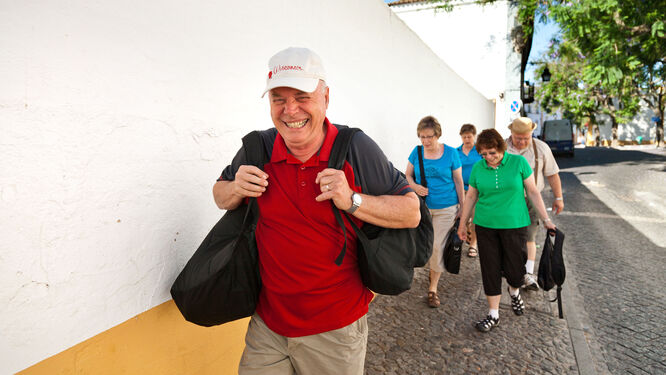
Too much luggage marks you as a typical tourist. It slams the back door shut. Serendipity suffers. Changing locations becomes a major operation. Con artists figure you're helpless. Porters are a problem only to those who need them. With one bag hanging on your back, you're mobile and in control. Take this advice seriously.
Backpack or Suitcase?

ETBD's Wheeled  Bag
ETBD's 21" Roll-Aboard

A fundamental packing question is your choice of luggage. Of all the options, I consider only three: 1) a carry-on-size "convertible" bag with zip-away shoulder straps; 2) a carry-on-size wheeled bag; or 3) an internal-frame backpack

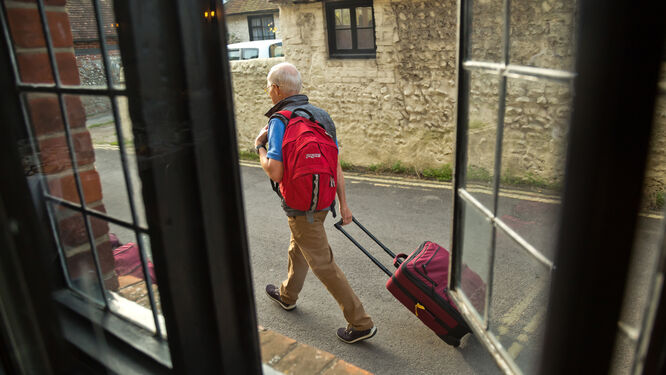
Travelers who want the easy mobility of a backpack but with a more low-key appearance travel with bag #1: a convertible backpack/suitcase with zip-away shoulder straps. These bags give you the best of both worlds — a suitcase when in town, and a backpack when you want to be more mobile. I travel with this bag and keep it exclusively in the backpack mode. While these "soft" bags basically hang on your back and are not as comfortable for long hauls as an internal-frame backpack, they work fine for getting from the station to your hotel. And, at 9" x 22" x 14", they fit in the airplane's overhead lockers. I live out of this bag for three months each year — and I absolutely love it.

Carry-on-sized wheeled bags (option #2) are well-designed and popular. My wife, daughter, and most of my staff prefer this bag; its tight and compact design makes it roomy while keeping it just small enough to fit in the plane's overhead locker. The advantage of bag #2 over bag #1: You can effortlessly wheel your gear around without getting sweaty. The downside: Wheeled bags cost $20–50 extra, weigh several pounds more, and delude people into thinking they don't need to pack so light. They are cumbersome in places without a smooth surface to roll on (crowded subways, hiking through a series of train cars, walking to your hotel in villages with stepped lanes and dirt paths, and so on) — but they're wonderful in airports (where check-in waits and distances to gates are longer than ever).

Most young-at-heart travelers "backpack" through Europe (option #3). They buy an internal-frame backpack at R.E.I. or a similar outdoor store (www.rei.com). While these are the most comfortable bags to wear on one's back, they can be expensive, and are often built "taller" than carry-on size.

Base your decision on the strength of your back. The day will come when I'll be rolling my bag through Europe with the rest of the gang. But as long as I'm hardy enough to carry my gear on my back, I will.

Unless you plan to camp or sleep out a lot, a sleeping bag is a bulky security blanket. Even on a low budget, bedding will be provided. (Hostels provide all bedding free or rent sheets for a small fee, and often don't allow sleeping bags.) Don't pack to camp unless you're going to camp. Without a sleeping bag, a medium-size backpack is plenty big.

Backpackademia — What to Bring?

How do you fit a whole trip's worth of luggage into a carry-on bag? The answer is simple: Bring very little. Think in terms of what you can do without, not what will be handy on your trip (risk shivering for a day rather than taking a heavy coat). Pack for the best scenario and figure you'll buy yourself out of any jams.

Begin by spreading out everything you think you might need on the living room floor. Pick up each item one at a time and scrutinize it. Ask yourself, "Will I really use this snorkel and these fins enough to justify carrying them around all summer?" Not "Will I use them?" but "Will I use them enough to feel good about carrying them over the Swiss Alps?" Regardless of my budget, I would buy them in Greece and give them away before I would carry that extra weight over the Alps.

Don't pack for the worst scenario. Pack for the best scenario and simply buy yourself out of any jams. Risk shivering for a day rather than taking a heavy coat. Think in terms of what you can do without — not what will be handy on your trip. When in doubt, leave it out. I've seen people pack a whole summer's supply of deodorant, tampons, or razors, thinking they can't get them there. The world's getting really small; you can buy Dial soap, Colgate toothpaste, Tampax, Nivea cream, and Bic razors in Sicily. Tourist shops in major international hotels are a sure bet whenever you have difficulty finding some personal item. And if you can't find one of your essentials, ask yourself how 300 million Europeans can live without it.

Whether you're traveling for three weeks or three months, you should pack exactly the same. Rather than take a whole trip's supply of toiletries, take enough to get started and look forward to running out of toothpaste in Bulgaria. Then you have the perfect excuse to go into a Bulgarian department store, shop around, and pick up something you think might be toothpaste…

Traveler drying laundry on a clothesline
Go ahead and ask! There's a good chance you can share the clothesline in the B&B's back yard or on the hotel's roof.

Our Clothing Scene

The bulk of your luggage is clothing. Minimize by bringing less and washing more often. Every few nights you'll spend 10 minutes doing a little wash. This doesn't mean more washing, it just means doing it little by little as you go.

Pack dark clothes that dry quickly and either don't wrinkle or look good wrinkled. To see how wrinkled shirts will get, give everything a wet rehearsal by hand-washing and drying once at home. You should have no trouble drying clothing overnight in your hotel room. I know this sounds barbaric, but my body dries out a damp pair of socks or shirt in a jiffy. It's fun to buy clothes as you travel — another reason to start with less.

For winter travel, you can pack nearly as light. Wear heavier, warmer, and waterproof shoes. Add a down or pile coat, long johns (quick-drying Capilene or superlight silk), scarf, mittens, hat, and an extra pair of socks and underwear since things dry more slowly. Pack with the help of a climate chart. Layer your clothing for warmth, and assume you'll be outside in the cold for hours at a time.

Local waiting for a train in traditional attire
Come on...do you really want to blend in with the locals?

During the tourist season (April through September), the concert halls go casual. I have never felt out of place at symphonies, operas or plays wearing khaki slacks and a good-looking sweater. Pack with color coordination in mind. Some cultural events require more formal attire, particularly outside of the tourist season, but the casual tourist rarely encounters these.

Many travelers are concerned about appropriate dress. While it's true that European women often wear dresses or skirts, traveling women who prefer slacks and don't pack a dress will have no regrets.

If you're trying to blend in, realize that shorts are uncommon in Europe. They're considered exclusively beachwear for use in coastal or lakeside resort towns. While most Europeans won't be offended if you wear shorts, you might be on the receiving end of some stares. Shorts are especially uncommon on older women and in big cities, and the cutoff temperature for "hot enough for shorts" is much higher than in the U.S. Especially in southern Europe, no matter how hot it is, grown adults look goofy in shorts.

Some churches (like St. Peter's in Rome and St. Mark's in Venice) have modest dress requirements for men, women, and children: no shorts or bare shoulders. If necessary, it's usually easy to improvise some modesty (buy a cheap souvenir T-shirt to cover your shoulders and borrow a nearby tablecloth for a skirt or kilt to cover your legs). In southern cities — no matter how hot it is — grown men look goofy in shorts.

Electricity

I used to recommend traveling without electronic gear. But these days, there are just too many cool and handy gadgets to go without. I still pack light...but I also bring a few select electronic items.

Europe's electrical system is different from the United States' — both in the plugs used and the voltage of the current. American appliances run on 110 volts, while European appliances are 220 volts. (Note that these numbers can vary slightly — for example, 120 instead of 110 volts in the U.S.) You can destroy your American appliance if you plug it directly into a European wall outlet.

There are two different components you'll need to plug in American gear overseas: A converter changes the electric current from European to American. A small adapter allows American-style plugs (two flat prongs) to fit into British outlets (which take three rectangular prongs) or continental European outlets (which take two small, round prongs). While there are some combination converter-adapters, you'll more likely need to deal with each of these issues separately.

Most new electronic travel accessories come with a built-in voltage converter that works in both the U.S. and Europe. These converters "autosense" the voltage from the wall outlet. If you see a range of voltages printed on the item or its plug (such as "110-220"), you're OK in Europe. Older appliances have a voltage switch marked 110 (U.S.) and 220 (Europe). Ask the salesperson when you buy. Often, buying a new travel appliance with a built-in converter can be smarter than buying a separate converter (around $30) to use with your old appliance.

Even if you've got a built-in converter, you'll still need to buy a plug adapter. Remember that British plugs (three rectangular prongs) are different from continental European plugs (two round ones). I bring each kind (handy for long layovers in Heathrow Airport). Secure your adapter to your appliance's plug with electrical or duct tape; otherwise it might stay in the outlet (and get left behind) when you pull out the plug. Many sockets in Europe are recessed into the wall; your adapter should be small enough so that the prongs seat properly in the socket. Cheap converters with built-in adapters often have prongs that are the right size but do not seat properly.

Many budget hotel rooms have only one electrical outlet, occupied by the lamp. Hardware stores in Europe sell cheap three-way plug adapters that let you keep the lamp on and your camera battery and PDA charged. For more information on plugs and adapters, consult TeleAdapt (www.teleadapt.com).

How to Pack for Europe

Pack your bag only two-thirds full to leave room for picnic food and souvenirs. Sturdy stitching, front and side pouches, padded shoulder straps (for backpacks), and a low-profile color are virtues. I'm not wild about the bags with a zip-off day bag — I take my convertible backpack and supplement it with a separate day bag.

Entire books have been written on how to pack. It's really quite simple: Use stuff bags (one each for toiletries, underwear and socks, bigger clothing items, camera gear and film, and miscellaneous stuff such as a first-aid kit, stationery, and sewing kit). Roll and rubber band clothes, or zip-lock them in airless baggies to minimize wrinkles.

For lots more tips, check out our best-selling Europe Through the Back Door travel skills guidebook or visit our Travel Store for product information.