

Savvy Senior Travelers
By Rick Steves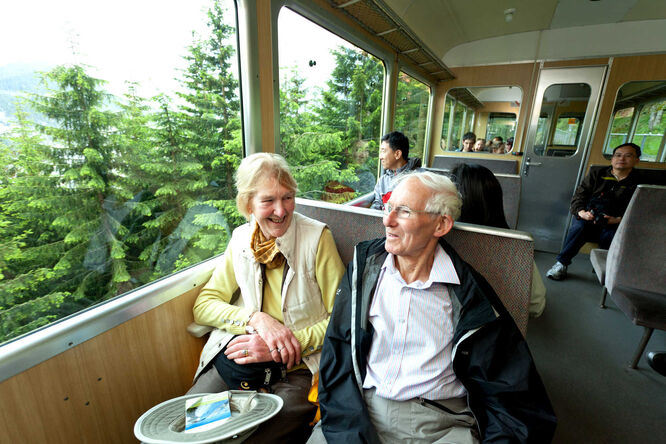
Looking for a fountain of youth? I've long noticed that older travelers seem younger than average in their appearance, attitudes, and energy levels. Travel is an excellent way to stay young in spirit — and many senior adventurers are proclaiming, "Age matters only if you're a cheese" as they plan their next trip (and the one after that).
When to Go
If you can travel whenever you want, it's smart to aim for shoulder season (April and October). Traveling in early spring and late fall allows you to avoid the most exhausting things about European travel — crowds and the heat of summer — and it saves money, too.
Travel Insurance
Seniors pay more for travel insurance — but are also more likely to need it. Find out exactly whether and how your medical insurance works overseas. (Medicare is not valid outside the US except in very limited circumstances; check your supplemental insurance coverage for exclusions.) When considering additional travel insurance, pay close attention to evacuation insurance, which covers the substantial expense of getting you to adequate medical care in case of an emergency — especially if you are too ill to fly commercially.
Packing
When you pack light, you move effortlessly through Europe. To lighten your load, take fewer clothing items and do laundry more often. Fit it all in a roll-aboard suitcase or a carry-on that converts to a backpack. Figure out ways to smoothly carry your luggage so you're not wrestling with a big bag or several bulky items. For example, if you bring a second piece of luggage, make it a shoulder tote, a day pack, or a small bag that stacks neatly and securely on top of your wheeled bag.
A small notebook or your phone's notes app is handy for jotting down facts and reminders, such as your hotel-room number or Metro stop. (Your phone's camera can take visual notes, too.) Recording these things will help keep your mind clear and uncluttered. If you wear eyeglasses, carry an extra pair, and look for the built-in magnifying feature on many smartphones to help you read detailed maps and small-print schedules.
Medications and Health
It's best to take a full supply of any medications and to leave them in their original containers. Finding a pharmacy and filling a prescription in Europe isn't necessarily difficult, but it can be time-consuming. Plus, nonprescription medications (such as vitamins or supplements) may not be available abroad in the same form you're used to. Pharmacists overseas are often unfamiliar with American brand names (for example, atorvastatin instead of Lipitor), so before you leave, ask your doctor for the precise generic names of your medications and the names of equivalent medications. See my general advice on getting medical help in Europe.
If you wear hearing aids, be sure to bring spare batteries — it can be difficult to find a specific size in Europe. If your mobility is limited, see my tips and resources for travelers with disabilities.
Flying
If you're not flying direct, you might consider checking your bag to avoid lugging it to a connecting flight through a huge, busy airport. (Be sure to keep medications and other important items in a smaller carry-on bag for the plane and any layovers.) If you're a slow walker, request a wheelchair or an electric cart when you book your seat so you can easily make any connecting flights. Since the lack of legroom on an airplane can cramp your style, book early to reserve aisle seats (or splurge on roomier "economy plus" or first class). Stay hydrated during long flights and take some short walks in the aisle to minimize the slight chance of getting a blood clot.
Accommodations
Hotels vary widely in their amenities and layouts, so think about your needs before you book. Ask about any accessibility quirks for the hotel you're considering — find out whether it's at the top of a steep hill, has an elevator or stairs to upper floors, and so on. If stairs are a problem, request a ground-floor room. Location matters, too: If you stay near the train station at the edge of town, you'll minimize carrying your bag on arrival; on the other hand, staying in the city center gives you a convenient place to take a break between sights (and you can take a taxi on arrival to reduce lugging your bags).
With the advantage of a more flexible schedule, older travelers can often find good alternative accommodations for longer stays. You can rent a house or apartment (usually cheaper by the week or month), or even swap houses with someone in an area you're interested in. The swap needn't be simultaneous and can sometimes include cars and recreational equipment like bikes and canoes. Travelers' cultural exchange organizations offer you the chance to stay in local homes for a minimal courtesy fee and to learn about your destination from those who live there.
Getting Around
Subways involve a lot of walking and stairs (and can be a pain with luggage if they're crowded). They also have relatively few stops; just getting to the station can be a journey on its own. If you want to do less walking, consider using city buses or taxis. City buses stop frequently, and with a little planning you can align your sightseeing itinerary with convenient routes. If you're renting a car, be warned that some countries and some car-rental companies have an upper age limit. To avoid unpleasant surprises, mention your age when you reserve.
Senior Discounts
At some sights, senior discounts are reserved for European citizens, but at other sights — and even some events such as concerts — just showing your gray hair or identification can snag you a discount. Always ask about discounts, even if you don't see posted information about one — you may be surprised. (The British call discounts “concessions”; look also for “pensioner’s rates.”) In non-English-speaking countries, memorize the phrase for requesting a senior discount or write it down on a card to hand over at the admissions desk.
Most rail passes are about 10 percent cheaper for seniors age 60 and up. And seniors can get deals on point-to-point rail tickets in many countries, such as Austria, Belgium, Great Britain, Finland, France, Germany, Italy, Spain, Sweden, and Norway. The qualifying minimum age ranges from 60 to 67 years old. But to get many of those discounts — including in Austria, Britain, Germany, Italy, and Spain, and a second tier of discounts in France — you must purchase a senior card at a local train station (valid for a year, prices range from €6 in Spain to €122 in Germany). Note that advance-purchase discounts are usually as good as or better than the senior card offers, and off-peak travel offers lower fares, too.
Sightseeing
Go late in the day for fewer crowds and cooler temperatures. Many museums have elevators, and even if these are freight elevators not open to the public, the staff might bend the rules for older travelers who'd appreciate a lift. Many larger museums offer loaner wheelchairs. Take bus tours (usually two hours long) for a painless overview of a city's highlights. Boat tours — of the harbor, river, lake, or fjord — are a pleasure. Hire an English-speaking cabbie to take you on a tour of a city or region (if it's hot, spring for an air-conditioned taxi). Or participate in the life of local seniors, such as joining a tea dance in England or playing boules in France. If you're traveling with others but need a rest break, set up a rendezvous point. Some people — of all ages — find that one day of active sightseeing is best followed by a quiet day to recharge the batteries. Europe needn't be nonstop museums and markets: Grab a table at a sidewalk café for a drink and people-watching.
Educational, Exchange, and Volunteer Opportunities
For a more meaningful cross-cultural experience, consider going on an educational tour such as those run by Road Scholar (formerly Elderhostel), which offers study programs around the world for those over 50. Trips last from several days to several months.
Long-Term Trips
Becoming a temporary part of the community can be particularly rewarding. Settle down and stay a while, doing side trips if you choose. If you're considering retiring abroad, two good resources are Expat Exchange, where you'll find tips and resources for expatriates, and International Living, with extensive reporting by North Americans who have moved overseas. The Living Abroad series (Moon Travel Guides) offers a look at the challenges and rewards of life in European destinations, including France, Italy, London, and Paris. You can also browse the blog posts at The Senior Nomads, where Michael and Debbie Campbell share tales of how they have been living out of their suitcases for more than a decade by staying in one Airbnb for weeks at a time.
More Tips
AARP provides an extensive library of travel-related articles and advice, including destination guides, budget travel recommendations, and an interactive trip finder. AARP also offers info on retiring abroad.