

Welcome Public Television Stations
Here you'll find station-support materials for Rick Steves' Europe seasons and specials, including promotional media and pledge-premium information.
What’s New!
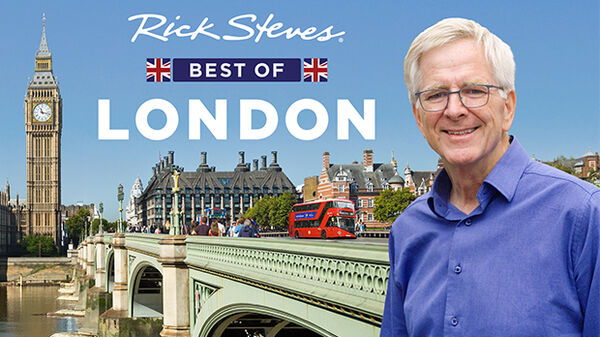
Best of London One-Hour Special
Available July 1, 2026 — Rick Steves’ newest one-hour special celebrates London's proud traditions. With Kings, Queens, Beefeaters, Big Ben and black cabs, it's a cultural and historic powerhouse. We'll cruise the Thames, get fancy at an afternoon tea, then jog with the locals. We'll ogle street art…enjoy a food tour… remember Britain's heroes and marvel at how its industrial past has become a foundation for a promising future.
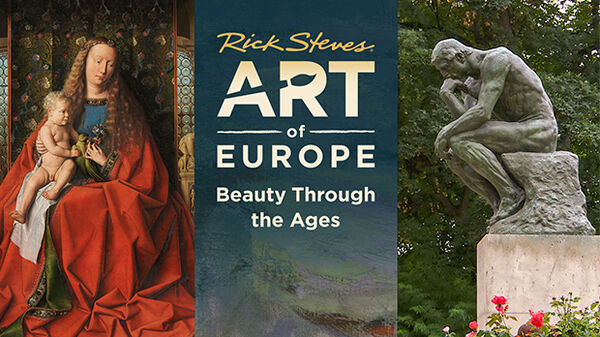
Art of Europe: Beauty Through the Ages Pledge Event
Available May 22, 2026 — This 30-minute membership special celebrates the beauty of European art from the High Middle Ages to the modern era with a selection of Rick's favorite art bites. We celebrate the beauty from soaring Gothic cathedrals and sensuous tapestries to the revolutionary Renaissance with its realism and humanism to Rodin's Thinker, Monet's Water Lilies, Klimt's Kiss, and Chagall's surreal lovers at the dawn of our modern age.

Best of Paris One-Hour Special
Available April 1, 2026 — In this one-hour celebration of the "City of Light" we cruise the Seine, marvel at the stained-glass glory of Sainte-Chapelle, dance on the riverbanks, and groove to cool jazz in a medieval cellar. We eat unforgettably French, enjoy perhaps Europe's finest art in the Louvre, admire the palace of palaces at Versailles, climb the Eiffel Tower, and embrace that fabled joie de vivre in its hometown.
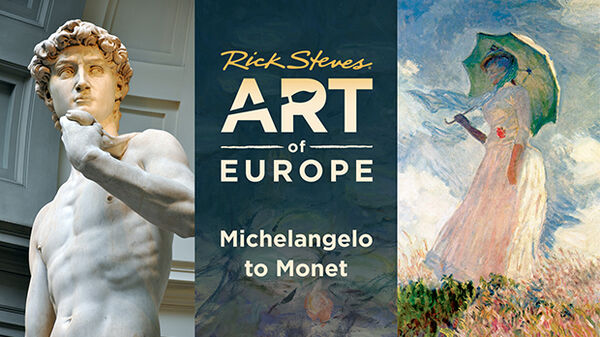
Art of Europe: Michelangelo to Monet Pledge Event
Available November 21, 2025 — This gorgeous membership special is a greatest hits party celebrating European art and creative genius from Leonardo to Van Gogh. It features three episodes from Rick Steves' Europe Season 12 (Art of the Florentine Renaissance, Baroque Art, and Art of the Impressionists and Beyond) with Rick's entertaining and compelling breaks sure to inspire members, both new and old.
Rick Steves' Europe Season 13
Available October 1, 2025 — Season 13 of Rick Steves' Europe features 11 all-new episodes. Stow away with Rick as we experience the local culture, history, cuisine, and fun with two episodes each in Iceland (Reykjavík with the Golden Circle, Ring Road), Poland (Kraków, Warsaw with Gdańsk), Istanbul (Turkish Delights, Capital of Emperors and Sultans), and London (A Royal Tour, Yesterday and Today); travel-thrill-packed episodes featuring highlights of Paris and Italy; and then loosen your belt for an unforgettably tasty gourmet barge cruise in Burgundy.
Rick Steves’ Europe Seasons and Specials
-
Season 13
Includes Iceland, Poland, highlights of Italy, Paris, Istanbul, London, and a Burgundy barge cruise -
Season 12
Includes Prehistoric and Ancient art, Middle Ages, Renaissance, Baroque, Neoclassical and Romantic, Impressionist, and Modern -
Season 11
Includes the Austrian, Italian, Swiss, and French Alps and places in Germany, Egypt, and Ethiopia -
Season 10
Includes Portugal, the Greek Islands, Sicily, Scotland, and places in England, plus festivals across Europe and tips for cruising -
Season 9
Includes places in Germany, Bulgaria, Romania, Italy, and England -
Season 8
Includes Berlin, Israel and Palestine, Prague, and places in France, Italy, the Netherlands, and Turkey -
Season 7
Includes northern England, London, Paris, Rome, Venice, and European travel skills -
Season 6
Includes Basque Country, Helsinki, southern Spain, Stockholm, Tallinn, Tangier, plus places in Croatia, Norway, and Slovenia
-
Season 5
Includes places in Austria, Czech Republic, Denmark, France, Greece, Iran, Spain, Switzerland, and Turkey -
Season 4
Includes places in Great Britain, Italy, and Austria -
Season 3
Includes places in Belgium, France, Great Britain, Hungary, Ireland, Poland, Portugal, and Spain -
Season 2
Includes places in Germany, Ireland, Italy, and Switzerland -
Season 1
Includes places in Germany, Great Britain, Sicily, and Turkey -
One-hour specials
Includes European Christmas, Easter, and Festivals; Alps; Andalucía; Cruising; Egypt; Fascism; Holy Land; Hunger and Hope; Iceland, Iran; Luther and the Reformation; Rome; and Symphonic Journey -
Interstitials
Handy videos for filling programming gaps