North Italy Choices
Milan, lakes, or mountains part 3: The Dolomites
![]() |
Italy's dramatic rocky rooftop, the Dolomites, offers some of the best mountain thrills in Europe. The sunny Dolomites are well developed, and the region's famous valleys and towns suffer from après-ski fever. The cost for the comfort of reliably good weather is a drained-reservoir feeling. Lovers of the other parts of the Alps may miss the lushness that comes with the unpredictable weather farther north. But the bold light, gray cliffs and spires, flecked with snow over green meadows under a blue sky, offer a powerful, unique, and memorable mountain experience.
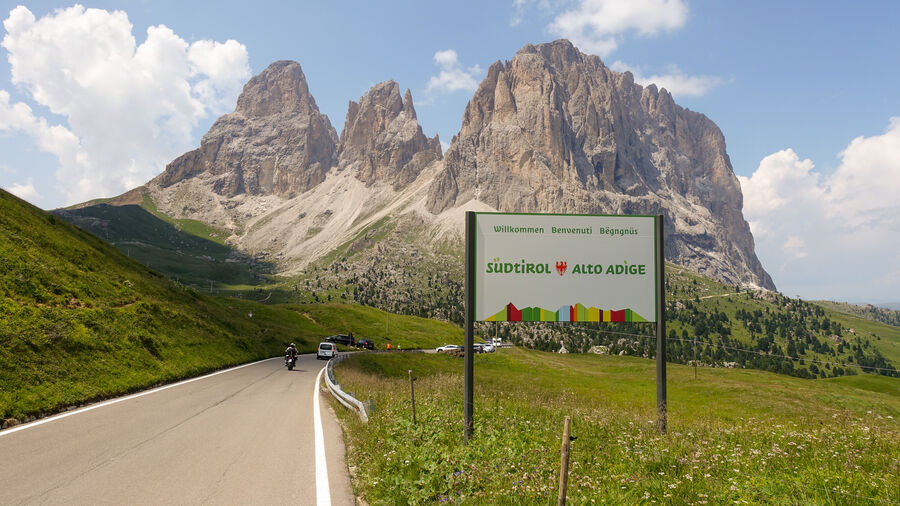
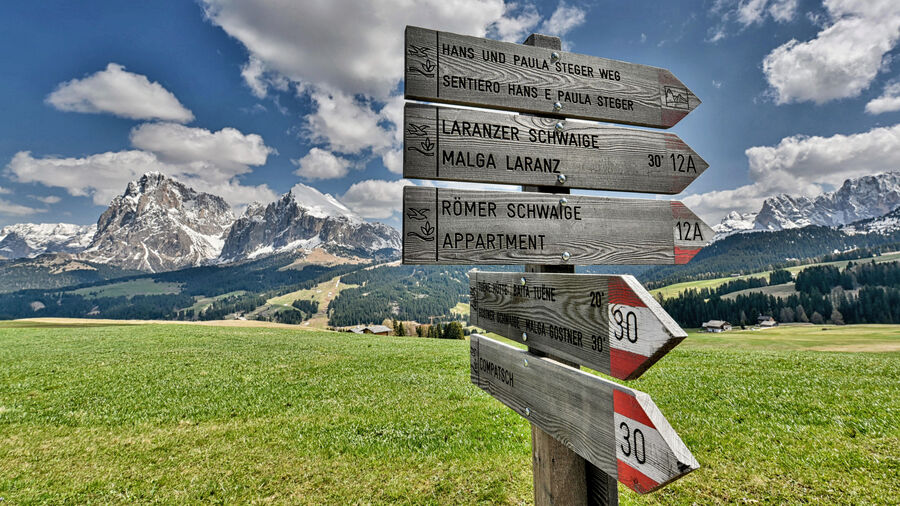
Locals speak German first, and some wish they were still part of Austria. In the Middle Ages, as part of the Holy Roman Empire, the region faced north. Later, it was firmly in the Austrian Hapsburg realm. By losing World War I, Austria's South Tirol became Italy's Alto Adige. Mussolini did what he could to Italianize the region, including giving each town an Italian name. But even as recently as the 1990s, local secessionist groups agitated violently for more autonomy with some success. Today, signs and literature in the autonomous province of Süd Tirol/Alto Adige are in both languages.
In spite of all the glamorous ski resorts and busy construction cranes, the local color survives in a warm, blue-aproned, ruddy-faced, felt-hat-with-feathers way. There's yogurt and yodeling for breakfast. Culturally, as much as geographically, the area is reminiscent of Austria. The Austrian Tirol is named for a village that is now part of Italy.
Lifts, good trails, outdoor activity-oriented tourist offices, and a decent bus system make the region especially accessible. But it's expensive. Most towns have no alternative to $160 doubles in hotels, or $80 doubles in private homes. Beds usually come with a hearty breakfast, a rarity in Italy.
The seasons are brutal. The best time to visit — when everything is open and booming but full price and crowded — is from mid-July through September. After a dreary November, the snow hits, and it's busy with skiers until April. May and early June are dead (though the sedentary sort will enjoy the views and tranquility). The most exciting trails are still under snow, and the mountain lifts are shut down. Most mountain huts and budget accommodations are closed, as the locals are more concerned with preparing for another boom season than catering to the stray off-season tourist.
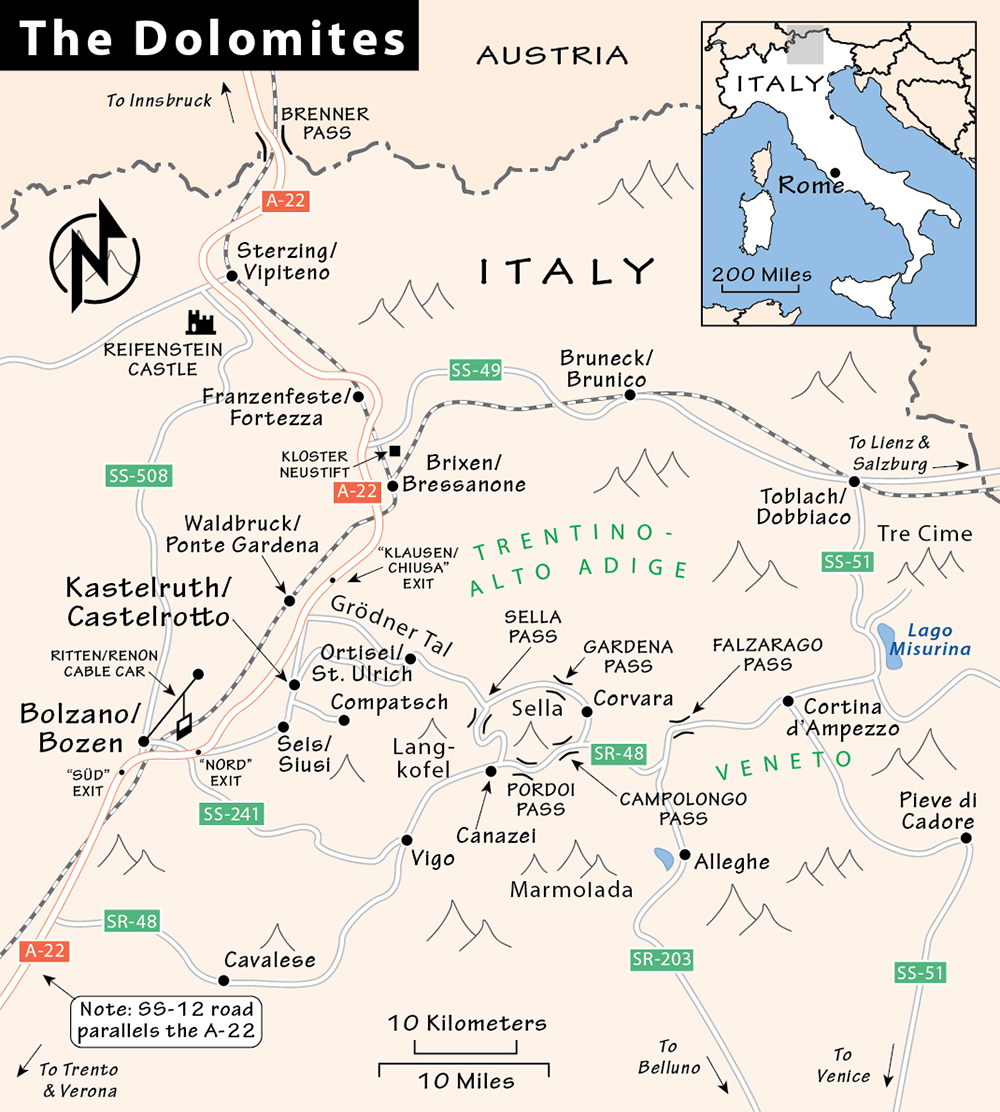
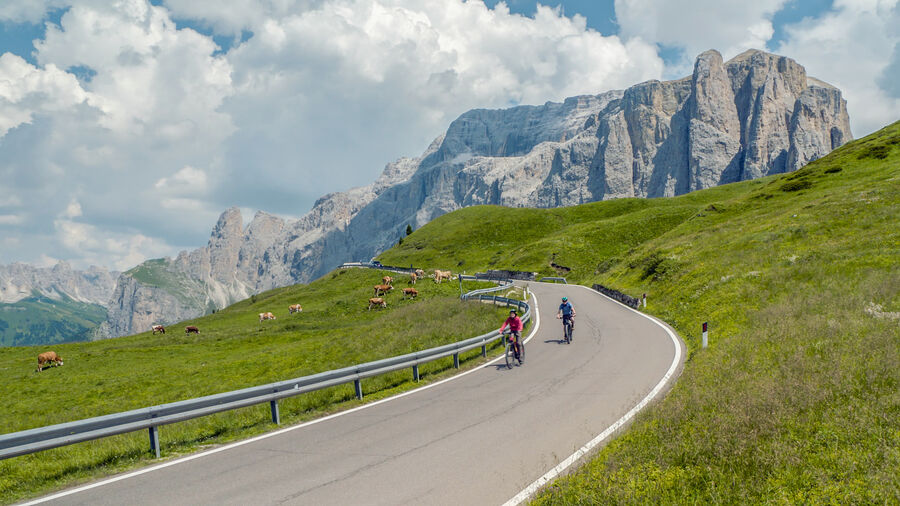
By car, circle north from Venice and drive the breathtaking Grande Strada delle Dolomiti, or Great Dolomite Road (65 miles: Belluno–Cortina d'Ampezzo–Pordoi Pass–Sella Pass–Val di Fassa–Bolzano). In the spring and early summer, passes labeled "closed" are often bare, dry, and, as far as local drivers are concerned, wide open. Conveniently for Italian tour operators, no direct public transportation route covers the Great Dolomite Road.
With limited time and no car, maximize mountain thrills and minimize transportation headaches by taking the train to Bolzano, then catching a public bus into the mountains.
If Bolzano (or Bozen to its German-speaking locals) weren't so sunny, you could be in Innsbruck. This arcaded old town of 100,000, with a great open-air market on Piazza Erbe, is worth a Tirolean stroll and a stop at its Dolomite information center. To chill out, see Bolzano's Ice Man, a 5,000-year-old body of a man found frozen with his gear in 1991.
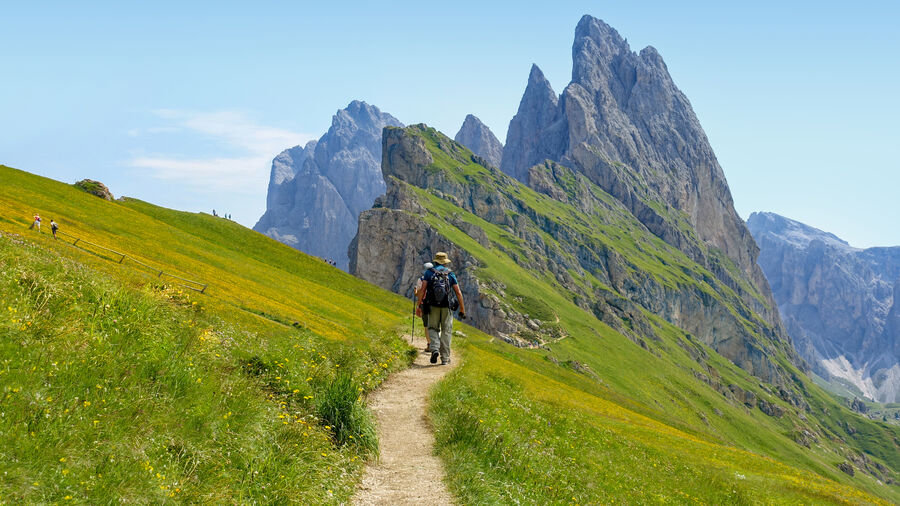
Tourist offices in any Dolomite town are a wealth of information. Before choosing a hike, get their advice. Ideally, pick a hike with an overnight in a mountain hut and make a telephone reservation. Most huts, called refugios, offer reasonable doubles, cheaper dorm (Lager) beds, and good inexpensive meals.
Many are tempted to wimp out on the Dolomites and admire the spires from a distance. They take the cable car into the hills above Bolzano to the cute but very touristy village of Oberbozen. Don't. Bus into the Dolomites instead.
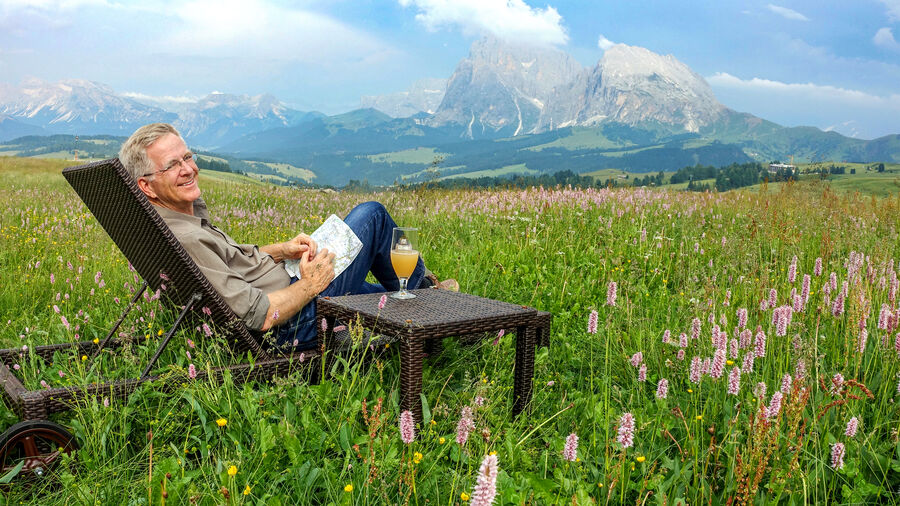
Europe's largest high alpine meadow, Alpe di Siusi, separates two of the most famous Dolomite ski-resort valleys (Val di Fassa and Val Gardena). Eight miles wide, 20 miles long, and soaring up to 6,500 feet high, Alpe di Siusi is dotted by farm huts and wildflowers (mid-June-July), surrounded by dramatic — if distant — Dolomite peaks and cliffs, and much appreciated by hordes of walkers.
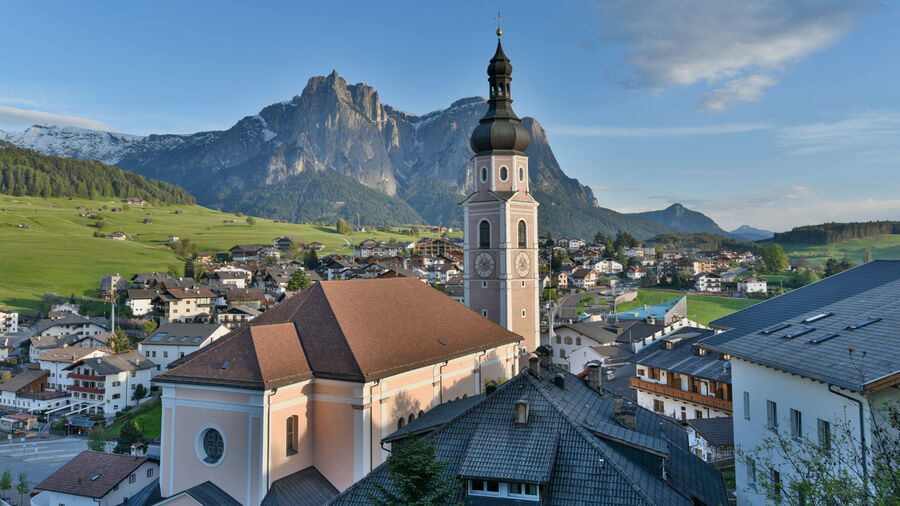
The Sasso Lungo mountains (Langkofel in German, Long Stone in English) at the head of the meadow provide a storybook Dolomite backdrop, while the spooky Schlern peak stands boldly gazing into the haze of the peninsula. The Schlern, looking like a devilish Winged Victory, gave ancient peoples enough willies to spawn legends of supernatural forces. Fear of the Schlern witch, today's tourist brochure mascot, was the cause of many a broom-riding medieval townswoman's fiery death.
A natural preserve, the meadow is virtually car-free. Buses take hikers to and from key points along the tiny road, all the way to the foot of the postcard-dramatic Sasso peaks. Meadow walks are ideal for flower lovers and strollers, while chairlifts provide springboards for more dramatic and demanding hikes.
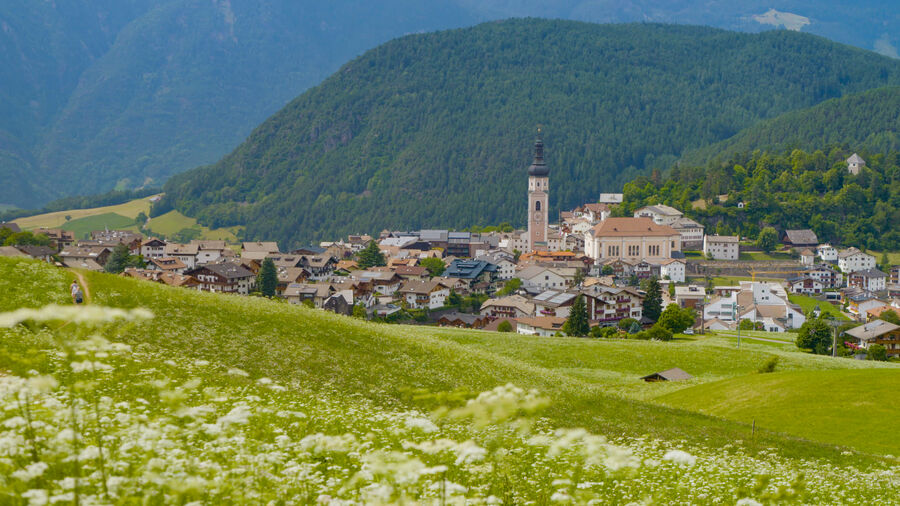
The Alpe di Siusi is my recommended one-stop look at the Dolomites because of its easy accessibility to those with or without cars, the variety of walks and hikes, the quintessential Dolomite mountain views, and the charm of neighboring Castelrotto as a home base.
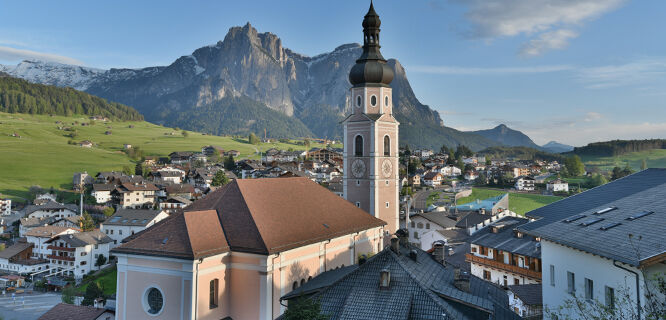
The town of Castelrotto (population: 2,000; German name: Kastelruth) was built for farmers rather than skiers. It has good bus connections, fine and friendly hotels, and more village character than any town around. Pop into the church to hear the choir practice. And be on the town square when the bells peal (biggest at 7:00 a.m., noon, and 7:00 p.m.).
Here at Europe Through the Back Door, Italy is considered the greatest country in Europe. If all you have is 10 days, then do Venice, Florence, Rome, the hill towns, and the Riviera. If you have more time and seek intensity, head south. But to round out your itinerary with all the best of Italy and none of the chaos, splice in a little of the Dolomites, the lakes, and Milan.
Updated for 2009. For lots more information, check out our best-selling Rick Steves' Italy guidebook — or join us on one of our free-spirited tours in Italy.