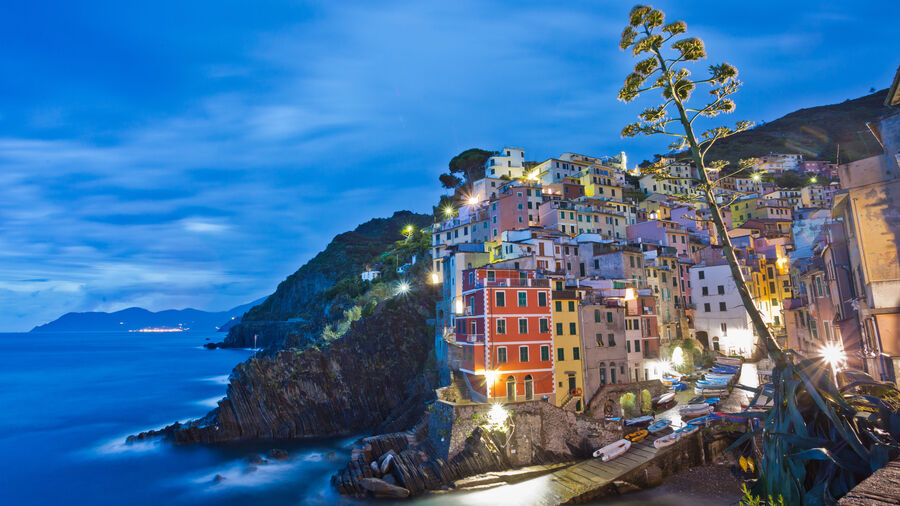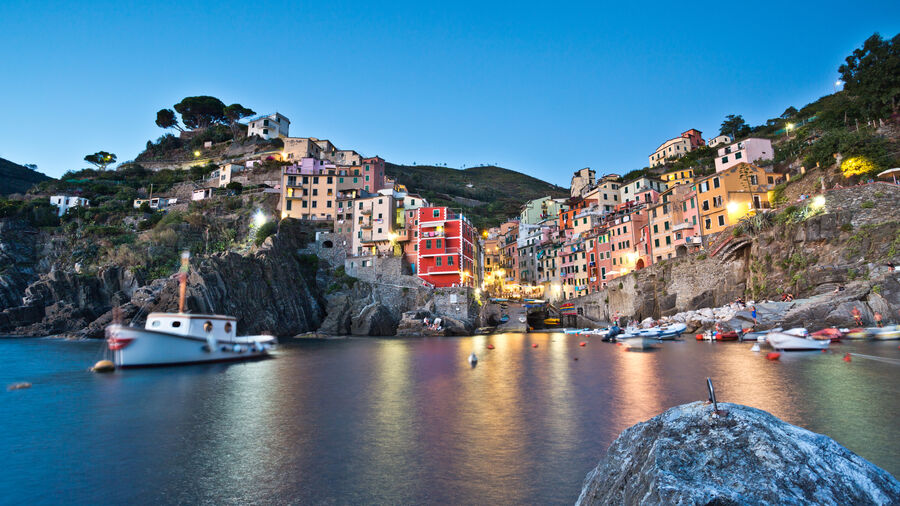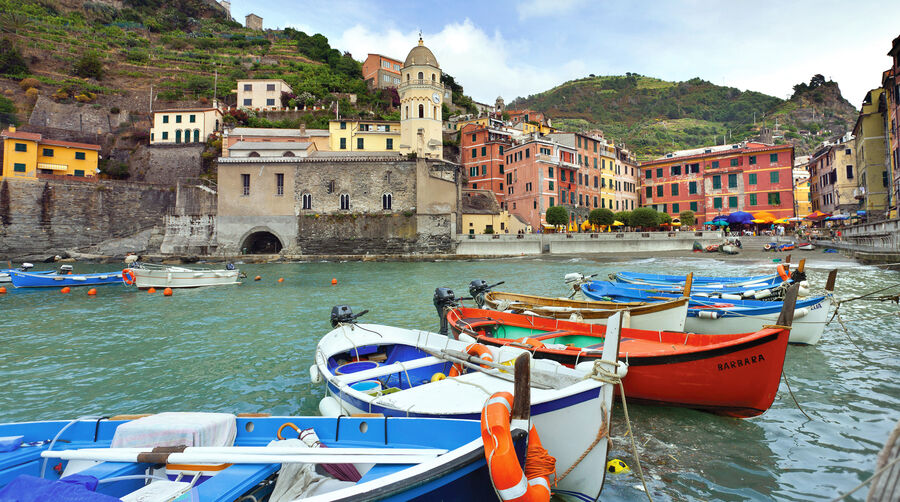
Vernazza
![]() |
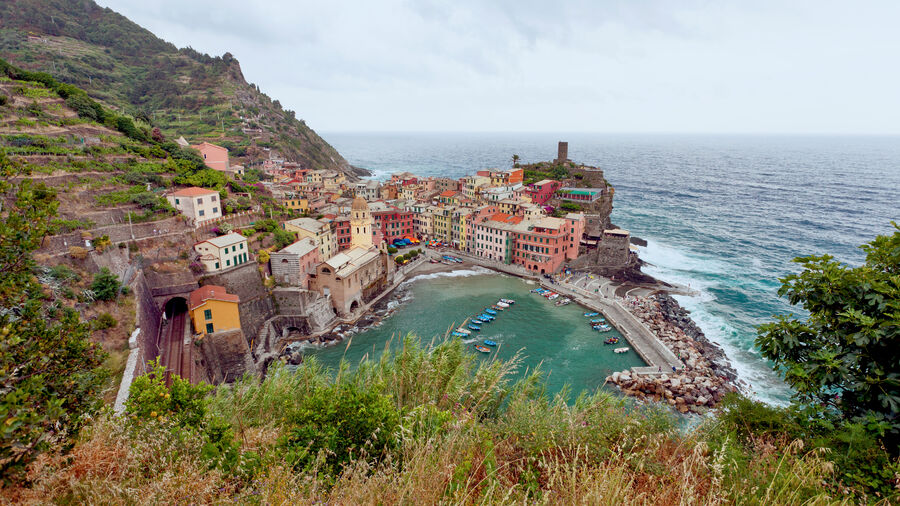
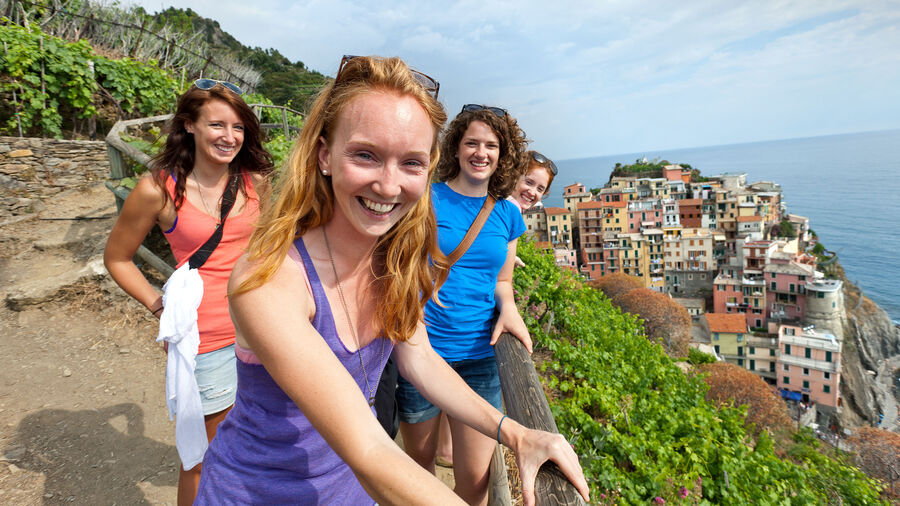
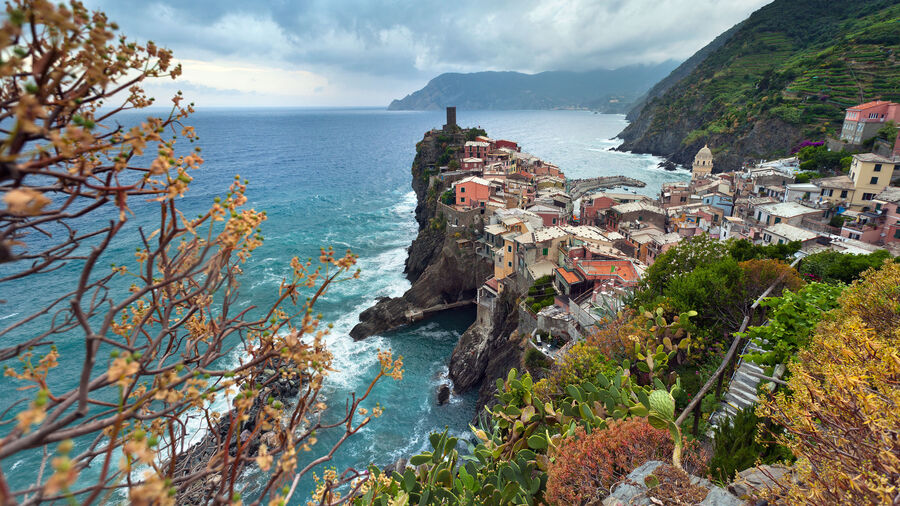
| Nestled along the coast, idyllic Vernazza was once prone to pirate attacks. |
From pirates to pesto in the Italian Riviera
By Rick Steves
It's a sunny afternoon a thousand years ago in the Cinque Terre (CHINK-weh TAY-reh), long before it became the Italian Riviera. This string of humble villages, surrounded by terraced vineyards, is a two-day sail from Genoa.
A leathery old farmer, taking a break from tending his grapevines, hears howls coming from the crude stony tower crowning a bluff that marks his village of Vernazza. Turkish pirates are attacking!
Avoiding powerhouse cities like nearby Genoa and Pisa, pirates delighted in the villages. These Cinque Terre towns, famous since Roman times for their white wine, were like snack time for rampaging pirates.
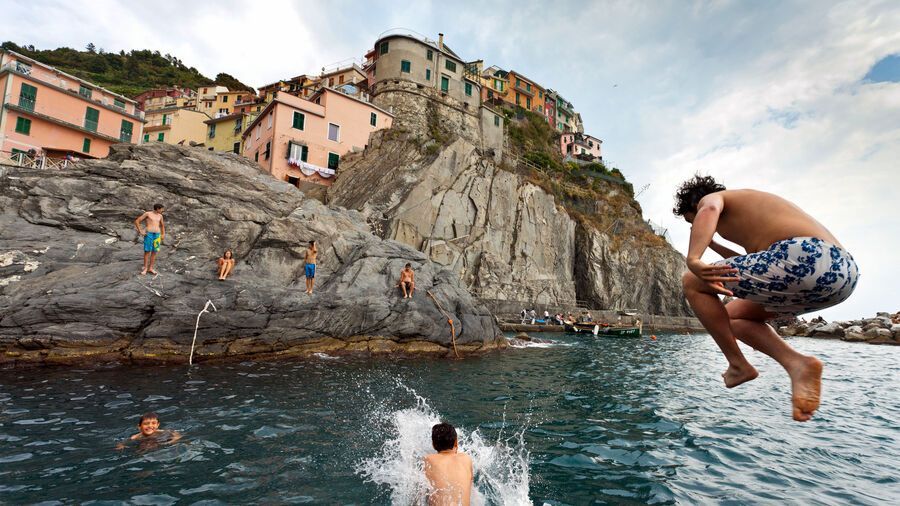
Fast forward to the 21st century: word of this paradise is out. More and more travelers visit, staying in local apartments rather than in hotels. Gnarled old men still tend their grapevines. Now Vernazza's castle, named "Belforte" centuries ago for the screams of its watchmen, protects only glorious views. And the screams ringing out are of delight from children playing on the beach below.
The local economy has changed. The poor village is now a rich village, living well in its rustic and government-protected shell. Tourism drives the economy as the less-calloused locals feed and house travelers. While the private rooms rented are basic, the cuisine — super-charged by a passion for pasta, pesto, and seafood — is some of Italy's best.
And these villages are still snack time, not for pirates, but for travelers who've survived the high prices and grueling sightseeing in Florence and Rome.
Vernazza and its Four Neighbors
![]() |
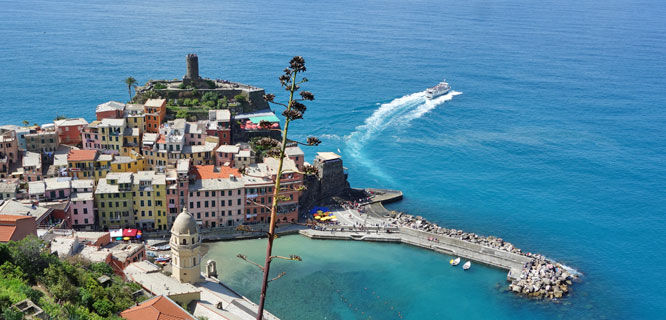
| Vernazza's stoic castle towers high above the village. |
Today, the Cinque Terre is a remote, traffic-free, lowbrow, underappreciated Italian alternative to the French Riviera. Tinseled in sunbeams and carbonated by waves, the lure of the Mediterranean and village life combine potently to shipwreck travelers' speedy itineraries. There's not a museum in sight. Just sun, sea, sand (well, pebbles), wine, five stay-awhile villages... and pure unadulterated Italy.
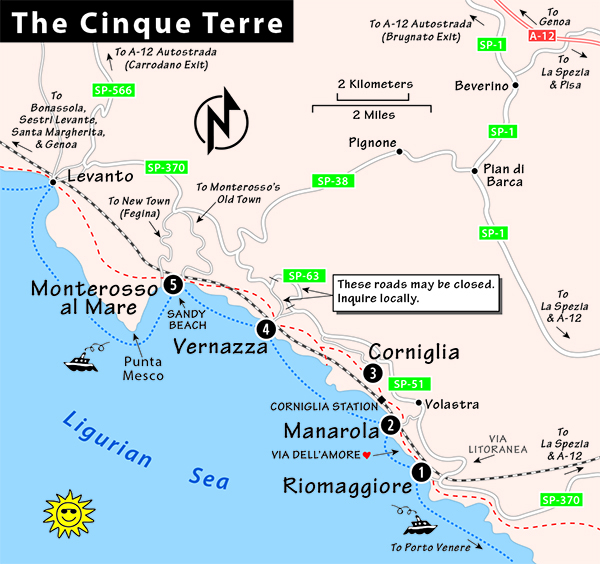
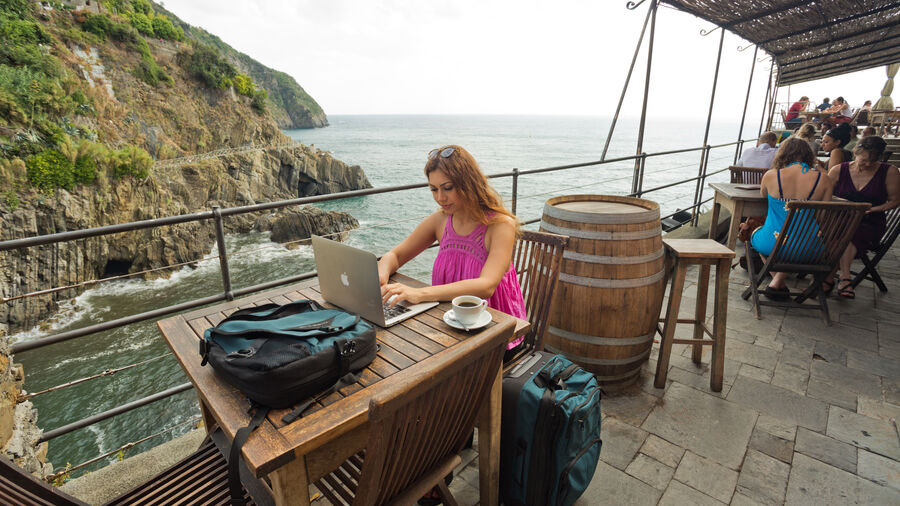
The Cinque Terre towns are each just a few minutes apart by nearly hourly train or boat. There's no checklist of palaces or museums to see; just hiking trails, the towns, and your fondest vacation desires. Piece together the perfect day, mixing hiking, swimming, trains, and a boat ride.
Each village fills its ravine with a lazy hive of human activity: salty locals, sunburned travelers, and no Fiats. While the place is now well-discovered (and has its own website: www.cinqueterre.it), I've never seen happier, more relaxed tourists.
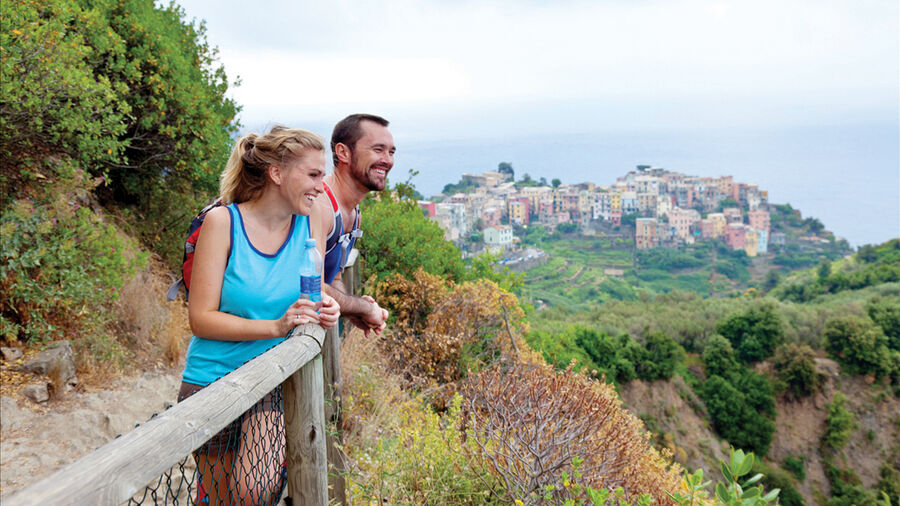
All five towns are connected by trails. Experience the area's best by hiking 7 miles from one end to the other. For the best light and coolest temperatures, start your hike early. The entire hike can be done in about four hours, but allow five for dawdling. (Sporadic off-season floods and mudslides can cause parts of the trail to be closed from time to time.)
Note: Now that the Cinque Terre is a national park, park entrance fees are charged to hike between the towns (fees are used to maintain the trails). The €8 Cinque Terre Card includes two days access to the trails, shuttle bus travel between the villages, and the use of the lift at Riomaggiore. (The Cinque Terre Card once included train travel, but that arrangement no longer exists.) Over the next decade, Italy has plans to protect the beauty and tranquility of the area: A new train line will be built inland for the fast noisy trains, leaving the Cinque Terre tracks for just the poky milk-run trains.
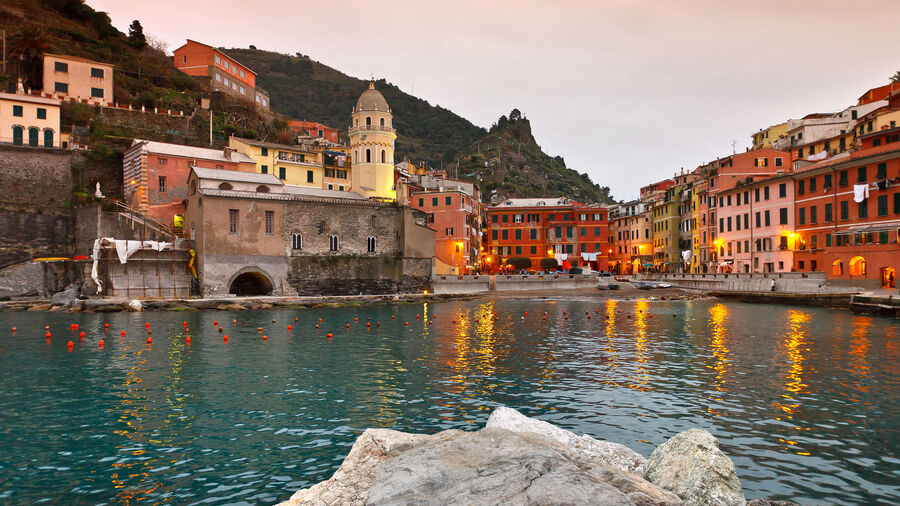
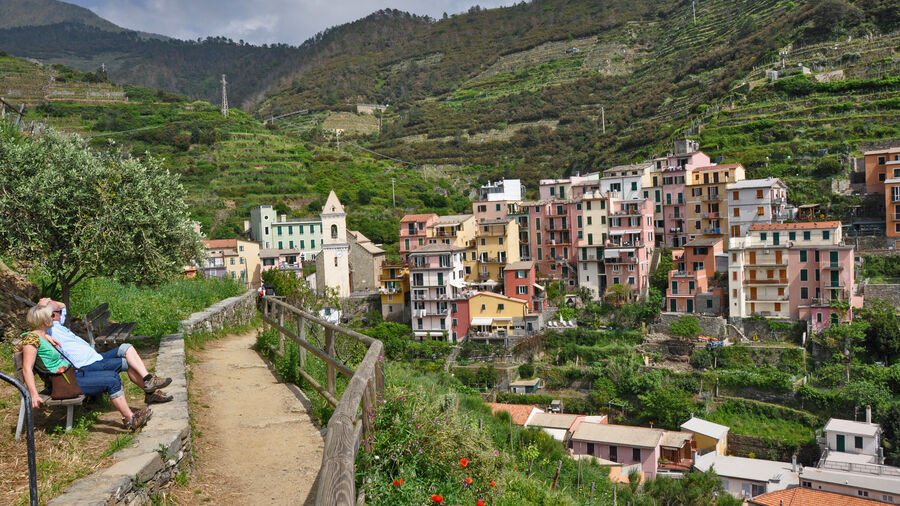
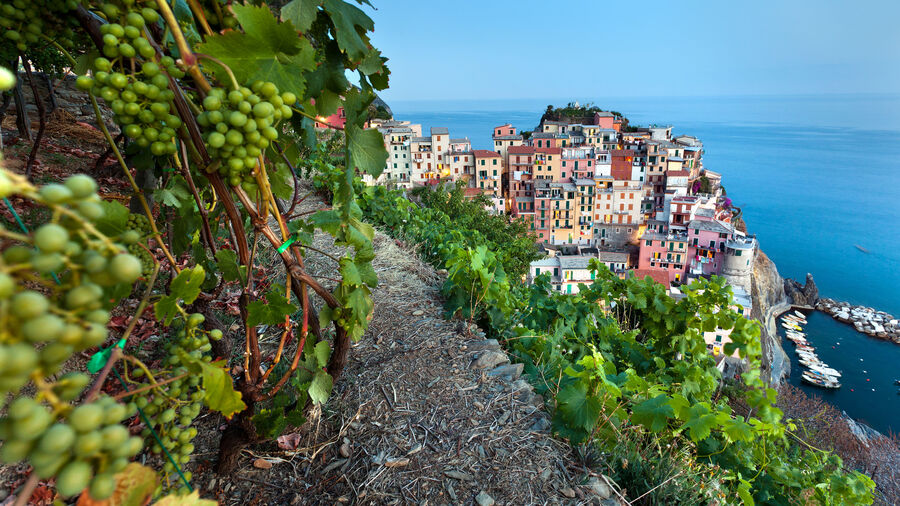
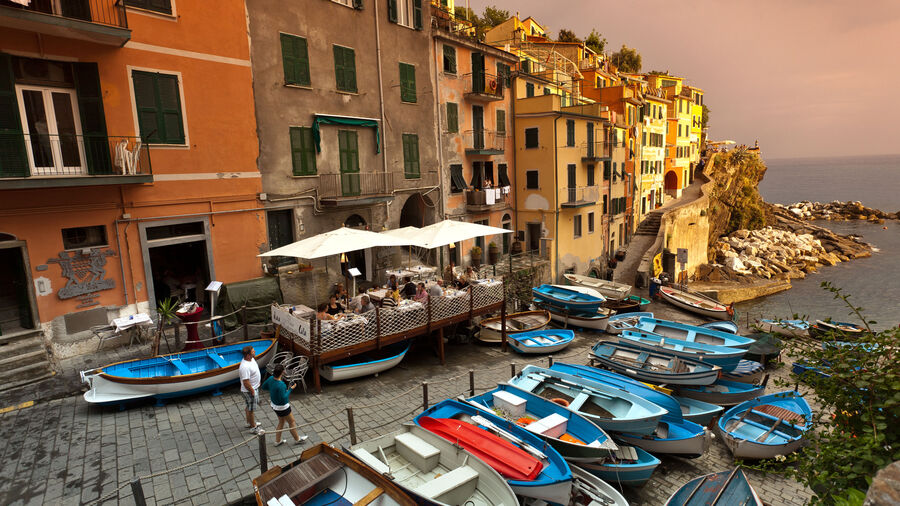
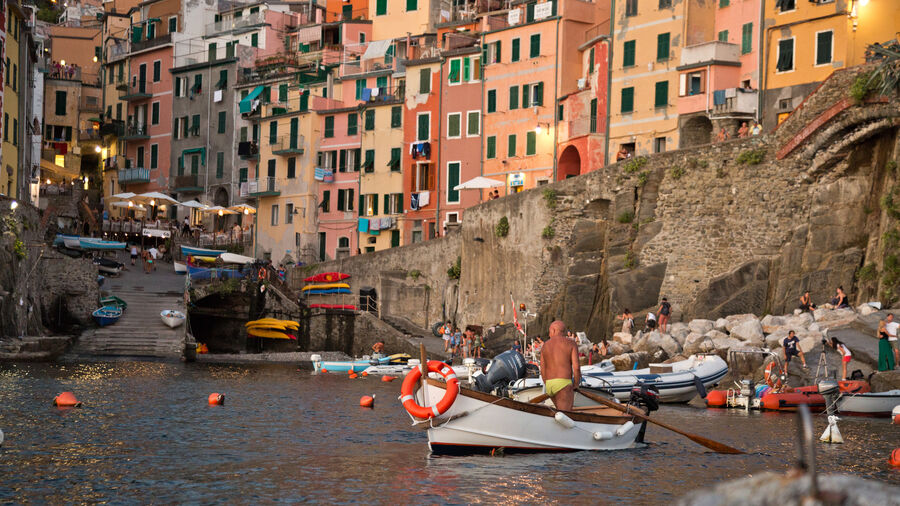
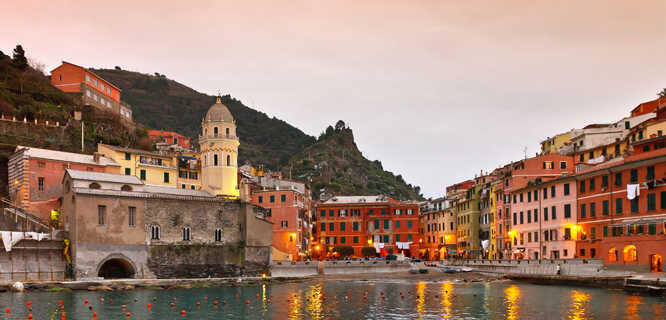
Vernazza — with the closest thing to a natural harbor, overseen by a ruined castle and an old church — is my Cinque Terre home. Only the occasional noisy train flashing by reminds you of the modern world.
The action is at the harbor, where you'll find a kids' beach, plenty of sunning rocks, outdoor restaurants, a bar hanging on the edge of the castle (great for evening drinks), and a tailgate-party street market every Tuesday morning. In the summer, the beach becomes a soccer field where teams fielded by local bars and restaurants provide late-night entertainment. Locals fish off the promonotory at midnight. Spot their glowing bobs shining in the waves.
![]() |
| Immune to the chaos of big-city Italy, Vernazza's residents are happy to stop and chat. |
The town's 500 residents, proud of their Vernazzan heritage, brag, "Vernazza is locally owned. Portofino (the famous resort just down the coast) has sold out." Fearing the change it would bring, Vernazzans stopped the construction of a major road into the town and region. Leisure time is devoted to the passeggiata: strolling lazily together up and down the main street. Sit on a bench and study the passersby. Then explore the characteristic alleys called carugi. The hidden passageways, which once provided safe passage from invasions, now only charm and confuse tourists looking for their private room.
Families are tight and go back centuries. The village even has its own dialect. As you stroll through town find evidence of a community that exists with or without tourism. Grandfathers teach tiny tots to count while struggling up steep stairs. Posted near the ambulance barn is a list of volunteers, on call for a dash to the hospital 30 minutes away in La Spezia. Across the street, one war memorial lists casualities from both sides of World War II. Not a family was spared. Soldiers "morti in combattimento" fought for Mussolini. "Partisans" were killed later, fighting against Mussolini.
Near the memorial, the grape-pickers' tiny trenino is parked quietly, except in September and October, when this tiny service train conquers the hills surrounding Vernazza, busily bringing up the pickers and down the grapes. In October village cantinas are draped with drying grapes.
While the town's fishing fleet is down to just a couple of small boats, Vernazzans are still more likely to own a boat than a car. In the '70s, little Vernazza had one of Italy's top water polo teams, and the harbor was their "pool." Later, when a real pool was required, Italian water polo's mighty mite was dropped from the league.
From Vernazza's castle the other Cinque Terre towns peek from jags in the rugged coastline. Each — only a few minutes away by train — has its own personality.
Riomaggiore is the most substantial non-resort town of the group. While a disappointment from the train station, walk through the tunnel next to the train tracks (or ride the elevator through the hillside to the top of town), and land in a fascinating tangle of pastel homes leaning on each other as if someone stole their crutches. There's homemade gelato at the Bar Centrale on main street, and, if former San Francisco resident Ivo is there you'll feel right at home. When Ivo closes, the gang goes down to the harborside with a guitar.
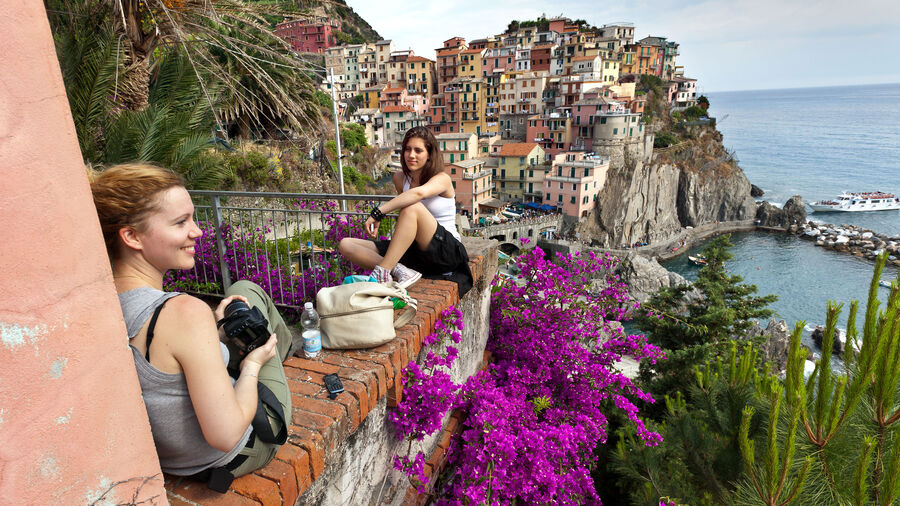
Manarola, tiny and picturesque, is a tumble of buildings bunny-hopping down its ravine to the fun-loving harbor. There's little to do here but swim or sit in the shade and enjoy a drink.
Corniglia, nearly 400 steps up a zig-zag path above its humble beach and train station, is the only Cinque Terre town not on the water. Originally settled by a Roman farmer who named it for his mother, Cornelia, its ancient residents produced a wine so famous that vases found at Pompeii touted its virtues. Today its wine is still its lifeblood. Follow the pungent smell of ripe grapes into an alley cellar where a local may let you dip a straw into a keg. Remote and less visited, Corniglia has cooler temperatures, a windy belvedere, a few restaurants, and plenty of private rooms for rent.
![]() |
| Friendly family-run restaurants, such as the Castello in Vernazza, serve up heavely helpings of pesto. |
Monterosso al Mare is a resort with cars, hotels, rentable beach umbrellas, and crowds. The town is split into the old and new. From the new town — with its sandy beach, huge parking lot, modern hotels and train station — a tunnel leads to the old town charm, crooked lanes, and nearly hourly boats to Vernazza and the rest of the Cinque Terre.
Birthplace of Pesto
This stretch of Italy's Riviera is the birthplace of pesto. Basil, which loves the temperate Ligurian climate, is mixed with cheese (half Parmigiano cow cheese and half pecorino sheep cheese), garlic, olive oil, and pine nuts, and then poured over pasta. Try it on spaghetti, trenette, or trofie (made of flour with a bit of potato, designed specifically for pesto). Many also like pesto lasagna, always made with white sauce, never red. If you become addicted, small jars of pesto are sold in the local grocery stores and gift shops. If it's refrigerated, it's fresh; this is what you want if you're eating it today. Get the jar-on-a-shelf pesto for taking home.
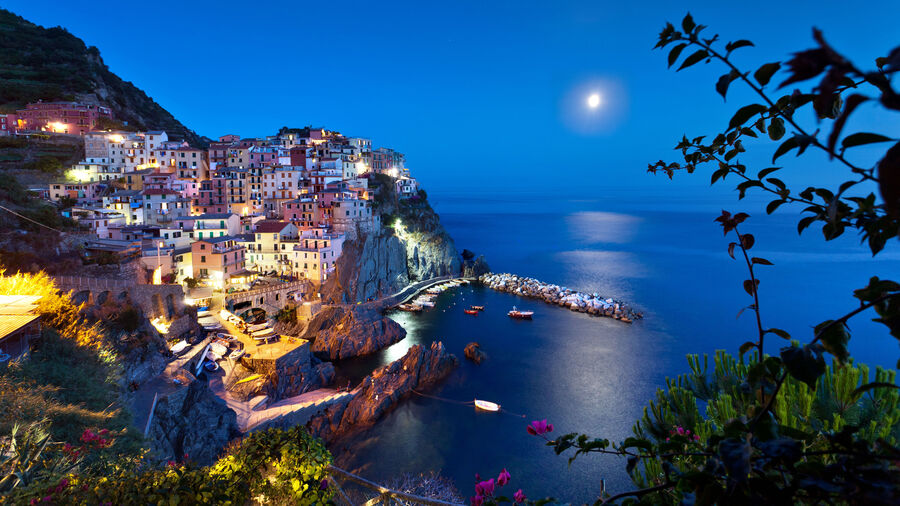
In the cool, calm evening, sit on the Vernazza breakwater with a glass of wine, watch the phosphorescence light up the waves, and imagine the days when visitors were not tourists... but those Turkish pirates.
Updated for 2008. For lots more information, check out our best-selling Rick Steves' Italy guidebook — or join us on one of our free-spirited tours in Italy.