Home > Railpasses

Step 4: Using Your European Rail Pass

Getting Started

Here's what you need to know to use your Eurail or other European rail pass wisely. But be sure to read all the printed information that accompanies your rail pass. Do not remove the rail pass cover (with official restrictions and a Travel Report which you must complete!).

Validating Your Rail Pass in Europe

Never write anything on your rail pass before it's been validated. You must get your rail pass validated (activated) in Europe before you use it. All rail passes must be validated within six months of the issue date (usually the day you bought it). For example, if May 24 is stamped on your rail pass as the issue date, you must validate (start) the pass by November 23.

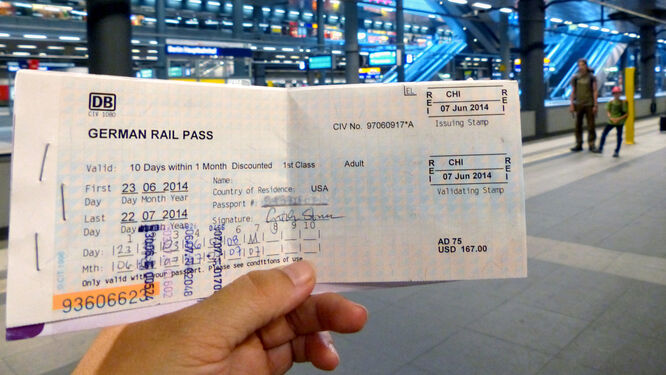
Sample Eurail Selectpass

Validate your rail pass at any station: It's easy. At any European train station (or some travel agencies), present your rail pass and passport to a railway official at a ticket window. The ticket agent (not you) will write in your passport number, and the first and last dates of your travel period, and stamp the validation box on the far right. For example, a two-month validity period starting May 15 will end at midnight on July 14. You may want to write these dates European style (15.05.12– 14.07.12) on a slip of paper to show the ticket agent. All trips and bonuses must be started and finished within the valid life of your rail pass. If you have a group pass (i.e., a Saverpass or Twin Pass), all group members must be present when the rail pass is validated.

You may validate your country rail pass before arriving in that country, or en route. Let's say you're in Copenhagen with a German rail pass, you're heading to Berlin, and you want the German portion of your route to be covered by your German rail pass. At the Copenhagen train station, buy a ticket to the German border and have the agent validate your German pass at the same time. Note: You may be charged $5 to $30 (in local currency) to have your pass validated on the train. Approach the conductor; don't let him "catch" you with an unvalidated pass (he'll assume you're trying to cheat).

Back to topUsing Your Rail Pass

Have an official at the station validate your railpass.
Before you hop on that first train in Europe, have an official at the station validate your rail pass.

Unless you're taking a train that requires a reservation (see below), just hop on the train with your validated rail pass and find a seat. With a consecutive-day rail pass (available for Eurail Global, BritRail, or Swiss passes), nobody counts how many days you travel during the validated period. If you have flexipass, fill in the travel date before the conductor reaches you. Both Flexi and Continuous Eurail passes also require you to fill in your trip destination on the Travel Report (on the long, extended pass cover). After the train starts, the conductor will head down the train, asking for train tickets and rail passes, and checking that they are dated correctly. He or she may ask to see your passport too.

Using a flexipass: On your flexipass, you'll see a string of blank boxes, one for each travel day available to you. You can take as many trips as you like within each travel day. Before boarding the train (or bus or boat covered 100% by your pass), fill in that day's date in ink in one of the blank boxes on your rail pass. A travel day normally runs from midnight to midnight, a standard calendar day.

7 p.m. rule: A direct overnight train uses up only one flexipass travel day (not two) if you board after 7 p.m. and do not change trains before 4 a.m. In that case, you just write the arrival date on your flexipass. You'll identify an overnight train in train schedules both by the timing and generally by notation that it has sleepers and couchettes available. If your route requires connecting trains, you use fewer travel days by starting with an overnight train and making connections on the day of arrival, but not before 4 a.m..  If you're starting in a small town where the night train doesn't stop, you'll use a different day of your flexipass (or buy a separate ticket) to travel to the night train departure city (for instance, Füssen-Munich $30). The 4 a.m. restriction does not apply to non-Eurail-managed passes (e.g., France, Germany, BritRail, Triangle, Balkan, or European East passes). Some smaller countries or regions don't offer qualifying night trains (and the rule does not apply with Swiss, Czech, Central Scotland, nor London Plus passes). If the very first use of your flexipass is for an overnight ride, you still write the next day's date as the date of travel, but your rail pass will be validated starting with the actual date you board. All rides must be started and completed within the validity period of the rail pass and the 7 p.m. rule does not apply to consecutive-day passes. An overnight boat ride also uses just one travel day, but you get to choose whether to count the date of departure or the date of arrival.

Back to topTrain Reservations with Rail Passes

Rail passes cover 95% of all state-run trains in Europe, but don't cover reservation fees. For many trains (local, regional, interregional, many EuroCity and InterCity trains, or Germany's speedy ICE), reservations are not necessary and not worth the trouble and expense unless you're traveling during a busy holiday period. Reservations are required for any train marked with an "R" in the schedule (e.g., high speed trains such as France's TGV, Swiss scenic trains, long rides in Spain, Italy, and Norway), and for couchettes and sleepers (see "Sleeping on Trains," below). Internet train schedules use the term "Reservation Compulsory" (while "Please Reserve" means it's optional).

Seat reservations, which cost from $5 to $35, can be made as early as two months in advance for most trains (three for TGV, Thalys and other international routes from France, six for Eurostar and Germany's City Night Line), or up to a few hours in advance. Most trains that require reservations also limit the number of seats available to rail pass holders. It is wise to reserve at least several days ahead (or as soon as you're ready to commit to a date and time) for night trains, weekends and holidays, high season, routes with infrequent service, any train you cannot afford to miss, or if you need several seats together. For instance, TGV fast trains within or to/from France can sell out weeks ahead. See our Plan Your Trip section for a list of holidays and festivals in Europe.

Print the Reservation Fees with Rail Passes PDF for handy reference and much more detail.

If you're ready to reserve specific departures with your rail pass, you can order through the link for Passholder Reservations at www.raileurope.com. For an additional fee, you can also reserve by phone at 800/438-7245 (or 800/361-7245 from Canada). In most cases, a printed reservation ticket will be shipped to you, though Rail Europe now offers e-ticketing for most reservations departing from a French train station and for Eurostar (Chunnel) tickets. Reservations made in the U.S. may cost a little more than in those made in Europe. Most reservations are not changeable or refundable. If you need many reservations, contact Euraide (charges European rates plus about $30 for schedule consultation and $30 for two-week delivery; email your list of train choices to euraide@verizon.net).

You can also get reservations in Europe at train stations or at travel agencies there, when rail pass holder space is still available. Pay before boarding for any required fees, or the conductor will charge more en route.

Rick Steves' Europe does not make reservations.

Back to topSleeping on Trains

Taking an Overnight Train
For about $32 extra, you can reserve an overnight couchette bunk. You'll have roommates, but also a conductor/cop who keeps out the riff-raff.

Taking long train trips at night makes sense. Every night spent riding the rails gives you an extra day to sightsee, saves you the cost of a hotel, and allows you to arrive early before the cheaper hotels fill up. The scenery missed is usually insignificant when you consider the time you gain — a day to bike in Holland, hike in the Alps, or sunbathe on an Italian beach.

Major stations may have shower facilities where you can freshen up after your morning arrival. You can try to sleep in you seat, or rent a couchette (berth) or sleeper (more private compartment). Whether you have a train ticket or a rail pass, you must pay extra for a couchette or sleeper.

Seat sleeping: If you're in an open-style car (with airline-type seats) or in a crowded compartment, you'll sit up miserably all night. If you're in an uncrowded compartment, you may be able to pull out the seats to make a bed. Expect frequent interruptions. Wear your moneybelt and clip your bags to the luggage rack for security. When they offer seats, many overnight trains require a seat reservation ($5).

Couchette: One of Europe's great bargains is the $32 couchette (pronounced koo-SHET). It's a bed in a usually lockable compartment with two triple bunks (with a blanket, pillow, clean linen, and up to five compartment mates). Some routes have co-ed compartments; others are single gender. As you board, you'll give the attendant your couchette voucher, rail pass or train ticket, and passport. He deals with conductors, thieves, and customs officials on your behalf as you sleep uninterrupted in relative safety.

Book your couchette in advance, either before you go, or through a European travel agent or at train stations. Night trains often fill up, but if space is available, unreserved couchettes or sleepers can be rented onboard from train attendants. Some routes offer roomier 4-person couchettes for about $50 per bunk (may require a 1st class train ticket or rail pass on routes through France.)

Sleeper: A sleeper offers more privacy and comfort than a couchette. You'll pay from $40 to $150 on top of your ticket price for a berth in a still-crowded one-, two-, or three-bed sleeper with a tiny sink. A few overnight trains (Edinburgh sleeper, Spanish international "hotel trains") offer only more expensive sleepers ($70+) and no couchettes.

Back to topEuropean Train Stations

Readerboards on each track announce departure times and destinations for each train
Don't worry, even thought the clock says 4:42, the sign at Track 4 says the train will leave 20 minutes late today. Note that it will stop at three different stations in Berlin. Make sure you know which station is your destination!

Whether you choose to travel with a rail pass or train tickets, you'll spend a lot of time in train stations. Take advantage of the assistance they can offer.

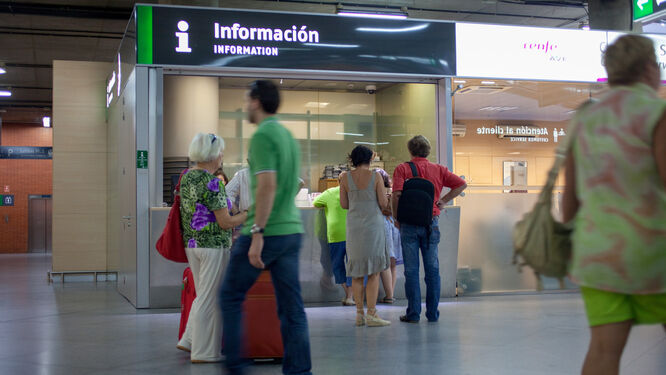
Every station has a train information office eager (or, at least, able) to help you with your scheduling. It helps to consult the timetables first, write down your plan, then confirm this with the information desk. Written communication is easiest and safest. Multi-lingual computer terminals are common and can save you time.

The tourist information office is usually either in the train station (in the case of major tourist centers) or nearby — pick up a map with sightseeing information and, if you need it, advice on where to find budget accommodations.

Most train stations have ATMs offering great rates 24 hours a day and money exchange desks open longer hours than those on the street (but the rates aren't great). If you're in a jam, you can sometimes change money at ticket windows, too.

Bag storage is still available. Virtually every major station has storage lockers or a luggage-checking service where, for about $5 a day, you can leave your luggage. People traveling light can fit two rucksacks into one locker, cutting their storage costs in half. In some security-conscious train stations, lockers are no longer in use, and travelers must check their bags at a luggage-deposit desk — often after going through an x-ray. This service can cost up to $10 per bag.

Pay attention to strikes!
This says "train strike": sciopero ferroviario. Knowing this, I made sure to get to my next destination before 9pm, when it was advertised to start.

Many cities have more than one train station. Paris has six, Brussels has three, and even Switzerland's little Interlaken has two. Be sure you know whether your train is leaving from Interlaken East or Interlaken West. A city's stations are generally connected by train, subway, or bus. When arriving in a city (especially on a milk-run train), you may stop at several suburban stations with signs indicating your destination's name with the name of the neighborhood (e.g., Madrid Vallecas or Roma Tiburtina). Don't jump out until you've reached the central train station (Madrid Chamartin or Roma Termini). You can also avoid arrival frustrations by finding out if your train stops at a city's main station rather than a suburban one. For instance, a few trains from Rome to "Venice" leave you at Venice's suburban station (Venezia Mestre), where you'll have to catch another train to the main "Venezia S. Lucia" station. To avoid time-consuming back-tracking, ask for help and pay attention.

Rail strikes are a fact of life. Every European country experiences occasional railway strikes. But luckily, information is usually posted in advance in stations and local news media. Look for the word "sciopero" in Italian, "greve" in French, "Streik" in German, or "strike" in English. Sporadic trains lumber down the main lines during most strikes and the few remaining station personnel can tell you the expected schedule.  While it is usually possible to get a refund for reservations affected by a strike, there is no refund for validated or partially used rail passes.

Wi-Fi internet access can be found at many major train stations throughout Western Europe, usually for a fee. In some stations, it's free in the first-class lounge for first-class ticket holders. Wi-Fi is also available onboard high-speed trains on some of the busiest business routes. These include Thalys (France and Benelux), ICE in Germany, Frecciarossa in Italy, faster services in Scandinavia, and Virgin Trains and East Coast Lines in the UK. There's often a charge, but it's sometimes free in first class, less often free in second. With limited distribution and some travelers reporting service issues, finding Wi-Fi on trains is still more serendipitous than reliable. Power sockets onboard are similarly rare, but increasing on newer trains, in designated business sections, and where Wi-Fi is available.

Back to topBoarding and Riding the Train

Finding the Right Train
This display maps out the locations of cars on major trains leaving the station. in this example, the third train includes a first-class car (yellow) going to Prague, a second-class car (green) to Prague, and two headed to Schwandorf. Dining cars (red) display the crossed knife and fork.

Finding the right train is largely a matter of asking questions, letting people help you, and assuming things are logical. Ask someone on the platform if the train is going where you think it is. (Point to the train or track and ask, "Roma?") Uniformed station personnel can answer any question you can communicate. Speak slowly, clearly, and with caveman simplicity. Be observant. If the loudspeaker comes on, watch the reaction of those around you to figure out if the announcement concerns you. If, after the babble, everyone dashes over to track 15, assume you should, too.

Scope out the train ahead of time. The configuration of many major trains is charted in little display cases on the platform next to where your train will arrive. As you wait, study the display to note where the first-class and sleeping cars are, whether there's a diner, and which cars are going where. Some train schedules will say, in the fine print, "Munich-bound cars in the front, Vienna-bound cars in the rear." Knowing which cars you're eligible for can be especially handy if you'll be competing with a mob for a seat. When expecting a real scramble, try standing on a bench at the far end of the track and studying each car as the train rolls by, noting where the most empty places are. If there are several departures within an hour or so and the first train looks hopeless, you can wait for the next.

Never assume the whole train is going where you are. Each car is labeled separately, because cars are usually added and dropped here and there all along the journey. Rick remembers, "I'll never forget one hot afternoon in the middle of Spain. My train stopped in the middle of nowhere. There was some mechanical rattling. Then the train pulled away leaving me all alone in my car... all alone in La Mancha. Ten minutes later another train came along, picked up my car, and I was on my way." To survive all of this juggling easily, check to be sure that the city on your car's nameplate is your destination. Confirm with the conductor when he or she comes by to check your train ticket or rail pass.

Train and bus connections are easy. When your route requires changing trains, be ready to hop off upon arrival at the transfer point.  An organized traveler can get through a small station in five minutes, but allow 10 – 15 minutes in larger city stations. The Deutsche Bahn's great train schedule website shows practical connection times for most travelers (and sometimes even platform numbers), and allows you to request longer layovers.  Train stations are also major bus stops, so connections from train to bus are generally no more difficult than crossing the street. Buses go from the stations to nearby towns that lack train service. Many buses, used by commuters, are scheduled to connect with the train and leave promptly. If there's an airport nearby, you'll find bus or rail shuttle services (usually well-marked) at the train station .

Non-smoking trains are the standard in Western Europe. While trains used to offer both smoking and non-smoking compartments, today's trend is smoke-free. Smoking is not allowed on trains in Great Britain, Ireland, Benelux, France, Italy, Switzerland, Austria, Germany, Norway, Sweden, or Poland. Smoking areas are still offered on some trains in Spain (only trains longer than 5 hours), Denmark, and Finland. Smoking is also prohibited in stations.

Pack a picnic. For the best dining value and variety, stock up at a local deli, bakery, or supermarket. For convenience, major train stations offer mini-markets and sandwich shops. Food sold on the train costs more, with options ranging from a basic coffee and sandwich cart, to a more extensive bar car or sit-down dining car (noted in most schedules when available). Only a few trains offer a "complimentary" meal, in first class only (Eurostar to/from London, Thalys through Belgium, and some fast trains in Britain, Spain and Scandinavia), usually covered by a higher seat reservation fee.

No-hassle boarding. In most European train stations, with ticket in hand, you stroll or dash right to your boarding platform without any check-in formalities. Eurostar trains running to/from London through the Channel Tunnel are the only type with an advance check-in deadline (30 minutes before departure) and an airline-style security procedure (passports are checked; passengers and luggage both screened; pets, weapons, and dangerous items specifically prohibited). However, you may find simpler pre-boarding security or ticket checks in a few other regions. For instance, your tickets will be checked and luggage scanned before you access the platform to board Spain's fast AVE trains. Many train stations in Britain require you to slide your paper ticket or tap your barcode on a turnstile reader both to enter and exit the boarding areas. Rail pass travelers show their passes to the attendants at these gates. Some night trains have conductors checking tickets at the doors to each car, to reduce interruptions later on the train. And it's standard in France and Italy to date-stamp your paper ticket or seat reservation in the yellow or orange box near the track before hopping on.

Back to top Luggage and Safety Onboard

Luggage racks are standard on every train.
Overhead luggage racks are standard on every train, and some even have bike racks.

Many train travelers are ripped off while they sleep. Those sleeping for free in regular cars should exercise extreme caution. Women need to be particularly careful. Sleeping in an empty compartment in southern Europe is an open invitation to your own private Casanova. A couchette (berth in a compartment, reserve ahead for about $32 per person) is safer because the car attendant monitors who comes and goes.

Every train car has plenty of room for luggage. Simply carry it on and heave it up onto the racks above the seats. Rick's mantra is "pack light pack light pack light." The only thing you should ever need to check would be a bicycle. Even a bike can be carried on if it's broken down and boxed or if the train has dedicated bike racks. Not every train has a checked baggage car, so confirm your plans at the station's information office.

Luggage is never completely safe on trains. There is a thief on every train (union rules) planning to grab a bag. Don't be careless. Keep your valuables either in a money belt or at least securely attached to your body. Before leaving luggage in a compartment, establish a relationship with everyone there. You're safe leaving it among mutual guards. For good measure, clip and fasten a strap to the luggage rack. If one tug doesn't take the bag, a thief will usually leave it rather than ask, "Scusi, how is your luggage attached?" You'll hear stories of entire train cars being gassed and robbed in Italy and Spain. It may happen — but we wouldn't lose sleep over it.

Use train time wisely. Train travelers, especially Eurailers, spend a lot of time on the train. This time can be dull and unproductive, or you can make a point to do whatever you can on the train to free up time off the train. It makes no sense to sit bored on the train and then, upon arrival, sit in the station for an hour reading your information and deciding where to go for hotels and what to do next.

Spend train time studying, reading, writing postcards or journal entries, eating, organizing, or cleaning. Talk to local people or other travelers. There is so much to be learned. Europeans are often less open and forward than Americans. You could sit across from a silent but fascinating and friendly European for an entire train ride, or you could break the ice by asking a question, quietly offering some candy, or showing your Hometown, U.S.A. postcards. Use your phrase book as a 2-way translator. You can start the conversation flowing and the friendship growing.

Buy Your European Rail Pass