

Beachcombing in London
At low tide, London's pebbly riverbanks reveal shards of the city's long and fascinating history.
By Rick Steves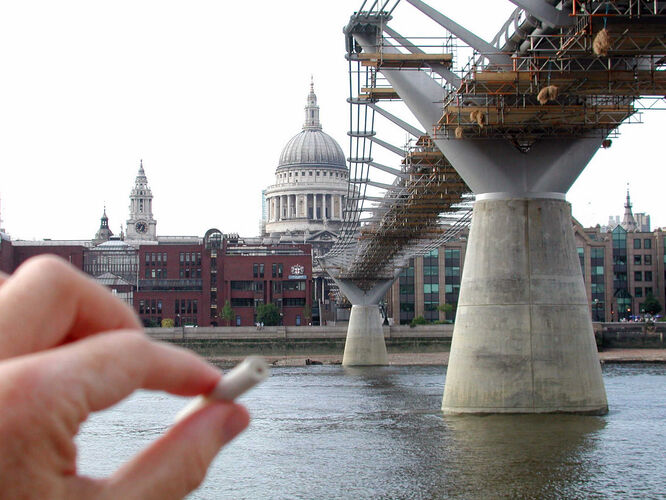
The tide is out in London, and in the midst of all the urban intensity, I'm beachcombing along the banks of the Thames. Like kids on a scavenger hunt, my companion and I pick through the pebbles. I find a fragile, chalky white tube and hand it to David, who explains it's no big deal…just the stem of a 19th-century clay pipe. Back then, tobacco was sold with disposable one-use pipes, so used pipes were routinely tossed into the river. David lets it fall from his fingers. Thinking, "Charles Dickens may have sucked on this," I pick it up again. Within minutes, I have half a dozen pipe stems in my pocket.
Strolling any new place with a good guide is a lot like beachcombing. Listening as a guide shares historical insights and some surprising stories, I pick up incomplete but still fascinating shards of a neighborhood's distant past. On this bright, brisk morning, right under London Bridge, David — who runs a tour company called London Walks — is helping me beachcomb not just metaphorically, but literally.
London is close enough to the North Sea to be affected by its tides, so the Thames' level does indeed rise and fall twice a day. One reason the Romans found this a practical location to establish their city of Londinium — even though it was about 50 miles inland — was that their boats could hitch a free ride with the tides between the sea and the town twice a day. (I imagine oarsmen rejoicing.)
With each tide going out and coming back, the Thames replenishes its beaches with historic wonders. The river's mud happens to be very low in oxygen, keeping these wonders well-preserved until they surface. In Victorian times (and even before), scavengers would "mudlark," as this muddy treasure hunt was called, for anything they could sell. Today, mudlarking is a pastime for locals who see the Thames as an ever-changing archaeological site, with little treasures — some dating as far back as ancient Roman times — awaiting discovery.
On today's stroll with David, I notice that the exposed banks are red with clay tiles from 500-year-old roofs. Hefting a chunky piece of tile worn oval by the centuries, with its telltale peg hole still clearly visible, David points out how heavy these roofs were, which meant they needed stout timbers for support. In the 16th century, when ship-building for the Royal Navy made these timbers more in demand (and costly), lighter slate tiles became the preferred roofing material. Over time, the heavy red clay tiles migrated from the rooftops to the riverbank…and now into the pockets of beachcombers like us. (Unfortunately, it's now illegal to mudlark here — even if you leave everything in place — without a pricey permit.)
I marvel at how calm and peaceful it feels here on the riverbank, even at the heart of the city. But it's time to climb (carefully) a set of seaweed-covered stairs and rejoin the urban bustle.
Back up on street level, David continues our walk as if our beachcombing were just a warm-up, and we prowl through the fascinating relics of the South Bank neighborhood of Southwark. In recent decades the area has been massively rebuilt with a complex of new buildings, but with David at my side I'm primed to gather more bits of history.
Scaling steep stairs into the attic of St. Thomas' Church, we visit the Operating Theatre Museum, home to the oldest surgical theater in Europe — a place designed to let medical students watch and learn as amputations were performed on poor women…without anesthetics.
Down the street, we sidetrack into the courtyard of a 19th-century teaching hospital for a peek at its lawn's decorative centerpiece: one of the freestanding Georgian alcoves that had lined the Old London Bridge (after the bridge was cleared of the medieval shops and houses that had long crammed its roadway). But our goal is the foodie heaven of Borough Market. In the early Middle Ages, when the first London Bridge was the only entry point into the walled City of London from anywhere south of the Thames, this area was the natural place for farmers to meet shopkeepers, and it's been bustling ever since.
Back at the embankment, I pull out one of my pipe stems and imagine Charles Dickens blowing a little smoke. With the keen eye and curiosity of a beachcomber, you'll come home with a pocket full of London history.