Home > Plan Your Trip > Best Destinations > Italy

Assisi: More Than the Basilica

By Rick Steves

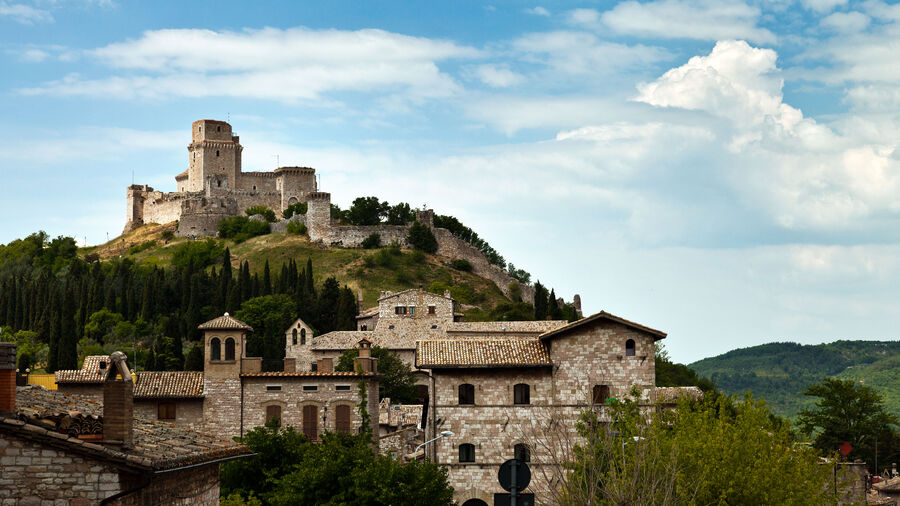
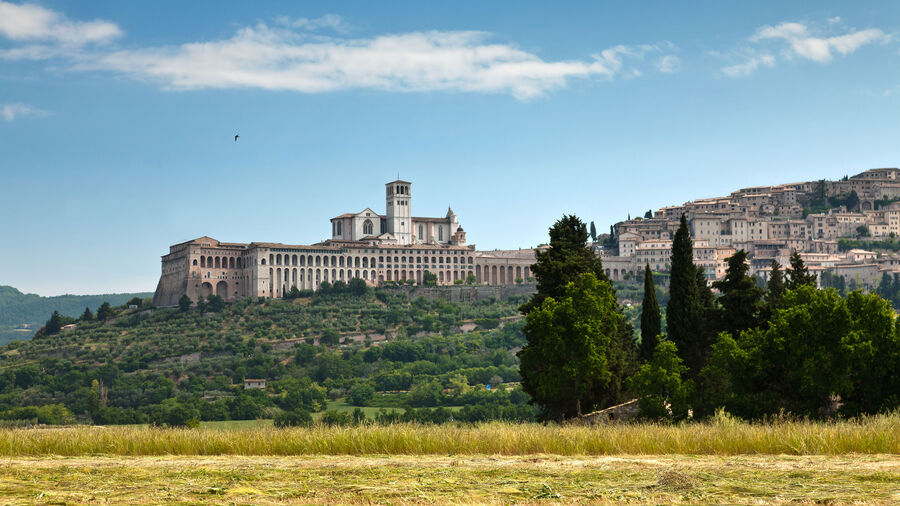
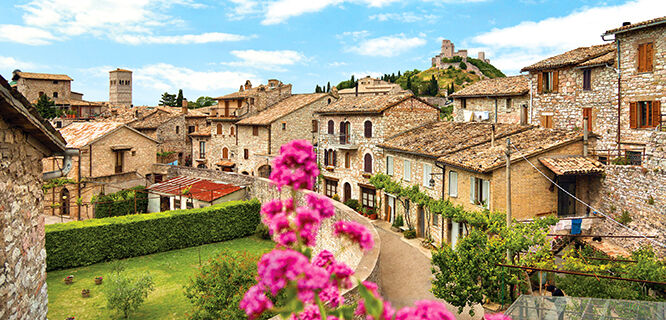
Crowned by a ruined castle, Assisi spills downhill to its famous Basilica of St. Francis. The town is beautifully preserved and rich in history. The 1997 earthquake did more damage to the tourist industry than to the local buildings. Fortunately, tourists have returned — whether art-lovers, pilgrims, or both — drawn by Assisi's powerful sights.

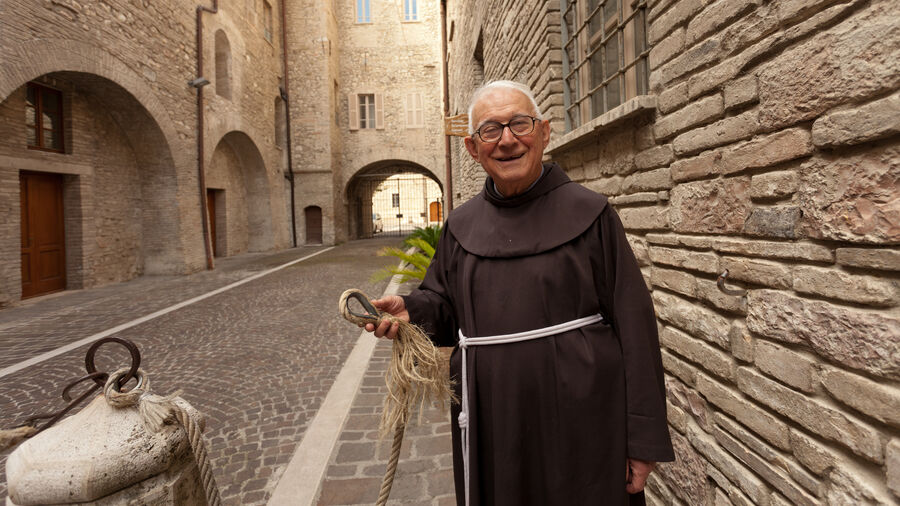
Assisi has long been a pilgrimage site. The big draw is that hometown boy who made very good: St. Francis. Around the year 1200, this simple friar challenged the decadence of church government and society in general with a powerful message of nonmaterialism, simplicity, and a "slow down and smell God's roses" lifestyle.

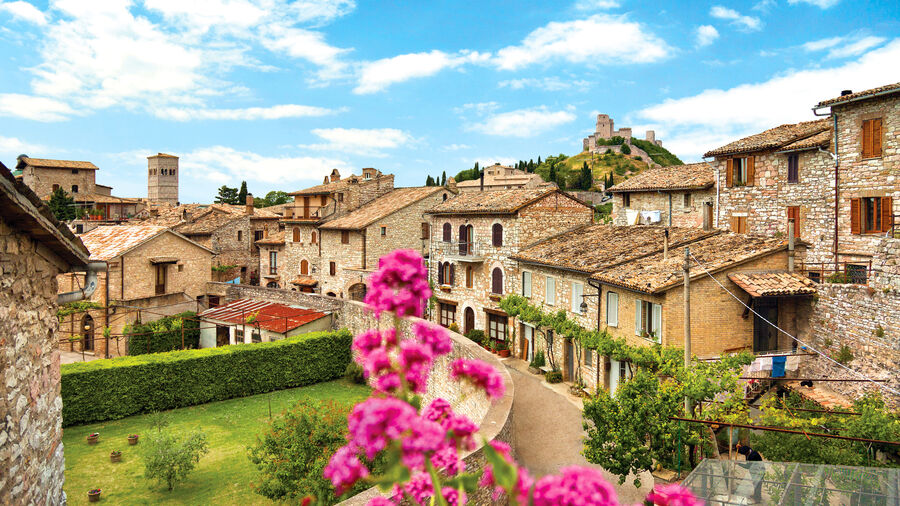
Assisi is crowned by a castle and filled with history.
The hometown of St. Francis, Assisi is crowned by a castle and filled with history.

Like Jesus, Francis taught by example. A huge monastic order grew out of his teachings, which were gradually embraced (some would say co-opted) by the Church. Clare, St. Francis' partner in poverty, founded the Order of the Poor Clares. Catholicism's purest example of simplicity is now glorified in Assisi's beautiful churches. In 1939 Italy made Francis and Clare its patron saints.

Francis' message of love and sensitivity to the environment has a broad and timeless appeal. But any pilgrimage site will be commercialized, and the legacy of St. Francis is Assisi's industry. In summer the town bursts with splash-in-the-pan Francis fans and Franciscan knickknacks. Those able to see past the tacky friar mementos can actually have a "travel on purpose" experience. Most visitors are day-trippers. Assisi after dark is closer to a place Francis could call home.

A Walk Through Assisi

Assisi, crowned by a ruined castle, is well-preserved and rich in history. There's much more to the town than what all the blitz tour groups see. Take a short, downhill walk from the bus stop at the top of town (Piazza Matteotti) to the Basilica of St. Francis at the bottom.

Start with a commanding Umbrian view (step outside the Porta Perlici). This state is called the "green heart of Italy" — the geographical center of the country. Enjoy the greens: silver green on the valley floor (olives), emerald green below you (grape vines) and deep green on the hillsides (evergreen oak trees). Also notice the Rocca Maggiore (big rock), a fortress that used to provide townsfolk a refuge in times of attack.

Assisi picnic
Assisi: Start at the top with a scenic picnic. Then wade through the medieval history until you hit the basilica.

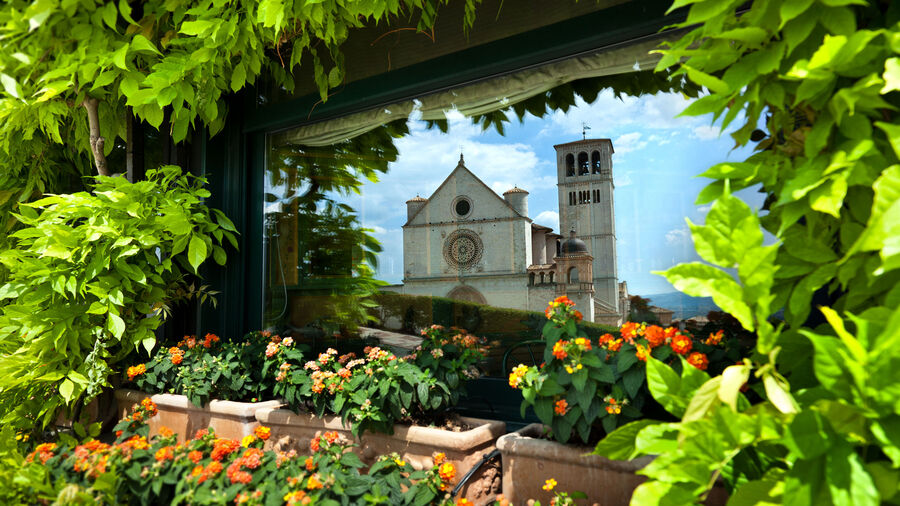
As you walk into town, you'll see that medieval Assisi survives in its architecture. The fancy facades with pointed arches are from the 12th to 14th centuries. Notice the floating gardens. Assisi has a flowering balcony competition every June.

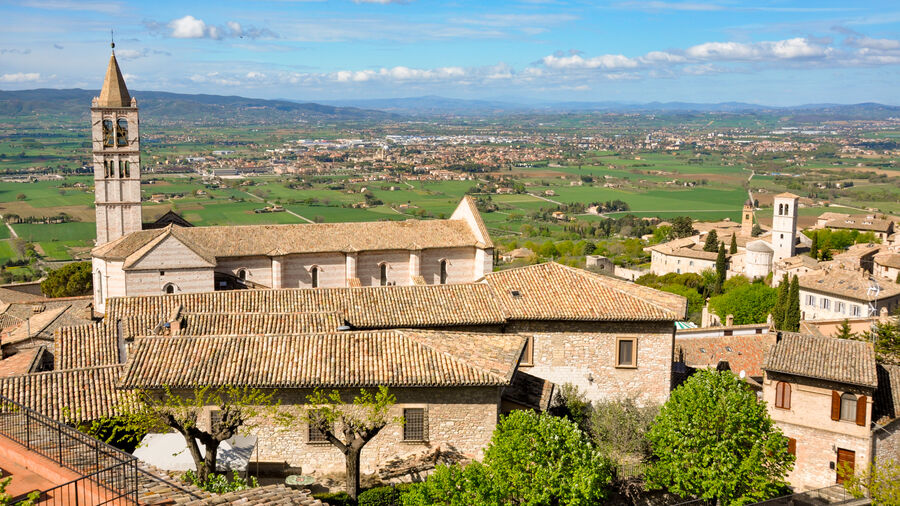
Follow the S. Chiara signs to the Basilica of Saint Clare. Dedicated to the founder of the order of the Poor Clares, this Umbrian Gothic church is simple, in keeping with the nuns' dedication to a life of contemplation.

Belly up to the viewpoint in front of the basilica for another Umbrian view. Below you stands the 700-year-old olive grove of the Poor Clares, and in the distance, another grand Umbrian view. Assisi overlooks the richest and biggest valley in otherwise hilly and mountainous Umbria. The municipality of Assisi has 25,000 but only 3,500 live in the old town. The lower town grew up with the coming of the railway in the 19th century. In the haze, the blue-domed church is St. Mary of the Angels (Santa Maria degli Angeli), the cradle of the Franciscan order, marking the place St. Francis lived and worked. This church, a popular pilgrimage site today, is the first Los Angeles.

Spanish-speaking Franciscans settled in California. Three of their missions grew into major cities: Los Angeles (named after this church), San Francisco (named after St. Francis), and Santa Clara (named after St. Clare).

From Via Santa Chiara, you can see gates in both directions. The gate over the road at the back of the church dates from 1265. (Beyond it, you can just see the crenellatinos of the 1316 Porta Nuova, which marks the final expansion of Assisi.) Toward the city center (on Via Santa Chiara, the high road), an arch marks the site of the Roman wall. These three gates mark the town's three walls, illustrating how much the city has grown since ancient times.

Walk uphill along Via Santa Chiara (which becomes Corso Mazzini) to the city's main square. The street is lined with interesting shops selling traditional embroidery, religious souvenirs, and gifty local edibles. About 20 yards before this arch, pop into the souvenir shop at #1b. The plaque over the door explains that the old printing press (a national monument now, just inside the door) was used to make fake documents for Jews escaping the Nazis in 1943 and 1944.

Ahead at Corso Mazzini 14d, the small shop (Poiesis) sells olive-wood carvings. Drop in. It's said that St. Francis made the first nativity scene to help teach the Christmas message, which is why you'll see so many crèches in Assisi. Even today, nearby villages are enthusiastic about their "living" manger scenes, and Italians everywhere enjoy setting up elaborate crèches in churches for Christmas.

Ahead of you, the six fluted Corinthian columns of the Temple of Minerva marked the forum (today's Piazza del Comune). Sit at the fountain on the Ppiazza for a few minutes of people-watching — don't you love Italy? Within 200 yards of this square, on either side, were the medieval walls. Imagine a commotion of 5,000 people confined within these walls. No wonder St. Francis needed an escape for some peace and quiet.

Assisi has always been a spiritual center. The Romans went to great lengths to make this first-century B.C. Temple of Minerva a centerpiece of their city. Notice the columns that cut into the stairway. It was a tight fit here on the hilltop. In ancient times, the stairs went down — about twice as far as they do now — to the main drag, which has gradually been filled in over time. The Church of Santa Maria sopra (over) Minerva was added in the ninth century. The bell tower is from the 13th century. Pop inside the temple/church (Mon–Sat 7:15–19:30, Sun 8:00–19:30, closes at sunset and midday in winter). Today's interior is 17th-century Baroque. Flanking the altar are the original Roman temple floor stones. You can even see the drains for the bloody sacrifices that took place here. Behind the statues of Peter and Paul the original Roman embankment peeks through.

Across the square at #11, step into the 16th-century vaults from the old market. Notice the Italian flair for design. Even this smelly market was finely decorated. The art style is "grotesque" — literally a painting in a grotto. This was painted after 1492. How do art historians know? Because turkeys — first seen in Europe after Columbus returned with his bag of exotic souvenirs — are featured. The turkeys painted here may have been that bird's European debut.

From the main square, hike past the temple up the high road, Via San Paolo. After 200 yards, a sign directs you down a lane to the Church of Santo Stefano. Surrounded by cypress, fig, and walnut trees, Santo Stefano — which used to be outside the town walls in the days of St. Francis — is a delightful bit of offbeat Assisi. Legend has it that Santo Stefano's bells miraculously rang on October 3, 1226, the day St. Francis died. Step inside. This is the typical rural Italian Romanesque church: no architect, just built by simple stonemasons who put together the most basic design (daily 8:30–21:30, until 18:30 in winter).

The lane zigzags down to Via San Francesco. Turn right and walk under the arch toward the Basilica of St. Francis. Via San Francesco was the main drag leading from the town to the basilica holding the body of St. Francis. Francis was a big deal even in his own day. He died in 1226 and was made a saint in 1228 — the same year the basilica's foundations were laid — and his body was moved in by 1230. Assisi was a big-time pilgrimage center, and this street was its booming main drag. Notice the fine medieval balcony just below the arch. A few yards farther down (on the left), cool yourself at the fountain. The hospice next door was built in 1237 to house pilgrims. Notice the three surviving faces of its fresco: Jesus, Francis, and Clare.

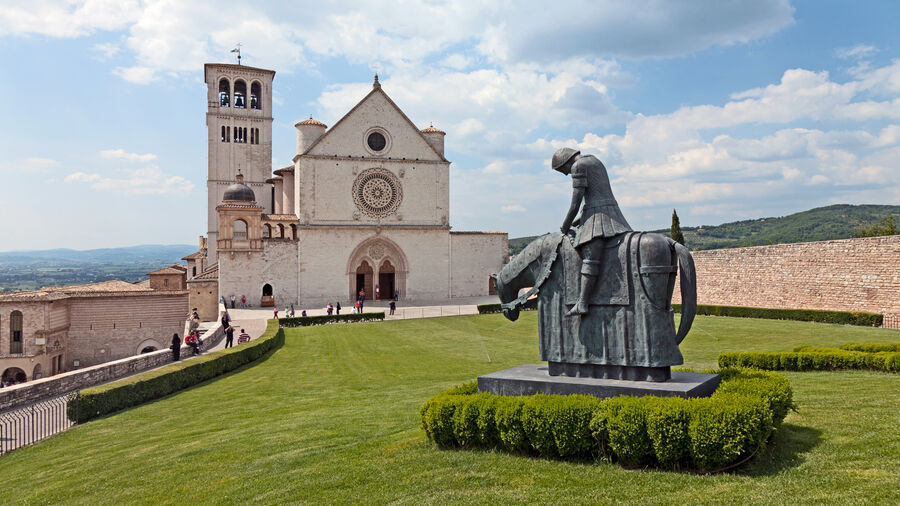
Continuing on, you'll eventually reach Assisi's main sight, the Basilica of St. Francis. Here is a self-guided walking tour of the Basilica, emphasizing the place's theology rather than art history.

Updated for 2008. For lots more information, check out our best-selling Rick Steves' Italy guidebook — or join us on one of our free-spirited tours in Italy.