

How Travel Pried Open My Hometown Blinders
By Rick Steves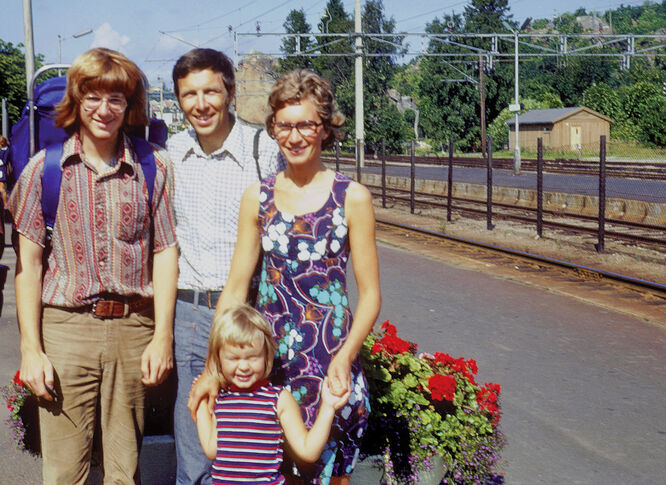
I'll never forget my first trip to Europe. I was a gangly 14-year-old, dragged to the Old Country by a conspiracy of grandparents and parents solely to visit Norwegian relatives. I didn't want to go. It just didn't make sense.
Jet lag wasn't the problem. It was teen culture-shock: No Fanta. No hamburgers. But after a few days I was wild about Solo (Norway's orange pop) and addicted to pølser wieners. Noticing stunning women — and their hairy armpits — I began to realize that our world is intriguing, and that exploring it can be endlessly entertaining.
Visiting the house of my great-great-grandmother's birth, I imagined the courage it must have taken to leave Norway and her entire family for America a century ago.
Sitting with my cousins on their living room floor in 1969 to watch the Apollo moon landing, I began to see the world differently. Hearing them translate Neil Armstrong's words ("Ett lite skritt for et menneske, ett stort skritt for menneskeheten"), it dawned on me: that first big step was more than just an American celebration. This was a human accomplishment.
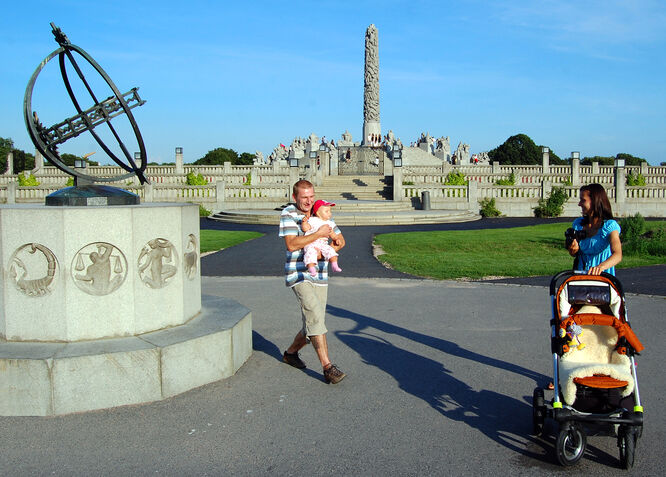
In Oslo's Vigeland Park, I was grossed out by the nude statues (by the great Norwegian sculptor Gustav Vigeland). But I also experienced an important revelation in that same park. As I watched tow-headed kids splashing with their parents in a fountain, I realized those parents loved their kids as much as mine loved me. It hit me: This planet is home to billions of equally precious people. Travel was prying open my hometown blinders.
Later, as an older teenage vagabond slumming through Europe, I'd regularly pop in on relatives in Norway. It was a much-needed rest stop for a bit of family warmth and good food. Now, as an adult, I find excuses to return to Norway every few years. All these decades later, Uncle Thor still meets me at the train station in his little town of Sandefjord. While I no longer need the free food, I enjoy Thor's warm hospitality as much as ever.
Returning to Norway, I find my roots. My grandfather — famous in the 1930s in Leavenworth, Washington, as a rowdy ski jumper — was a Romstad. So, although my last name is Steves (after a step-grandfather), my blood is Romstad, and that branch of my family comes from a scenic valley called Gudbrandsdalen.
But I don't visit Norway just to read my family name on tombstones. The roots I seek are also cultural. It's stimulating to learn about different social systems (many of which confound Americans). A friend in Oslo introduced me to the ideas of Norwegian philosopher Erik Dammann, who in the 1970s started a movement called "The Future in Our Hands." Dammann argued that a successful society can rise above materialism and that being content was a good thing. His book (by the same title), lit a political fire in my belly that burns to this day.
Visiting Norway caused me to be reflective…to challenge my cultural norms. In Norway, where city halls are as grandly and lovingly decorated as churches, I find people almost evangelical about their belief in organizing society for the benefit of all.
Norwegians are talented linguists. I speak only English, and perhaps moreso than all the other places I've worked (shooting TV shows, leading tour groups, and researching guidebooks), communicating in Norway has been a breeze. Not long ago, I was at a cousin's dinner party with a dozen people in Oslo. Out of politeness to me, everyone simply switched to speaking English.
The topics were fascinating. One man, an author who had just completed a book on Franklin D. Roosevelt, talked with me about the intricacies of American post-WWII politics. Two new parents gently debated the various ways to split their paid maternal and paternal leave. People seemed very content — these Norwegians were just loving their salmon, shrimp, and goat cheese.
Discussions with relatives and new friends alike often lead to comparisons of our two very affluent but very different societies. Take attitudes towards cars: Whenever I am in Oslo, I am struck by how peaceful the big city feels. That's partly due to a congestion fee that keeps most vehicles from the center of town — they're routed through a tunnel instead. To encourage clean electric cars, the government underwrites car charging, parking, tolls, and taxes — making even a US-expensive Tesla an affordable ride (and they do this despite the huge role of North Sea oil in Norway's economy).
My "Europe Through the Gutter" days are long gone, but I still love dropping by Norway for an oasis of warmth, love, and lots of food. Just as important is the chance to rein in my US-centricity, and to admire other ways of doing things. If you have relatives anywhere in Europe, by all means — look them up. And regardless of where your roots are, we can all travel with the joy of getting to know the whole human family. Because, in a sense, that's what good travelers always do.