

Lake Geneva: Switzerland’s Riviera
By Rick Steves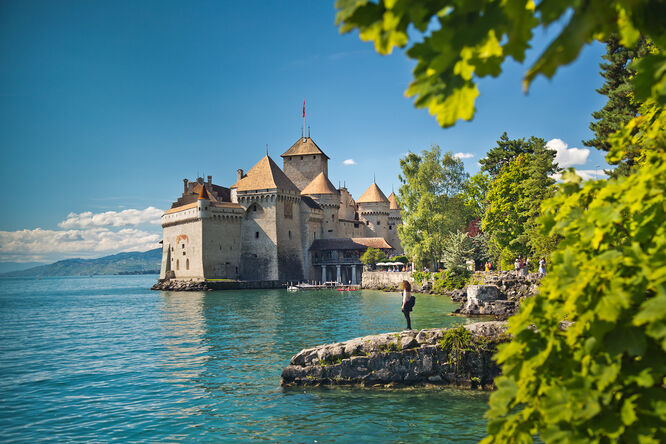
Arching around most of southern end of Swizerland's most southwest corner, Lake Geneva laps against the French border with a serene beauty. A collage of castles, museums, resort towns, and vineyards, this region merits a few days of exploration — though you can enjoy a swift overview of its highlights even in just one day.
Last summer I took time to relax and enjoy the tranquil and elegant city of Lausanne (the area's best home base). With a characteristic old town, towering cathedral, and delightful lakeside promenade, it has the energy and cultural sophistication of a larger city, but is home to only about 140,000 people.
The Romans founded Lausanne on the lakefront — but with the fall of Rome and the rise of the barbarians, the first Lausanners fled for the hills, establishing today's tangled old town a safe distance uphill from the lake. The steep city feels like a life-size game of Chutes and Ladders. Two-dimensional maps don't do justice to the city's bridges, underpasses, stairways, hills, and valleys. Even the Métro trains and platforms are on an incline.
Wandering the pedestrianized Rue de Bourg in the old town, I could see the multiethnic makeup of today's Switzerland on parade. Though the region's official language is French, the language situation is potluck, with German and Italian also prevalent. (Be careful to pronounce Lausanne correctly — "loh-zahn" — and don't confuse it with Luzern.)
One of Lausanne's highlights, the Collection de l'Art Brut, is like nothing else you'll see in Europe: a museum filled with art produced by untaught artists — many of them imprisoned or legally insane, and all of them as free-spirited as artists could possibly be.
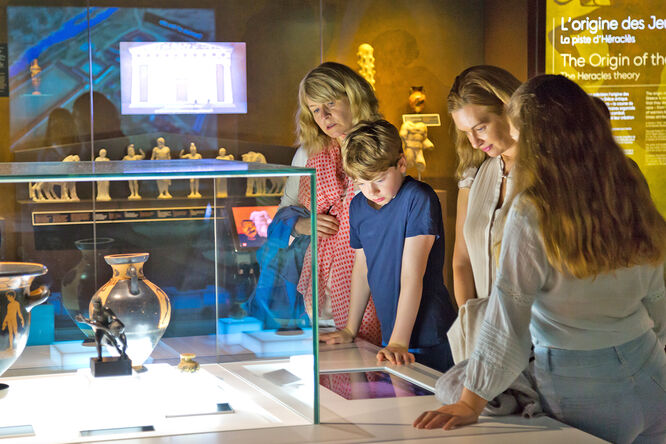
Down by the lake is another tourist district, Ouchy (pronounced "oo-shee"). It's the happy domain of commoners, office workers, and roller skaters strutting their stuff — a fun zone with fountains, parks, promenades, and restaurants. The Ouchy lakefront is also where you'll find the top-notch Olympic Museum, set in a beautiful lakeside park wither the Olympic flame flickers between editions of the games. This is your chance to see Jesse Owens' spiked jumping shoes, Katarina Witt's red skating dress, a basketball signed by the 1992 American "Dream Team," and Cathy Freeman's running shoes.
The most picturesque way to see Lake Geneva is by a two-hour boat cruise from Lausanne to the region's best sight: the island-castle of Château de Chillon. Elegant French-style villas with pastel colors, frilly balconies, and mansard roofs grace the lakeshore and instill an air of gentility. On my last visit, I sailed past the dreamy terraced banks of Lavaux vineyards and on toward Montreux — a relaxed resort famous for its jazz festival each July.
Though not heavy on sights, Montreux offers sublime views of misty Lake Geneva and the cut-glass peaks in the distance. For an easy side-trip from Montreux, hop on the Chocolate Train. It stops at a chocolate factory and at the foot of Gruyères, the ultra-touristy town that's justifiably famous for its cheese — which you can see being made in a cheese production house. The French-speaking Swiss countryside to the north is worth exploring, especially if you're driving. Along with tasty chocolates and fragrant cheese, it's sprinkled with crystal-clear lakes and sleepy cows.
My favorite destination in the area, Château de Chillon, is set wistfully at the edge of Lake Geneva, about 20 miles southeast of Lausanne. Because it's built on a rocky island, this medieval castle has a higgledy-piggledy shape that combines a stout fortress (on the land side) and a residence (on the lake side). Remarkably well-preserved, the château has never been damaged or destroyed — always inhabited, always maintained. Over the centuries it's been used as an armory, warehouse, prison, hospital, and tourist attraction. The Romantics loved this place: Rousseau, Lord Byron, Victor Hugo, and Goethe were all inspired here, and even Dickens and Hemingway dropped by. Chillon is still Switzerland's best castle experience, with a dank prison, battle-scarred weapons, simple Swiss-style mobile furniture, and 800-year-old toilets. Make like a sentry and patrol the ramparts, then (if the coast is clear) curl up on a windowsill to enjoy the tingly lake views.
There's plenty of gorgeous scenery in Switzerland, but Lake Geneva is one of its real charms. Whether enjoyed on a stroll through a shoreline park, from the deck chair on a boat cruise, over the wrought iron of your hotel-room balcony, or through the window of a medieval castle, Lake Geneva sparkles with romantic ambiance. Its laid-back vibe makes it the perfect place to just be on vacation.