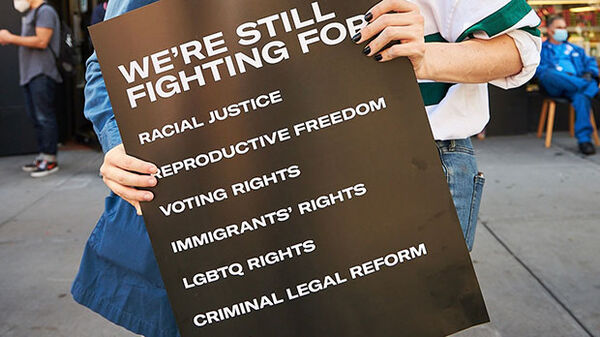
Civil Rights and Social Justice

Travel reminds us that the rules we live by in our own country are not inevitable. Every society makes choices about how it protects individual rights, treats people under the law, and creates opportunities for its citizens. Some laws protect freedom and expand opportunity. Others create necessary (or not) barriers. Seeing different approaches encourages us to ask thoughtful questions about our own and to stay open to ideas that might work better.

Feeding a family or helping someone find work matters. But if the rules themselves keep producing the same problems, that work alone won't fix things. That's why, in addition to supporting organizations that serve people directly, we also support organizations focused on the long-term and more fundamental work of changing systems.

Sometimes "changing systems" means ensuring people with criminal records who've served their time don't face lifelong barriers to employment, housing, or voting rights. It can mean protecting a woman's right to make her own reproductive health decisions. Ensuring everyone can exercise their rights to free speech, religious freedom, and due process. Or responding to drug use by reducing harm rather than increasing punishment.

Rick has long believed that supporting advocacy can be one of the most effective uses of philanthropic dollars. That's because government policies shape realities on a scale that no individual charity can match. Advocacy is simply giving a voice to (e.g. lobbying for) a cause in the places where decisions are made. If special interests like the gun, tobacco, and pharmaceutical industries have lobbyists, the causes we care about need advocates, as well.

We believe good citizenship means active citizenship. Democracy depends on citizens who are willing to (and free to) engage those questions. It also means recognizing that progress often comes through constructive disagreement, not unanimity. We won't all reach the same conclusions, but a healthy democracy requires us to wrestle with difficult issues together. While some might call this "America bashing" we see it as "America loving"… a way to live up to those much-vaunted ideals we all want to be proud of.

Whether advocating for the hungry, protecting civil liberties, or advancing equal justice under the law, these organizations help give voice to causes that might otherwise go unheard.

sojourners-graphic

Sojourners

Sojourners is a progressive Christian organization working at the intersection of faith, social justice, and public life. Through its advocacy, community organizing, and journalism, it challenges people of faith to engage more deeply in issues such as poverty and economic justice, racial justice, democracy, and peacebuilding. With a national platform that reaches faith leaders and policymakers across the country, Sojourners is a powerful example of how the principle of "love thy neighbor" can be translated into collective action.

Learn more…


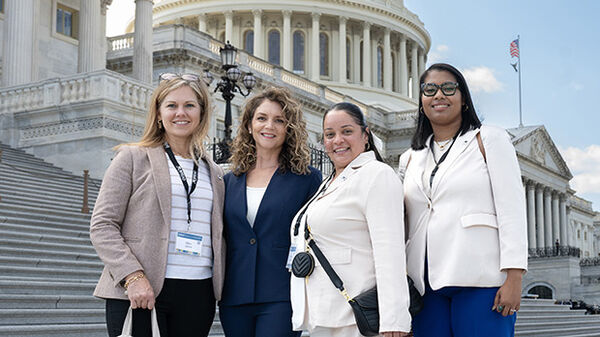
four women standing in front of us capitol

Bread for the World

Even in our abundant world, hundreds of millions of people still live in extreme poverty, struggling to get by on just a few dollars a day. More than ever, people facing hunger need strong, compassionate advocates. And more than ever, their voices are not heard above the din of unbridled capitalism. That's why we support advocacy organizations like Bread for the World, working in Congress to build bipartisan support for policies that reduce hunger in the U.S. and globally.

Learn more…


rick-steves-as-uncle-sam

Faith Action Network

Faith Action Network (FAN) brings together more than 100 faith communities (Christian, Muslim, Jewish, and more) across Washington State to advocate for policies that promote justice, opportunity, and human dignity. Working on issues ranging from anti-discrimination protections to criminal justice reform and economic fairness, FAN helps ensure that compassion has a voice in Olympia.

Learn more…


rick holding a goblet at the piano

Marijuana Policy Project and NORML

For decades, outdated marijuana policies have criminalized a matter of personal liberty, contributing to penalties that are ineffective, costly, and racist. Through their advocacy initiatives, the Marijuana Policy Project and NORML have helped reshape the national conversation about drug policy advancing pragmatic policies based on protecting civil liberties and reducing harm rather than legislating morality.

Learn more…


sign explaining what the aclu does

American Civil Liberties Union (ACLU)

Civil liberties are the guardrails of a free society. For more than a century, the ACLU has worked to protect the individual freedoms that are the foundation of American democracy, serving as a vital check on government power and defending the rights of people across the political spectrum. Its advocacy and legal victories have helped shape some of the nation's most important debates about rights and freedom.

Learn more…