

The Sips and Sounds of a Greek Taverna
By Rick Steves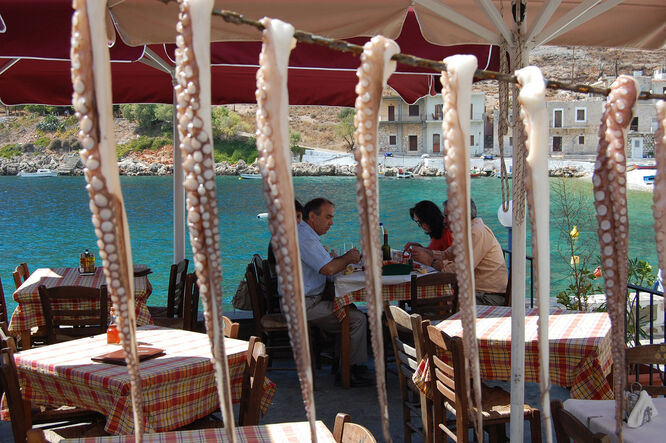
Whenever I'm in Greece, I don't let a sun go down without enjoying a nice glass of ouzo. It's funny, because I don't even like the taste of that licorice-flavored firewater when I'm back home in the United States. But you can't experience Greek culture without really tasting it — from olives at breakfast to ouzo after dark.
You don't drink ouzo straight; instead, you add ice or water, which turns the ouzo from clear to milky white. When my waiter brings my glass, I give him a melodramatic little show — artfully trickling a few drops of water into my ouzo, magically giving it a milky swirl. It's a performance in a glass and suddenly, to him, I'm not just another tourist. I'm a cultural chameleon, mastering a little slice of the Greek life — indicating I'm ready and rarin' for more.
When Greeks really want to show hospitality, the drinking shifts from ouzo to its wilder cousin, tsipouro. Similar to Italian grappa, this brandy-like liquor is about 40 percent alcohol and makes ouzo seem like kid stuff. It's the drink of boisterous toasts, tall tales, and meals that drag late into the night. Judging from my fuzzy photos, the last time I had it, I had managed to go so extremely local that I had a hard time holding my phone steady.
In Greece there's no better spot to "go Greek" than at the local taverna. It doesn't matter if I'm snuggled into the car-free island of Hydra, perched above an untrampled beach on the remote Mani Peninsula, or enjoying a tiny joint hiding in the shadow of Athens' Acropolis. When evening comes, the conviviality of a taverna is what I'm after.
With their basic décor, rickety stools, and rustic tables, Greek tavernas are humble at first glance. But after a few laughs and a few drinks, you realize how rich they are in heritage, character, and charm. Backgammon dice chatter, as do the wrinkled folks tossing them. Worry beads click and clack as they're threaded between fingers. Hand-rolled cigarettes hang tenuously from lips, and stray cats wait patiently to take your seat — and your dinner — if you dare abandon either.
I like to grab a table in the middle of the action and order my ouzo with a plate of mezedes — an easily shared smattering of dips, olives, and feta-stuffed peppers. I enjoy nibbling on these appetizers while debating which fresh seafood dish sounds right tonight. (At some seaside tavernas, my options are hanging right in front of me, ready to be thrown on the grill.)
Taverna menus tend to be small, offering the same favorites nearly everywhere. Unlike the French, who are forever experimenting to perfect an intricate cuisine, the Greeks found an easy formula and stick with it — and it rarely misses. The four Greek food groups are olives (and olive oil), salty feta cheese, ripe tomatoes, and crispy phyllo dough. Virtually every Greek dish is built on a foundation of these four tasty building blocks. It's simple fare…and simply delicious.
To get the true taverna experience, head out around 9 p.m., when most locals do. (Dine much earlier, and you'll find yourself surrounded only by other tourists.) Especially in cities, popular tavernas tend to stay open till midnight or even later. In smaller towns, though, I make sure not to arrive too late, as restaurant hours — like many other aspects of Greek life — are relaxed and informal. No matter what hours may be listed in your guidebook or posted on the door, on slow days tavernas may close up whenever the staff feel like going home.
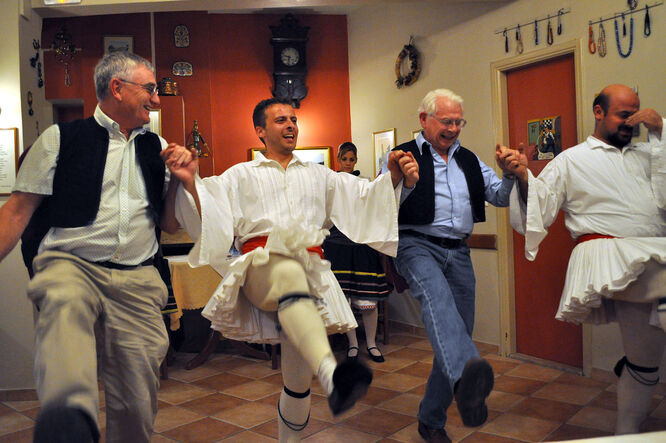
The later you stick around, the more likely you'll get to witness Greeks' love of dancing. Popular dances include the graceful kalamatianos circle dance and the syrtaki, done with arms outstretched or thrown across one another's shoulders. While these are popular for special events like weddings and baptisms, I've found people don't need much of an excuse to break out in dance…especially at a taverna with live music. (The ouzo helps.) I've seen dancers get so carried away they "applauded" the music by throwing flowers and even plates…then danced on the tables into the wee hours.
Music is a part of everyday life in Greece. Wander through any town on a weekend summer evening and there's a decent chance you'll come across musicians sitting around an outdoor table playing traditional folk music on their bouzouki (a long-necked mandolin). As night descends, the crowd is ready to go bouzouki-crazy, and the ouzo-fueled magic of the Greek taverna kicks into high gear. Opa!
It's a joy to surrender to the Greek way of living. Greece's welcoming people, mouthwatering food and drink, and joyful music and dancing make it easy to immerse yourself into the easygoing lifestyle.